

Vital signs are defined as the six core measurable indicators of a person's physiological status: body temperature, heart rate, respiratory rate, blood pressure, oxygen saturation, and pain level. Understanding this vital signs terminology guide gives you the language to recognize health changes, ask better questions, and communicate clearly with any healthcare provider. The traditional "core four" vital signs have expanded in modern clinical practice to include oxygen saturation and pain level, reflecting how much more we now expect from a basic health assessment. Knowing what these numbers mean puts you in control of your own care.
1. What is body temperature and what does it tell you?
Body temperature is the measure of how well your body produces and releases heat. The normal adult range runs from 97°F to 99°F, with 98.6°F cited as the classic average. A reading above 100.4°F is clinically defined as a fever, while a reading below 95°F is hypothermia.
Temperature can be taken at several sites: oral (under the tongue), tympanic (ear canal), temporal artery (forehead scan), axillary (armpit), and rectal. Rectal readings run slightly higher and are considered the most accurate for core temperature. Non-invasive methods like forehead scans and ear thermometry are standard in clinical settings because they are fast and comfortable.

2. What is heart rate and why does it matter?
Heart rate, also called pulse, is the number of times your heart beats per minute. The normal adult range is 60–100 beats per minute. A rate above 100 bpm is called tachycardia; below 60 bpm is bradycardia. Both can signal underlying conditions that need attention.
Pulse is measured manually by pressing two fingers against the radial artery at the wrist or the carotid artery in the neck. A pulse oximeter clipped to a fingertip measures both heart rate and oxygen saturation at the same time. Trained athletes often have resting heart rates well below 60 bpm, which is normal for them but would flag as bradycardia in someone sedentary.
3. What is respiratory rate and what does it reveal?
Respiratory rate is the number of breaths a person takes per minute. The normal adult range is 12–20 breaths per minute. A rate above 20 is called tachypnea; below 12 is bradypnea. Elevated respiratory rate is one of the earliest warning signs of serious illness, including sepsis.
Respiratory rate is measured by observation, counting chest rises over 60 seconds. Because people unconsciously change their breathing when they know it is being counted, clinicians often measure it while appearing to check the pulse. This small technique detail significantly improves accuracy.
4. What do systolic and diastolic blood pressure mean?
Blood pressure measures the force of blood pushing against artery walls. It is expressed as two numbers: systolic over diastolic, written as 120/80 mmHg. Systolic is the pressure when the heart beats; diastolic is the pressure when the heart rests between beats. A reading below 120/80 mmHg is considered normal for adults.
Hypertension means blood pressure is consistently too high. Hypotension means it is too low. Both carry health risks. Blood pressure is measured with a sphygmomanometer, which uses an inflatable cuff placed around the upper arm and a stethoscope or automated sensor to detect arterial sounds.
Pro Tip: Sit quietly for five minutes before taking a blood pressure reading. Physical activity, caffeine, and stress all raise the number temporarily, which can lead to a false high reading.
5. What is oxygen saturation (SpO2)?
Oxygen saturation, abbreviated SpO2, is the percentage of hemoglobin in the blood that is carrying oxygen. Normal SpO2 for healthy adults is 95%–100%. A reading below 90% is a medical emergency requiring supplemental oxygen. This single number reflects how well your lungs and heart are working together.
SpO2 is measured with a pulse oximeter, a small clip-on device placed on a fingertip. The device shines light through the skin to detect oxygen levels without a blood draw. Nail polish, cold fingers, and poor circulation can reduce accuracy, so clinicians check for a strong waveform signal before trusting the reading.
6. What is pain level and why is it a vital sign?
Pain is often called the "fifth vital sign" because documenting it using a 0–10 scale is as clinically important as any objective measurement. Zero means no pain; 10 means the worst pain imaginable. Unlike the other vital signs, pain is entirely subjective, which makes clear communication between patient and provider critical.
Pain scales include numeric rating scales, visual analog scales, and descriptive scales for patients who struggle with numbers. Tracking pain over time reveals whether a treatment is working. A single pain score in isolation tells less than a series of scores recorded across hours or days.
7. How are vital signs measured in practice?
The tools behind vital signs measurements are straightforward once you know what each one does. Standard non-invasive methods include thermometers for temperature, pulse oximeters for SpO2 and heart rate, and inflatable arm cuffs for blood pressure. Each device has specific technique requirements that affect the reliability of the result.
Accurate measurement technique, timing, and patient positioning critically affect data reliability and subsequent clinical decisions. For blood pressure, the cuff must sit at heart level. For temperature, an oral thermometer requires a closed mouth for the full measurement time. Small errors in technique produce numbers that look abnormal but are not.
Pro Tip: When measuring vital signs at home, take three readings spaced two minutes apart and record the average. A single reading is far less reliable than a short series.
8. What do abnormal vital sign readings indicate?
Abnormal readings point to specific physiological problems, and the terminology makes those problems easier to name. Terms like tachycardia, bradycardia, tachypnea, and hypertension each describe a precise deviation from normal. Knowing these words lets you understand a clinical note or discharge summary without needing a translator.
| Term | Meaning | Possible Implication |
|---|---|---|
| Tachycardia | Heart rate above 100 bpm | Dehydration, fever, anxiety, cardiac issue |
| Bradycardia | Heart rate below 60 bpm | Athletic conditioning, medication effect, heart block |
| Tachypnea | Respiratory rate above 20 | Infection, pain, respiratory distress |
| Bradypnea | Respiratory rate below 12 | Sedation, neurological issue |
| Hypertension | Blood pressure above 130/80 mmHg | Cardiovascular risk, kidney stress |
| Hypotension | Blood pressure below 90/60 mmHg | Dehydration, shock, medication effect |
| Fever | Temperature above 100.4°F | Infection, inflammation |
| Hypoxemia | SpO2 below 90% | Respiratory failure, cardiac compromise |
9. Why context changes everything in vital sign interpretation
A single reading rarely tells the full story. Individual baseline, age, fitness level, emotional state, and medications all affect what a "normal" reading looks like for a specific person. A heart rate of 55 bpm is healthy in a marathon runner but warrants investigation in a sedentary 70-year-old on no medications.
Clinicians interpret vital signs in clinical context, noting factors like recent activity, stress, measurement site, and patient baseline to avoid misinterpretation. This is why a single emergency room reading is less meaningful than a trend recorded over several hours. Understanding this principle helps you ask better questions when a provider seems unconcerned about a number that alarmed you.
10. How to use vital signs terminology in health conversations
Vital signs provide the measurable "Objective" data in medical SOAP notes, bridging subjective symptoms with clinical assessment. When you can name what you measured and describe the trend, providers respond more efficiently. Saying "my blood pressure was 145/92 this morning and 138/88 yesterday" is far more useful than "my blood pressure has been high."
Here are practical ways to apply this knowledge:
- Write down your readings with the date, time, and conditions (resting, after exercise, before medication).
- Learn your personal baseline for each vital sign so you can spot deviations early.
- Use the correct terminology when describing readings to a provider: "my SpO2 dropped to 93%" rather than "my oxygen thing was low."
- Ask your provider what your target ranges are, since they may differ from population averages.
- Know when to seek care: SpO2 below 92%, respiratory rate above 25, or blood pressure above 180/120 mmHg all warrant immediate attention.
Experts recommend tracking vital sign trends over time rather than relying on isolated measurements. A single high reading may be noise; three consecutive high readings is a signal. This distinction is worth understanding before your next appointment.
You can also learn how body systems signal illness to connect vital sign changes to the underlying physiology driving them.
Key takeaways
Vital signs are the six objective measurements that define physiological status, and knowing their terminology gives you the ability to monitor, document, and communicate your health with precision.
| Point | Details |
|---|---|
| Six core vital signs | Temperature, heart rate, respiratory rate, blood pressure, SpO2, and pain level form the complete picture. |
| Normal ranges matter | Each vital sign has a defined normal range; deviations have specific clinical names like tachycardia or hypoxemia. |
| Context shapes interpretation | Age, fitness, medications, and baseline all affect whether a reading is truly abnormal. |
| Trends beat single readings | Recording vital signs over time reveals patterns that a single measurement cannot. |
| Terminology improves communication | Using correct terms like SpO2 or systolic pressure helps providers respond faster and more accurately. |
Vital signs as the foundation of clinical thinking
Vital signs are the cornerstone of clinical assessment. That is not a metaphor. Every clinical decision, from adjusting a medication to calling a rapid response team, starts with these six numbers. I have seen patients dismissed because they could not articulate what was wrong, and I have seen the same patients get fast, appropriate care once they walked in with a written log of their readings and the right vocabulary to describe them.
The terminology is not gatekeeping. It is a shared language, and you are entitled to speak it. When a provider says your "sats are 94," you should know that means your oxygen saturation is slightly below the normal floor of 95% and worth monitoring. When a discharge note says "resolved tachycardia," you should know your heart rate normalized before you left.
My honest advice: start with your own baseline. Spend two weeks measuring your resting heart rate, blood pressure, and temperature at the same time each morning. Write the numbers down. That data becomes your reference point for every future conversation with a provider. A reading that looks alarming on a chart may be completely normal for you, and you will only know that if you have your own history to compare it against.
Tools like secure symptom checkers can help you understand when a change in your readings warrants professional attention. Use them as a starting point, not a replacement for clinical judgment.
> — Rishi
Healthnavigatorai's MediGuide puts vital signs in plain English
Healthnavigatorai built MediGuide specifically for Canadians who want clear answers without the friction of sign-ups or fees. If your blood pressure reading looks off or your SpO2 has been dipping, you can describe your symptoms directly and get a plain-English assessment of what to do next.
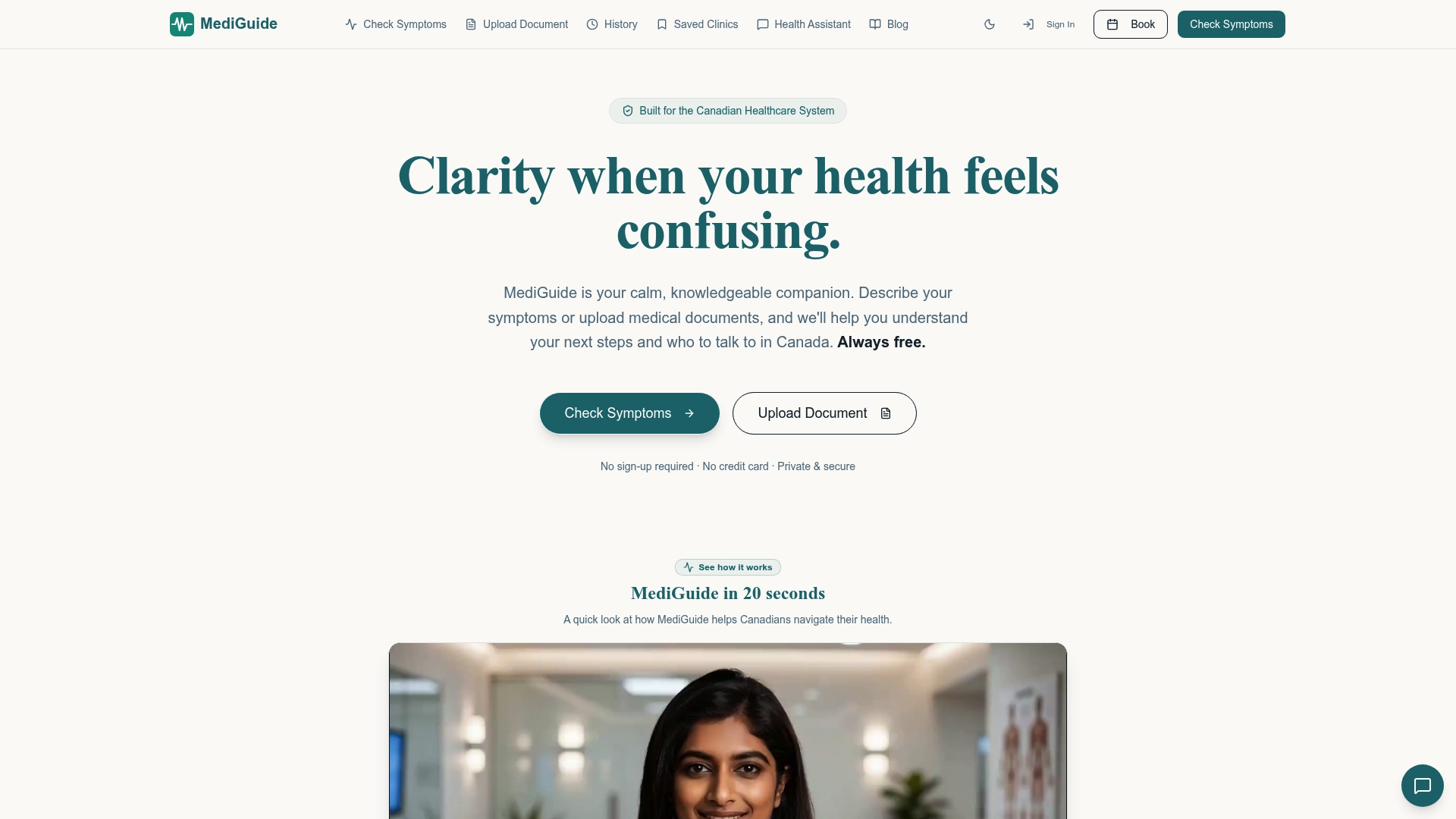
MediGuide also lets you upload medical documents so your vital sign records are part of the picture when you need guidance. The tool connects you to the right specialists and shows average wait times in your region, all without storing or selling your data. When a number concerns you, check your symptoms and get a clear next step in seconds.
FAQ
What are the six vital signs?
The six vital signs are body temperature, heart rate, respiratory rate, blood pressure, oxygen saturation (SpO2), and pain level. The traditional four have expanded to include SpO2 and pain in modern clinical practice.
What is a normal blood pressure reading?
Normal adult blood pressure is below 120/80 mmHg. The top number (systolic) reflects pressure during a heartbeat; the bottom number (diastolic) reflects pressure between beats.
What does SpO2 below 90% mean?
An SpO2 reading below 90% indicates hypoxemia and is a medical emergency. Normal SpO2 for healthy adults is 95%–100%, measured with a pulse oximeter.
Why do vital signs change throughout the day?
Vital signs fluctuate with activity, stress, meals, medications, and sleep. This is why clinicians recommend recording readings at consistent times and conditions to build a reliable personal baseline.
When should I seek care based on vital sign readings?
Seek immediate care if your SpO2 drops below 92%, your respiratory rate exceeds 25 breaths per minute, or your blood pressure reads above 180/120 mmHg. Any sudden, unexplained change from your personal baseline also warrants prompt evaluation.


