

Checking symptoms in plain language means describing what your body is doing in simple, everyday words so you and your doctor can understand your condition quickly and accurately. Most Canadians struggle to describe what they feel without using medical terms they half-remember from a Google search. That gap causes delays, misdiagnoses, and wasted appointments. This guide shows you how to describe symptoms clearly, recognize when to act fast, and use tools like Healthnavigatorai's MediGuide to get the right care faster.
What details should you include when describing symptoms simply?
The most effective way to check symptoms in plain language is to use a structured method called QPRCS. QPRCS stands for Quality, Provocation, Region, Chronology, and Severity. According to Dr. ME Ghodhbani, QPRCS balances emotional and objective information to help clinicians reach a diagnosis faster. Think of it as a five-question checklist you fill out before any appointment.
Here is what each part means in plain terms:
- Quality: What does it feel like? Sharp, dull, burning, throbbing, tight, or pressure-like?
- Provocation: What makes it better or worse? Exercise, eating, stress, lying down, or a specific movement?
- Region: Where exactly is it? Point to the spot. Does it spread anywhere else?
- Chronology: When did it start? Is it constant or does it come and go? How long does each episode last?
- Severity: On a scale of 1 to 10, how bad is it? Does it stop you from working or sleeping?
Vague descriptions slow everything down. Compare these two examples. Vague: "My stomach hurts sometimes." Clear: "I have a sharp pain in my lower right abdomen that started three days ago, rates a 7 out of 10, gets worse after eating, and lasts about 20 minutes each time." The second version gives a clinician enough detail to prioritize your care immediately.
Pro Tip: Keep a simple symptom diary on your phone. Log the date, time, location, severity score, and any trigger you noticed. Three days of notes are worth more than three weeks of memory.

Tracking environmental factors, medication, and symptom timing also reduces repeated questions during consultations. A pre-written symptom summary with your current medication list saves time and helps your provider focus on what matters.
How do you decide if symptoms need emergency, urgent, or routine care?
Not every symptom needs a trip to the emergency room. The key is knowing which category your symptoms fall into so you act at the right speed.
Red flag symptoms require emergency care right now. Stroke signs (sudden face drooping, arm weakness, slurred speech), a headache with neck stiffness and fever, chest pain with shortness of breath, or sudden vision loss all demand a 911 call or immediate ER visit. Meningitis signs and stroke features require emergent care, not a wait-and-see approach. Every minute matters with these conditions.
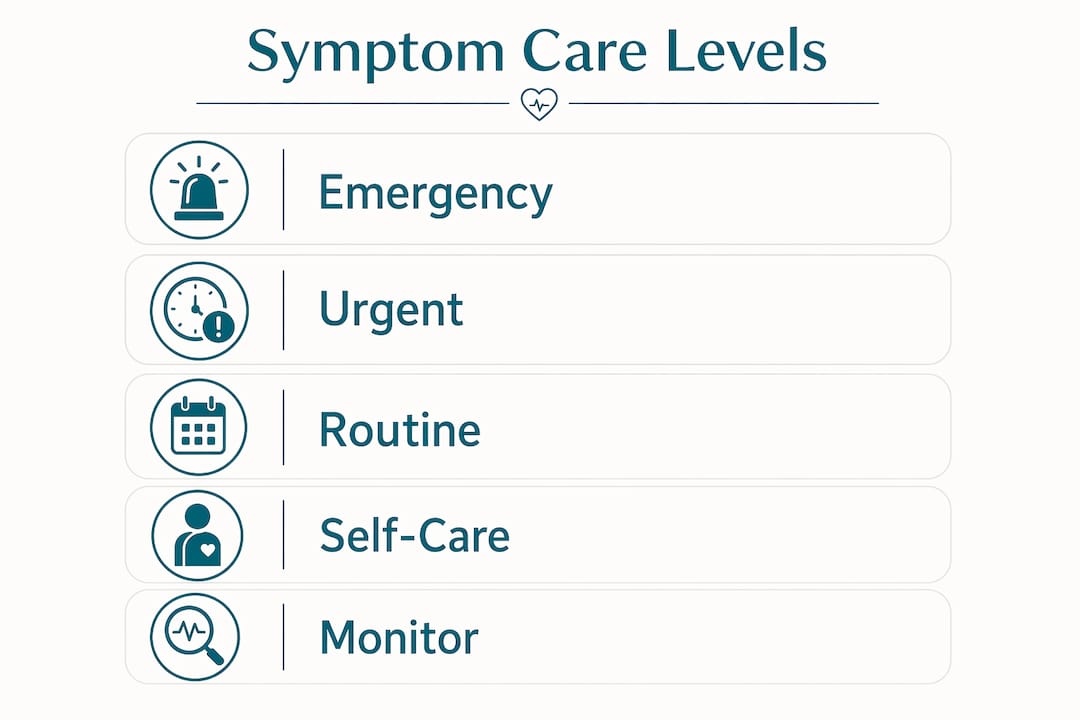
Urgent symptoms need a same-day or next-day appointment. A fever above 38.5°C that does not respond to medication, a new rash spreading quickly, or significant pain that is getting worse all qualify. You do not need the ER, but you should not wait a week either.
Routine symptoms can be monitored at home, with a time limit. Symptoms lasting more than 2–3 weeks should prompt a booked appointment with a primary care provider, even if they seem mild or unchanged. Mild symptoms that persist are not automatically harmless. They signal that your body has not resolved the issue on its own.
| Symptom type | Examples | Recommended action |
|---|---|---|
| Emergency | Stroke signs, chest pain, meningitis symptoms | Call 911 or go to ER immediately |
| Urgent | High fever, spreading rash, worsening pain | Book same-day or next-day appointment |
| Routine but persistent | Fatigue, mild headache, digestive changes | Book appointment if lasting over 2–3 weeks |
| Mild and short-term | Common cold, minor muscle soreness | Monitor at home for 5–7 days |
> "Watchful waiting is a clinical choice, not mere inaction. Patients need to know which red flag symptoms require prompt re-evaluation even during a monitoring period." — Better Health Medical
What are the best tools for Canadians to check symptoms in plain English?
The right tool gives you a starting point, not a final answer. AI-powered symptom checkers like MediGuide translate complex medical terminology into plain language, offering ranked condition possibilities explained simply before you see a doctor. That ranked list helps you ask better questions and understand what your provider is considering.
The limitations of self-assessment are real and worth knowing. Patients self-assessing symptoms online achieve a correct answer only 36% of the time without professional validation. That number is not a reason to avoid symptom checkers. It is a reason to use them as a starting point, not a conclusion.
Here is how to get the most from a plain-language symptom checker:
- Describe, do not diagnose. Enter what you feel, not what you think is wrong. "Burning sensation when urinating, started two days ago" works better than "I think I have a UTI."
- Use the output as a conversation starter. Print or screenshot the ranked possibilities and bring them to your appointment.
- Check for red flags first. Good symptom checkers flag emergency symptoms before anything else.
- Upload documents when available. Tools like Healthnavigatorai's MediGuide let you upload medical documents for faster, more accurate assessments.
Pro Tip: Use a symptom checker for education, not diagnosis. The goal is to walk into your appointment informed, not to replace the appointment itself.
The mental health assessment process follows the same plain-language principle. Describing emotional symptoms clearly, such as "I have felt persistently low for six weeks and stopped enjoying activities I used to like," gives a clinician far more to work with than "I feel off."
How do you tell your symptom story clearly to a doctor or specialist?
Doctors diagnose patterns, not isolated events. A single headache tells a clinician very little. A headache that appears every Monday morning, lasts four hours, responds to ibuprofen, and started after a new work schedule tells a story. Frequency, triggers, and cyclical patterns give your provider the context needed to understand what is actually happening.
Clear, plain-spoken communication about symptoms improves care prioritization and reduces misunderstandings. Schedulers and doctors use your words to decide how fast you need to be seen. Vague language leads to routine slots. Specific language leads to faster action.
Use this checklist to prepare before any appointment:
- Write down your main symptom in one sentence. Keep it factual and specific.
- Add the timeline. When did it start? Has it changed since then?
- List your triggers. What makes it better? What makes it worse?
- Rate the severity. Use a 1 to 10 scale and note whether it interferes with daily life.
- Note any related symptoms. Even ones that seem unrelated, like fatigue alongside a skin rash.
- List your current medications. Include over-the-counter drugs, vitamins, and supplements.
- Mention what you have already tried. Rest, medication, dietary changes, and whether they helped.
- State your concern directly. "I am worried this could be X" is a legitimate and useful thing to say.
Clinicians say that patients who openly express uncertainty actually help with effective care prioritization. Saying "I am not sure if this is serious, but it has not gone away" is more useful than staying silent about your concern. Expressing uncertainty clearly helps schedulers and doctors decide where you fit in the queue.
Emotional language and clinical language serve different purposes. "I feel terrible" is emotional. "I have had a fever of 38.8°C for three days and cannot keep food down" is clinical. Use both. Start with the clinical facts, then add how it is affecting your life. That combination gives your provider the full picture.
Key Takeaways
Describing symptoms in plain, structured language is the single most effective thing Canadians can do to improve their healthcare outcomes and speed up specialist referrals.
| Point | Details |
|---|---|
| Use the QPRCS method | Describe Quality, Provocation, Region, Chronology, and Severity for every symptom. |
| Know your urgency level | Emergency symptoms need 911; persistent mild symptoms need a booking after 2–3 weeks. |
| Self-assessment has limits | Online symptom checkers are correct only 36% of the time without professional follow-up. |
| Prepare before appointments | A written symptom summary with medications saves time and improves diagnostic accuracy. |
| Patterns matter more than single events | Frequency, triggers, and timing give doctors the context needed for accurate diagnosis. |
Why plain language changed how I think about symptom checking
Most people walk into a doctor's office having rehearsed a vague summary in their head. They say "I have been feeling off" and expect the clinician to fill in the blanks. That expectation costs time, and in Canada's healthcare system, time is the one resource nobody has to spare.
What I have seen repeatedly is that the patients who get faster referrals and clearer diagnoses are not the ones with the most serious conditions. They are the ones who show up prepared. They have a written note. They know when the symptom started, what makes it worse, and what they have already tried. That preparation signals to a clinician that this person is worth listening to carefully.
The 36% self-diagnosis accuracy rate is not a failure of patients. It is a failure of the tools available to them. Most symptom checkers dump a list of conditions on you without explaining what they mean or what to do next. That is where plain-language tools like Healthnavigatorai's MediGuide make a real difference. They do not just name a condition. They explain it in words you can actually use in a conversation with your doctor.
My honest advice: stop trying to diagnose yourself and start trying to describe yourself. Your job is not to figure out what is wrong. Your job is to give your provider enough clear information to figure it out quickly. The right symptom checker helps you do exactly that.
> — Rishi
How Healthnavigatorai's MediGuide helps Canadians check symptoms simply
Healthnavigatorai built MediGuide specifically for Canadians who want to understand their symptoms before seeing a doctor. MediGuide is free, requires no sign-up, and keeps your personal data private.
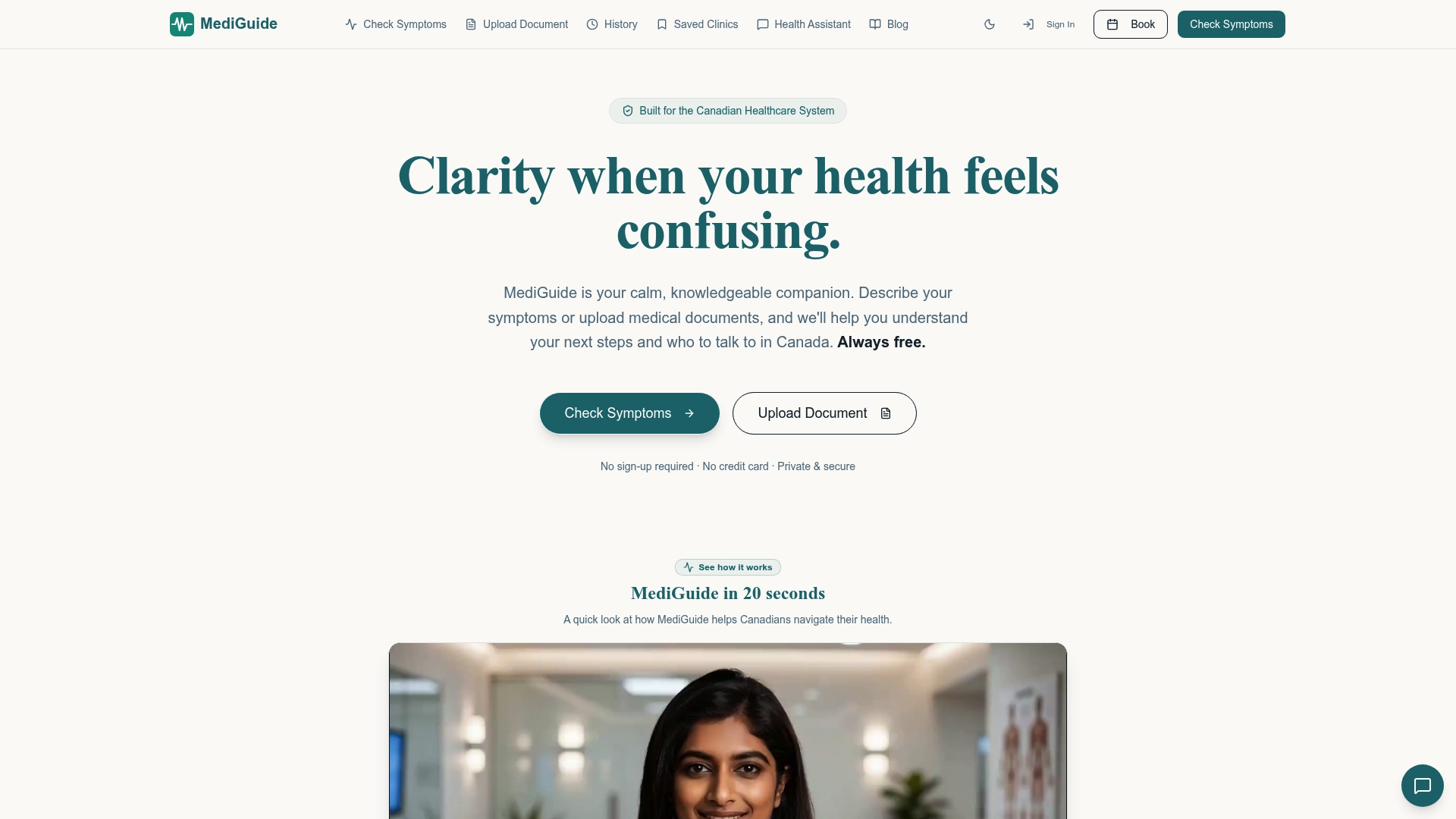
You describe your symptoms in plain English or upload a medical document, and MediGuide returns a clear, ranked assessment with next steps. It connects you to the right specialist and shows average wait times in your region. No medical jargon. No guesswork. Just clear guidance on what to do next. Start your free symptom check now and walk into your next appointment already informed.
FAQ
What does it mean to check symptoms in plain language?
Checking symptoms in plain language means describing what your body is experiencing in simple, everyday words rather than medical terminology. The goal is to communicate clearly with healthcare providers so they can prioritize and diagnose your condition faster.
How do I know if my symptoms need emergency care?
Symptoms like sudden face drooping, chest pain with shortness of breath, or a severe headache with neck stiffness and fever require immediate emergency care. Call 911 or go to an ER right away for any of these signs.
How long should I wait before seeing a doctor about a symptom?
Symptoms lasting more than 2–3 weeks should prompt a booked appointment with a primary care provider, even if they seem mild. Persistent symptoms that do not resolve on their own warrant professional evaluation.
Are online symptom checkers accurate enough to rely on?
Patients self-assessing online achieve a correct answer only 36% of the time without professional validation. Use symptom checkers as a starting point to prepare for your appointment, not as a replacement for professional diagnosis.
What is the QPRCS method for describing symptoms?
QPRCS stands for Quality, Provocation, Region, Chronology, and Severity. It is a structured way to describe symptoms clearly so clinicians can understand your condition quickly and make faster, more accurate decisions.


