

A privacy-first health platform is a healthcare technology system built to protect personal health data by design, giving patients full control over their information at every stage. Unlike standard digital health tools that collect, store, and often monetize user data, a privacy-focused health service treats data protection as its core architecture, not an afterthought. The technical term for this approach is "privacy by design," a framework that embeds data protection into a platform's structure from the ground up. Understanding what separates these platforms from conventional alternatives is the first step toward making an informed choice about your health data.
What is a privacy-first health platform, technically?
A privacy-first health platform is defined by three core technical commitments: local data storage, end-to-end encryption, and minimal data collection. These are not marketing claims. They are architectural decisions that determine whether your health information can ever be accessed, sold, or exposed without your knowledge.
Local-first data storage means your medical records stay on your device rather than uploading to a remote server. This approach makes cloud breaches irrelevant because there is no cloud copy to steal. Some platforms extend this further with on-device AI processing, using hardware like Apple's Neural Engine to analyze data without it ever leaving your phone or computer.
Zero-knowledge encryption means the platform mathematically cannot read your data. Encryption and key derivation happen exclusively within your browser or device. The provider holds no key and therefore has no access, even if compelled by a court order or targeted by a hacker.

Platforms that avoid telemetry, analytics, and error-reporting tools demonstrate a deeper commitment to privacy. This matters because a platform can be externally secure while still collecting behavioral data internally. Security and privacy are not the same thing.
Pro Tip: Check a platform's privacy policy for the phrase "we do not collect telemetry or analytics." If that language is absent, assume some form of behavioral tracking is active.
Key technical features to look for
- Offline-ready functionality: The app works without an internet connection, and data never requires a cloud sync.
- No third-party logins: Requiring a Google or Facebook login hands your identity to a third party immediately.
- No persistent cloud identity: Your account, if one exists at all, does not link your health data to an external profile.
- Zero-knowledge key management: True privacy platforms give users control over encryption keys with no administrative backdoor. If you lose your key, the platform cannot recover it.
- Subscription or private-pay model: Subscription-based platforms commit explicitly to not monetizing user data, unlike free apps that rely on data harvesting to generate revenue.
What laws govern health data privacy platforms?
HIPAA does not cover consumer-generated health data from wellness apps, fitness trackers, or symptom checkers. That regulatory gap is significant. It means the health data you generate outside a clinical setting has historically had far less legal protection than your hospital records.
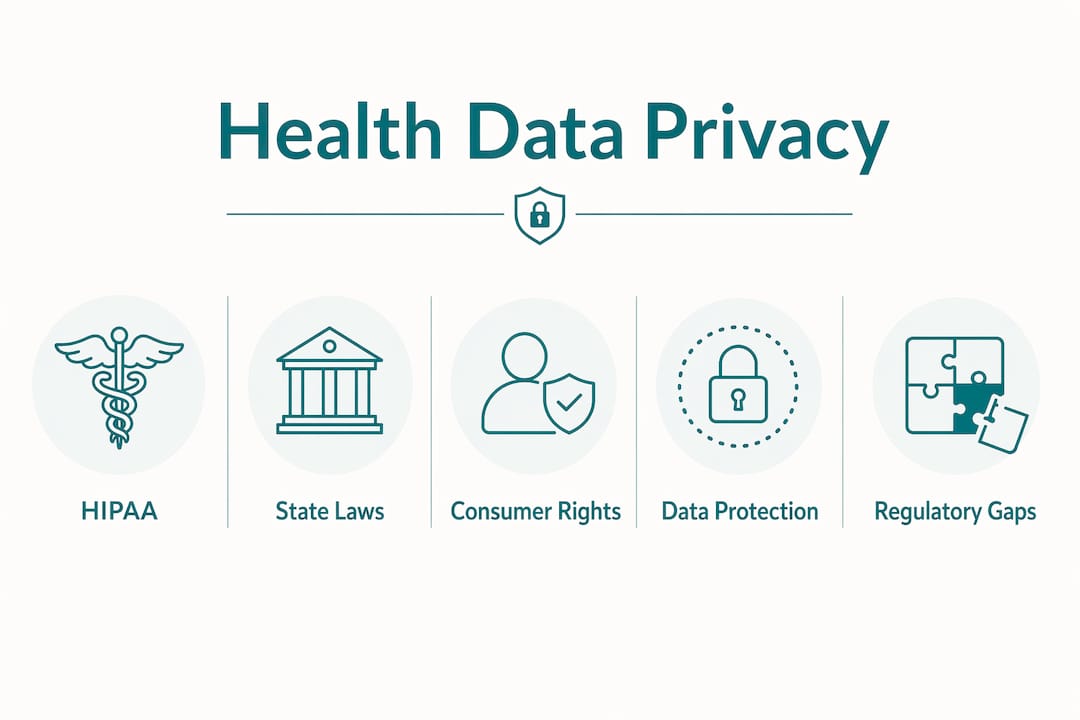
State laws are filling that gap. Washington State's "My Health, My Data" Act is the most comprehensive example. The law mandates "clear affirmative acts" for consent, prohibiting broad terms of use or deceptive design to collect sensitive health data. That means a platform cannot bury consent inside a 40-page terms-of-service agreement. California's CPRA imposes similar consent and transparency requirements on businesses handling consumer health information.
Washington's law covers "consumer health data" broadly, including mental and physical health information. Regulated entities must restrict data access, provide clear privacy policies, and limit processing to only what is necessary for the service requested. That principle is called data minimization, and it is a cornerstone of privacy by design.
Consumer rights under current privacy laws
Patients and health app users now hold several enforceable rights under state-level frameworks:
- Right to access: You can request a copy of all data a platform holds about you.
- Right to delete: You can demand permanent deletion of your health data.
- Right to opt out: You can refuse the sale or sharing of your data with third parties.
- Affirmative consent: Platforms must obtain explicit, informed agreement before collecting sensitive health data.
- Data minimization: Platforms may only collect what is strictly necessary for the service you requested.
Pro Tip: Before using any health app, search "[platform name] + privacy policy + data sharing" to find independent reviews. Regulatory filings and app store privacy labels also reveal what data categories a platform collects.
For a deeper look at how Canadian privacy law applies to personal health information protections, the regulatory picture shares many of the same principles.
How do you spot a genuinely private health platform?
Privacy claims are easy to make and hard to verify. The difference between a true privacy-first platform and one that uses privacy as a marketing label shows up in specific, checkable behaviors.
Red flags appear quickly when you know what to look for. Platforms requiring third-party logins or extensive data-sharing permissions signal weaker privacy protections from the start. Excessive app permissions, such as access to your contacts or location when those are irrelevant to health guidance, indicate data collection beyond what the service requires. A lack of offline capability means your data must travel to a server, which creates exposure.
Indicators of genuine commitment look different. A clear, plain-language encryption policy that specifies key management tells you the platform has thought through its architecture. Offline data portability, meaning you can export your records in a standard format, shows the platform does not hold your data hostage. The absence of advertising within the app removes the financial incentive to profile you.
Understanding how health app permissions work gives you a practical framework for evaluating any platform before you share a single symptom.
Practical checklist before you sign up
- Does the platform work offline, at least partially?
- Does it require a third-party login (Google, Apple, Facebook)?
- Does the privacy policy explicitly state that data is not sold or shared?
- Does it use end-to-end or zero-knowledge encryption?
- Can you delete your account and all associated data on demand?
- Is the platform funded by subscriptions rather than advertising?
A "no" answer to any of these questions is not automatically disqualifying, but it warrants a closer read of the privacy policy before you proceed.
What are the real benefits of privacy-first health systems?
The most immediate benefit is trust. When a platform cannot access your data, you can describe symptoms honestly without worrying that your search history will affect your insurance rates or employment. That psychological safety changes how people use health tools. Patients who trust a platform share more complete information, which leads to better guidance.
Patient data protection also reduces your exposure to secondary harms. Health data is among the most valuable categories of personal information on the secondary market. A breach of your financial data is recoverable. A breach of your mental health history, reproductive health records, or chronic condition data carries consequences that are far harder to reverse.
There is one tradeoff worth understanding. Zero-recovery key models mean that if you lose your encryption key, the platform cannot restore your data. That is the price of true privacy. No backdoor means no recovery path. Patients who choose these platforms need to manage their own key backups, which adds a small but real responsibility.
The long-term benefit is coordinated health intelligence. Private-pay and membership-based models allow platforms to build a complete, longitudinal picture of your health without fragmenting it across multiple providers or monetizing it along the way. That continuity produces better health outcomes over time.
Key Takeaways
A privacy-first health platform protects patient data through architecture, not policy promises, using local storage, zero-knowledge encryption, and minimal data collection as its foundation.
| Point | Details |
|---|---|
| Privacy by design | True platforms build data protection into their architecture, not as an add-on feature. |
| Zero-knowledge encryption | Encryption keys stay on your device only; the provider cannot access or recover your data. |
| Regulatory gap | HIPAA does not cover consumer health apps; state laws like Washington's "My Health, My Data" Act fill this gap. |
| Red flag detection | Third-party login requirements and excessive app permissions signal weaker privacy commitments. |
| Subscription models | Fee-based platforms remove the financial incentive to monetize your health data. |
Privacy is a design decision, not a promise
I have spent years watching health technology companies treat privacy as a compliance checkbox. A policy gets written, a lawyer approves it, and the platform continues collecting behavioral data that never appears in the terms of service. The gap between what platforms say and what they do is wide, and most patients never see it.
What changed my thinking was understanding the architecture argument. Privacy is not something you add to a platform after it is built. It is a consequence of specific decisions made at the design stage: where data lives, who holds the keys, whether the app needs a network connection to function. When those decisions favor the user, privacy follows. When they favor the platform's business model, no privacy policy can compensate.
The trend I find most encouraging is offline AI processing. The idea that a platform can analyze your symptoms using a model running entirely on your device, with no data leaving your hardware, was theoretical a few years ago. It is practical now. That architectural shift removes the central vulnerability that makes most health apps risky.
My advice is simple. Ignore the privacy badge on the app store listing. Read the technical documentation. Ask whether the platform can function without an internet connection. Ask who holds your encryption key. Those two questions will tell you more about a platform's real privacy commitment than any marketing copy ever will. Support the platforms that give you honest answers.
> — Rishi
Healthnavigatorai's approach to secure health guidance
Healthnavigatorai built its MediGuide tool around the same principles this article describes. No sign-up is required, no personal data is sold or shared, and the platform operates under strict privacy protocols from the moment you describe a symptom or upload a document.
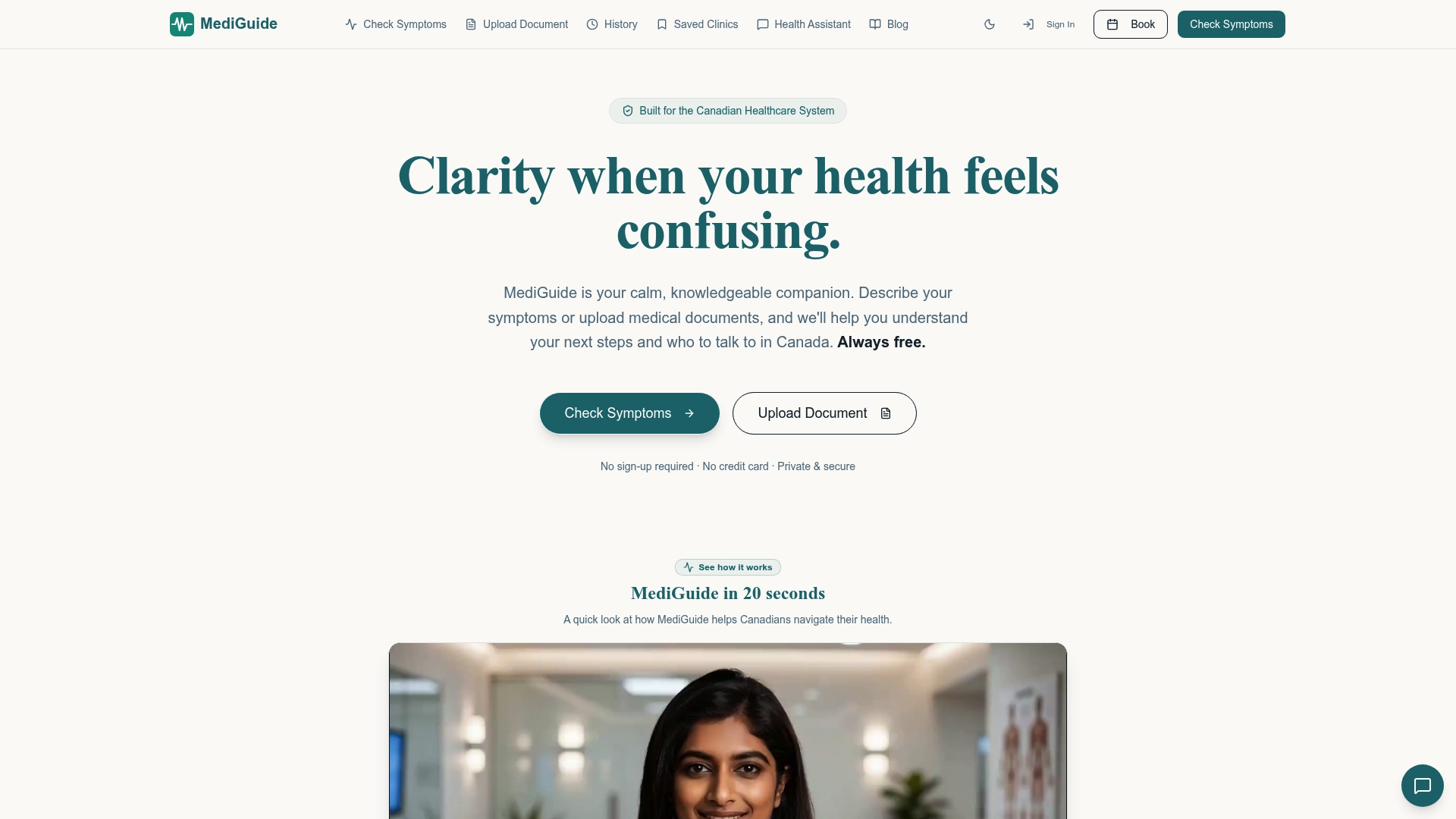
MediGuide is entirely free and connects Canadians to the right specialists based on their symptoms, with average wait times specific to their region. You get real guidance without creating a data trail. Check your symptoms privately, or upload a medical document for a plain-English assessment. Your health information stays yours.
FAQ
What is a privacy-first health platform?
A privacy-first health platform is a digital health service built to protect personal health data by design, using local storage, end-to-end encryption, and minimal data collection to keep patient information under user control.
Does HIPAA protect data from health apps?
HIPAA does not cover consumer-generated health data from wellness apps or symptom checkers. State laws like Washington's "My Health, My Data" Act and California's CPRA fill this regulatory gap for consumer health data.
What is zero-knowledge encryption in health platforms?
Zero-knowledge encryption means the platform cannot access your data because encryption keys exist only on your device. Even if the platform is breached or compelled by law, your data remains unreadable to anyone but you.
How can I tell if a health app truly protects my privacy?
Check whether the app requires a third-party login, works offline, and explicitly states it does not sell or share data. Reviewing health app permissions before signing up reveals the platform's real data practices.
Are free health platforms less private than paid ones?
Free platforms often rely on data harvesting to generate revenue, which creates a direct conflict with privacy. Subscription-based platforms remove that financial incentive and typically commit explicitly to not monetizing user data.


