

Transparency in health platforms is defined as the open, accessible sharing of information about healthcare processes, data use, and the reasoning behind medical decisions. The role of transparency in health platforms goes far beyond legal compliance. It directly shapes whether patients trust a platform, follow its guidance, and feel confident in their care. Research from Scientific Reports involving 517 U.S. adults confirms that patient trust is highest when health information sources are transparent and interactive. The OECD Recommendation on Health Data Governance identifies transparent data access as a prerequisite for patient-centered digital health systems. Without transparency, even technically accurate platforms fail to earn the confidence patients need to act on health information.
How does transparency shape trust in health platforms?
Transparency is the single strongest predictor of patient trust in digital health platforms. A 2026 study published in Scientific Reports found that non-transparent, static systems produced the lowest trust scores among 517 U.S. adults tested across multiple platform types. That finding has a direct implication: platforms that hide their data practices or bury policies in legal text are actively eroding the trust they need to function.
The connection between transparency and trust runs through a concept researchers call "perceived ethicality." When patients see a platform openly explaining how it uses their data, they interpret that openness as a signal of integrity. A statistically significant study on digital health platform adoption found that perceived transparency directly increases adoption intention, with a direct effect of β = 0.27 at p < 0.01. Patients read transparency as reliability, not just policy compliance.

Transparency also strengthens patient autonomy. When patients understand what a platform does with their information, they ask sharper questions and make more deliberate healthcare choices. The OECD's work on people-centered digital health confirms that patients with clear access to their personal health data are better equipped to verify accuracy and maintain continuity of care. That is not a soft benefit. It reduces medical errors and improves outcomes.
The trust effect compounds when transparency combines with interactivity. The Scientific Reports study found that transparency paired with interactivity created the highest trust scores of any platform configuration tested. Interactivity alone was not enough. Transparency alone was not enough. Together, they produced a force multiplier effect that no other combination matched.
- Transparent platforms signal ethical intent, not just legal compliance.
- Interactive features amplify the trust gains from transparency.
- Patients who trust a platform are more likely to follow its guidance.
- Opaque systems produce measurably lower trust, regardless of their accuracy.
Pro Tip: When evaluating a health platform, look for plain-language explanations of data use, not just a privacy policy link. If you cannot find a clear answer within 60 seconds, the platform is not designed with your trust in mind.
Why does transparency matter more than AI accuracy in health platforms?
AI-powered health platforms face a specific trust problem: patients cannot see inside the algorithm. Researchers at Ohio University published findings in 2026 showing that transparency outweighs AI accuracy in building trust between patients and primary care providers using AI tools. That result surprises most people. A more accurate AI that explains nothing earns less trust than a less accurate one that explains its reasoning clearly.
The explanation is straightforward. Patients are not engineers. They cannot evaluate an algorithm's accuracy directly. What they can evaluate is whether a platform tells them what the AI is doing and why. When that explanation is present, patients extend trust to the AI and to the provider using it. When it is absent, skepticism fills the gap.
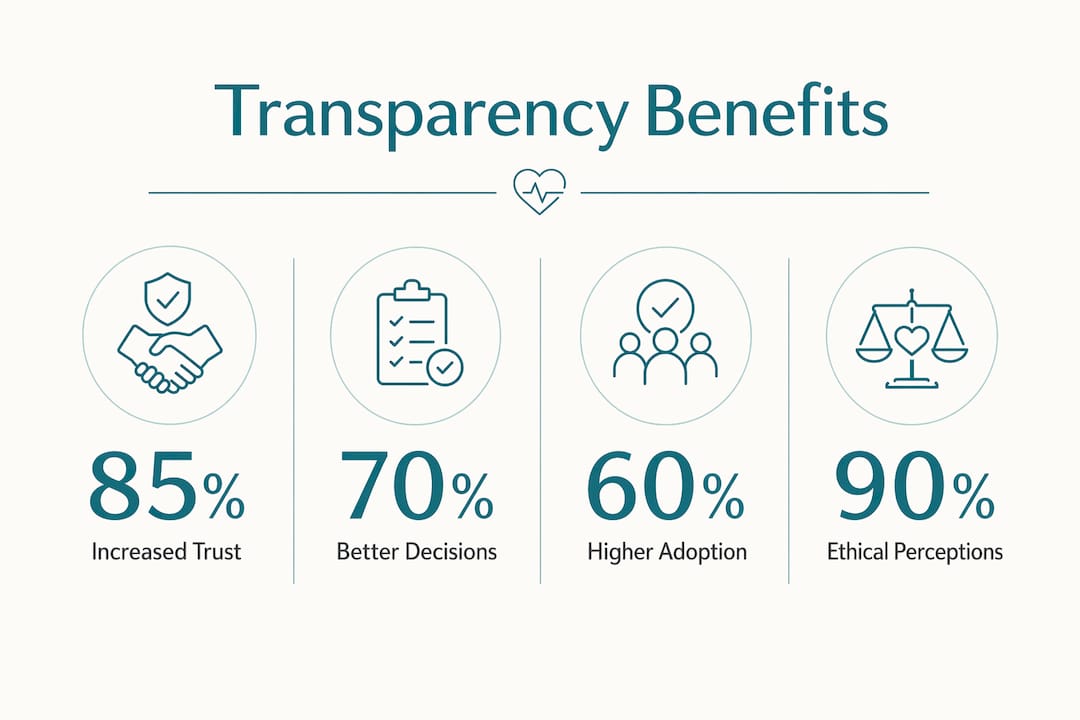
A single-factor experiment with 151 participants found that AI transparency increases follow-through on health guidance by raising perceptions of AI competence and agency. Patients who understood what the AI was doing were more likely to act on its recommendations. That is the practical payoff of process transparency.
The key distinction here is between technical transparency and process transparency. Technical transparency means publishing model architecture or training data. Process transparency means telling a patient, in plain language, that the AI flagged their symptoms as consistent with a specific condition and recommends a follow-up with a specialist. Patients need process transparency. Technical transparency serves researchers, not patients.
- Explain what the AI assessed, not how the algorithm works internally.
- State the confidence level or limitation of the AI's output in plain language.
- Connect the AI's finding to a specific next step the patient can take.
- Disclose whether the AI recommendation is reviewed by a clinician.
- Make it easy for patients to ask follow-up questions or seek a second opinion.
Pro Tip: If a health platform uses AI, check whether it tells you what the AI found and what to do next. A platform that only gives you a result without context is not being transparent about its process.
What does user-centric transparency actually look like?
Most health platforms treat transparency as a legal obligation. They publish a privacy policy, check the compliance box, and move on. That approach fails patients. Accessible communication rather than mere data availability is what actually builds adoption and trust, according to research on digital healthcare platforms in low-resource settings. The lesson applies universally: legal language is not the same as transparency.
User-centric transparency replaces dense policy documents with tools patients can actually use. Visual data flow diagrams show patients exactly where their information goes after they submit it. Localized language interfaces present information in the vocabulary patients use in their daily lives, not the vocabulary lawyers use in contracts. Visual consent tools let patients make active choices about data sharing rather than accepting a wall of text.
The OECD's health data governance framework reinforces this point. Giving patients clear access to personal health data empowers them to verify accuracy and maintain continuity of care. That access only works when the presentation is genuinely understandable. A data portal buried behind three login screens and written in technical language is not transparent. It is theater.
Understanding your digital health footprint is a practical starting point for evaluating whether a platform meets this standard. Platforms that make this information easy to find and understand are the ones worth trusting.
- Plain-language summaries replace legal boilerplate with one-paragraph explanations of data use.
- Data flow diagrams show patients visually where their information travels after submission.
- Granular consent controls let patients opt in or out of specific data uses, not just accept all or nothing.
- In-app explanations answer common questions about data security without requiring patients to leave the platform.
- Accessible privacy inquiries give patients a direct, simple way to ask questions about their data.
The shift from legalistic to user-centric transparency is not cosmetic. Research confirms that ethical perceptions driven by transparent practices are the primary driver of health platform adoption in resource-constrained environments. Patients who understand a platform's practices adopt it. Patients who do not understand those practices avoid it, regardless of the platform's technical quality.
What challenges block transparency in health platforms?
Transparency is harder to implement than most platforms acknowledge. The biggest structural barrier is interoperability. The OECD's 2026 report on health data management found that interoperability challenges fragment health information flow, leaving patients and providers confused about where data lives and who controls it. A patient whose records are split across three systems cannot get a transparent view of their own health history, even if each individual system is technically compliant.
Cultural and ethical challenges add another layer of complexity. Transparency practices designed for one population often fail another. A data consent interface built for English-speaking urban patients may be incomprehensible to patients in rural communities or those who speak a different primary language. Genuine transparency requires localization, not just translation.
| Challenge | Impact on transparency | Path forward |
|---|---|---|
| Fragmented data silos | Patients cannot see a complete picture of their health data | Adopt interoperable standards like HL7 FHIR |
| Legalistic privacy policies | Patients do not read or understand data practices | Replace with plain-language summaries and visual tools |
| Cultural and language barriers | Consent tools fail non-dominant language speakers | Localize interfaces and use visual consent formats |
| AI opacity | Patients distrust AI outputs they cannot interpret | Implement process transparency, not just technical disclosure |
| Low digital literacy | Complex interfaces exclude vulnerable populations | Design for the lowest common denominator of digital skill |
Governance frameworks offer the clearest path forward. The OECD Recommendation on Health Data Governance calls for interoperable, patient-centered transparency as a design standard, not an afterthought. Platforms that build transparency into their architecture from the start avoid the costly retrofitting that compliance-first platforms face later. The private health inquiry process in Canada reflects this shift, moving toward user-centric disclosure as a baseline expectation rather than an optional feature.
Key Takeaways
Transparency in health platforms is the most reliable driver of patient trust, adoption, and informed decision-making, outweighing even AI accuracy in building confidence between patients and providers.
| Point | Details |
|---|---|
| Transparency drives trust | Transparent, interactive platforms produce the highest patient trust scores in controlled research. |
| AI process clarity matters most | Patients trust AI tools more when platforms explain what the AI found, not how it works technically. |
| Legal policies are not enough | User-centric tools like data flow diagrams and plain-language summaries build real trust. |
| Interoperability is a transparency barrier | Fragmented data systems prevent patients from seeing a complete, accurate picture of their health. |
| Governance frameworks set the standard | OECD Health Data Governance recommendations push for interoperable, patient-centered transparency by design. |
Transparency is the foundation, not a feature
I have spent years watching health platforms treat transparency as a checkbox. They publish a privacy policy, add a cookie banner, and call it done. That approach misses the point entirely. Transparency is not a legal shield. It is the reason patients decide to trust you in the first place.
What strikes me most about the 2026 research from Ohio University is how counterintuitive the finding is. Accuracy does not win trust. Explanation does. A platform that tells patients exactly what it found, why it matters, and what to do next will outperform a technically superior platform that stays silent about its process. That is a design principle, not just a research finding.
The platforms I find most credible are the ones that make transparency feel effortless. They do not make patients hunt for data policies. They do not hide consent options behind five menus. They put the important information where patients naturally look, in plain language, with a clear path to ask questions. That is not complicated to design. It is just rarely prioritized.
My advice is direct: treat transparency as a deciding factor when you choose a digital health platform. Ask whether the platform tells you what it does with your data, what its AI is actually assessing, and how to get a human involved if you need one. If those answers are hard to find, the platform is not designed with your interests at the center.
> — Rishi
Healthnavigatorai puts transparency at the center of health guidance
Healthnavigatorai is built on the principle that patients deserve clear, honest answers, not confusing medical jargon or hidden data practices. Every interaction on the platform is free, requires no sign-up, and operates under strict privacy protocols that prohibit selling or sharing personal data.
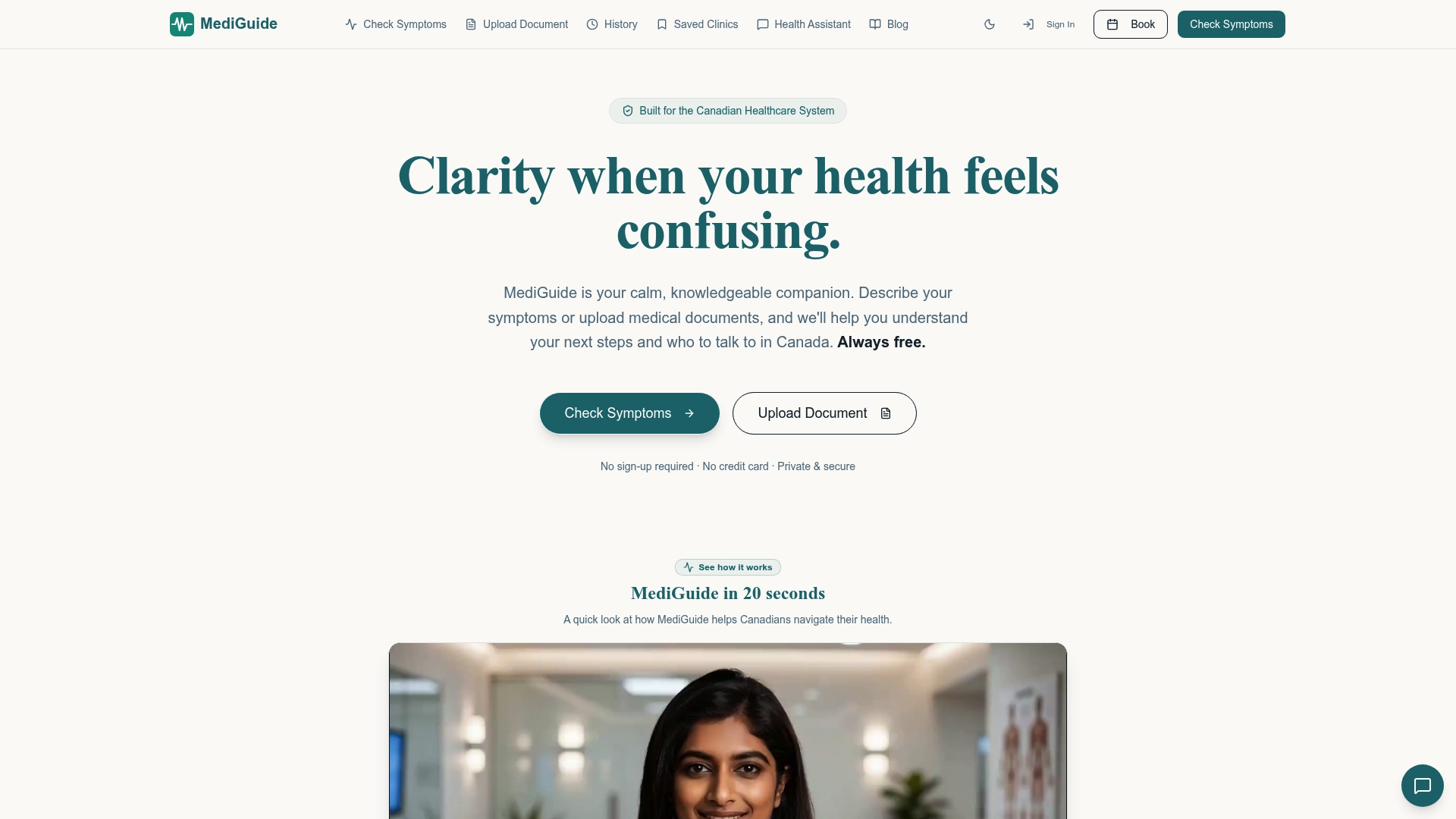
Patients can check their symptoms and receive plain-English assessments that explain what the findings mean and what to do next, including which specialists to see and average wait times in their region. For patients with medical documents, the document upload tool delivers transparent, comprehensible analysis without requiring a clinic visit. Healthnavigatorai gives Canadians the kind of clear, trustworthy health guidance that builds real confidence in their next steps.
FAQ
What is transparency in health platforms?
Transparency in health platforms means openly sharing clear, accessible information about how healthcare data is used, how decisions are made, and what patients can expect from the platform's processes.
How does transparency affect patient trust?
Research involving 517 U.S. adults found that transparent, interactive health platforms produce the highest patient trust scores, while non-transparent, static systems produce the lowest.
Does AI accuracy matter more than transparency for patient trust?
Researchers at Ohio University found in 2026 that transparency matters more than AI diagnostic accuracy in building trust between patients and providers using AI tools.
What makes a health platform genuinely transparent?
Genuine transparency goes beyond privacy policies. It includes plain-language data summaries, visual consent tools, data flow diagrams, and clear explanations of what any AI assessment found and what the patient should do next.
What barriers prevent health platforms from being transparent?
The main barriers are fragmented data silos that limit information flow, legalistic privacy policies that patients cannot understand, and AI systems that provide results without explaining their reasoning.


