

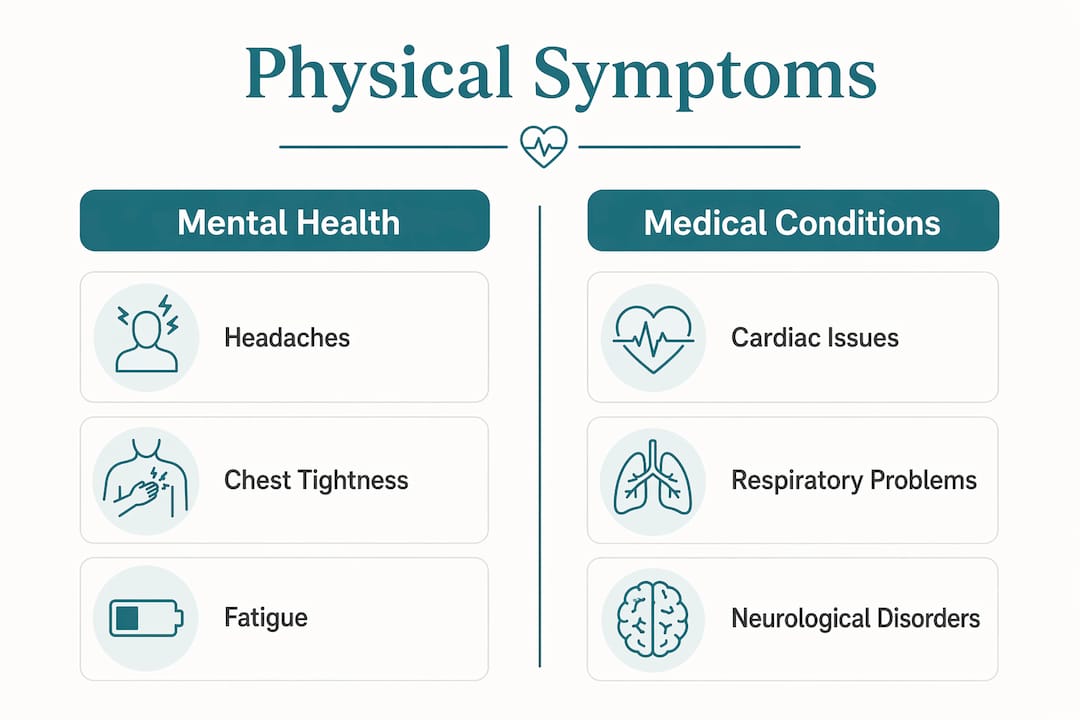
Mental health symptoms present physically as real, measurable body sensations, including headaches, chest tightness, fatigue, and digestive distress. These are not imagined. They are legitimate physiological responses to stress, anxiety, and depression. The medical term for this is somatization, the process by which psychological distress converts into physical symptoms. Recognizing how mental health symptoms present physically is the first step toward getting the right care. Millions of people visit doctors each year for physical complaints that trace back to anxiety or depression, often without realizing the connection.
What are the common physical symptoms of mental health conditions?
Mental health conditions produce a wide range of physical symptoms that can feel alarming and confusing. The body does not separate emotional pain from physical pain. When the mind is under stress, the body responds in kind.
The most frequently reported physical symptoms include:
- Headaches and muscle tension: Anxiety and depression commonly cause tension headaches, jaw clenching, and tightness in the neck and shoulders. Chronic muscle tension is one of the earliest physical signs of stress.
- Digestive problems: Nausea, stomach cramping, diarrhea, and appetite changes are common somatic symptoms of depression and anxiety. The gut and brain share a direct communication pathway, so emotional distress hits the digestive system fast.
- Cardiovascular signs: Chest tightness, heart palpitations, and a racing pulse are hallmark physical symptoms of anxiety. These sensations can mimic a cardiac event, which is why they cause so much fear.
- Fatigue and sleep disturbances: Persistent tiredness that does not improve with rest is a core somatic symptom of depression. Sleep disruption, whether insomnia or oversleeping, compounds physical exhaustion.
- Neurological symptoms: Dizziness, tingling in the hands or face, trembling, and shortness of breath are all documented physical symptoms of anxiety. These often result from hyperventilation during anxious episodes.
- Other signs: Sweating, weight changes, and a sensation of something stuck in the throat (called globus sensation) round out the picture.
Understanding this list matters because many people seek treatment for the physical symptom without ever addressing the mental health root cause. That cycle can go on for years.
How does the body's stress system create physical symptoms?

The body's stress response is the engine behind most physical symptoms tied to mental health. When you perceive a threat, real or imagined, the sympathetic nervous system fires and triggers the fight-or-flight response. This is not a metaphor. It is a cascade of hormonal and neurological events.
Here is how the process unfolds:
- The HPA axis activates. The hypothalamic-pituitary-adrenal axis releases cortisol and adrenaline. These hormones raise heart rate, tighten muscles, and redirect blood flow away from digestion.
- Breathing changes. Anxious breathing becomes shallow and fast. This causes hyperventilation, which lowers carbon dioxide in the blood and triggers respiratory alkalosis. The result is tingling, dizziness, and a feeling of unreality.
- The gut shuts down. Cortisol suppresses digestive function. Blood leaves the stomach and intestines. Nausea, cramping, and diarrhea follow.
- Muscles stay tense. The body prepares to fight or flee by tensing major muscle groups. When stress is chronic, those muscles never fully relax, producing persistent pain in the neck, back, and jaw.
- Inflammation builds. Chronic stress-related activation increases systemic inflammation and raises long-term cardiovascular risk. This is why untreated anxiety and depression are linked to heart disease over time.
Pro Tip: Slow diaphragmatic breathing, inhaling for four counts and exhaling for six, directly counters the fight-or-flight response. It lowers heart rate and cortisol faster than any cognitive technique alone.
The key insight here is that the stress system was designed for short bursts of danger. When mental health struggles keep it chronically activated, the physical damage accumulates in real, measurable ways.
How do physical symptoms from mental health overlap with other medical conditions?
This is where things get genuinely complicated. The physical symptoms of anxiety and depression overlap significantly with those of cardiac, gastrointestinal, and neurological conditions. A racing heart could be anxiety or atrial fibrillation. Stomach pain could be stress or Crohn's disease. Dizziness could be hyperventilation or a vestibular disorder.
The table below shows common overlaps and the distinguishing patterns that point toward a mental health origin.
| Symptom | Possible medical cause | Mental health pattern |
|---|---|---|
| Chest tightness | Cardiac arrhythmia, angina | Worsens with stress, normal ECG results |
| Dizziness | Inner ear disorder, low blood pressure | Triggered by anxiety, resolves with calm breathing |
| Stomach pain | IBS, Crohn's disease | Fluctuates with emotional state, normal imaging |
| Fatigue | Thyroid disorder, anemia | Persists despite normal bloodwork, linked to mood |
| Tingling in hands | Peripheral neuropathy, MS | Follows hyperventilation, resolves quickly |
Clinical guidelines recommend ruling out organic causes first. Patterns suggesting mental health origin include symptoms that worsen with stress, improve during rest, and persist despite normal test results. A primary care physician is the right starting point. Getting medical clearance before attributing symptoms to mental health is not optional. It is the responsible path.
Tracking your symptoms in a journal helps enormously. Note when symptoms appear, what was happening emotionally, how long they lasted, and what made them better or worse. This data helps your doctor see patterns that a single appointment cannot reveal. Symptom pattern tracking is one of the most practical tools for accurate diagnosis.
One important nuance: physical symptoms of anxiety can trigger health anxiety, a cycle where the symptom itself becomes a source of fear, which intensifies the symptom. Recognizing that sensations like globus and tingling are often benign effects of hyperventilation, not signs of serious illness, breaks that cycle.
What practical steps can you take to manage these physical symptoms?
Managing the physical symptoms of mental health conditions requires addressing both the body and the mind. Cognitive insight alone does not reset a nervous system stuck in high gear. Body-based approaches are equally necessary.
Practical steps that work:
- Practice diaphragmatic breathing daily. This is not just a relaxation exercise. It directly regulates the nervous system by activating the parasympathetic response. Five minutes twice a day produces measurable changes in heart rate variability.
- Track your symptoms and triggers. A simple notebook or phone note works. Record the symptom, the time, your stress level, and what you were doing. Patterns emerge within two weeks.
- Seek multidisciplinary care. The best practice for managing mental health's physical symptoms combines medical clearance, therapy (particularly cognitive behavioral therapy or Somatic Experiencing), and stress reduction skills. No single approach covers all the ground.
- Do not self-diagnose. Physical symptoms that interfere with daily life signal an urgent need for professional evaluation. Assuming a cause without testing it delays effective treatment.
- Know when to go to the ER. Chest pain with shortness of breath, sudden severe headache, or numbness on one side of the body require immediate medical attention. These symptoms need to be ruled out as medical emergencies before any mental health explanation applies.
Pro Tip: Somatic Experiencing, a body-focused therapy developed by Dr. Peter Levine, addresses physical sensations directly rather than working through thought patterns. For people whose anxiety lives in the body, it can reach places that talk therapy alone cannot.
Physical and mental health influence each other bidirectionally. Treating only one side of that equation produces incomplete results.
Key Takeaways
Mental health symptoms cause real physical sensations through the body's stress response system, and accurate diagnosis requires both medical evaluation and attention to emotional patterns.
| Point | Details |
|---|---|
| Somatization is real | Physical symptoms like headaches and chest tightness are genuine physiological responses to mental health stress. |
| The fight-or-flight system drives symptoms | Chronic activation of the HPA axis causes inflammation, muscle tension, and digestive disruption. |
| Overlap with medical conditions is common | Always get medical clearance before attributing physical symptoms to mental health causes. |
| Symptom tracking aids diagnosis | Noting when symptoms worsen with stress and improve with rest helps doctors identify mental health patterns. |
| Body-based treatment is necessary | Diaphragmatic breathing and Somatic Experiencing address physical symptoms that cognitive therapy alone cannot resolve. |
What I've learned from watching people miss the mental-physical connection
The most common mistake I see is people spending months chasing a physical diagnosis for symptoms that are driven by anxiety or depression. They get a clean ECG, a normal MRI, and a reassuring blood panel, and then they feel more confused than before. The absence of a medical finding does not mean the symptom is not real. It means the cause is somewhere the standard tests are not looking.
The second mistake is the opposite: assuming every physical symptom is mental health related and skipping the medical workup. That is equally dangerous. I have seen people attribute chest pain to anxiety for months before discovering a cardiac issue. The rule is simple. Get the body systems checked first. Then, if tests are clear and symptoms fluctuate with your emotional state, start looking at the mind-body connection seriously.
What I find most underused is body-based therapy. People are willing to talk about their anxiety for years, but they resist the idea of working with physical sensation directly. Somatic Experiencing and diaphragmatic breathing are not soft options. They are evidence-based tools that change how the nervous system responds. Cognitive work changes what you think. Body work changes how you feel in your skin. You need both.
The last thing worth saying: physical symptoms of mental health conditions carry real stigma. People worry they will not be taken seriously, or that admitting a mental health cause means the symptom was not real. It was real. The body does not lie. Understanding that is not just reassuring. It is the foundation of getting better.
> — Rishi
How Healthnavigatorai helps when physical symptoms leave you with questions
Physical symptoms without a clear diagnosis are stressful. Healthnavigatorai's free AI-powered tool, MediGuide, lets you describe your symptoms in plain language and get an immediate, clear assessment of possible causes and next steps.

No sign-up is required, and your data is never sold or shared. If you have already seen a doctor and received test results, you can upload your medical documents for a deeper review. MediGuide also connects you to the right specialists and shows average wait times in your region. When you are not sure whether what you are feeling is physical, mental, or both, check your symptoms with MediGuide and get clarity fast.
FAQ
Can anxiety actually cause physical pain?
Yes. Anxiety activates the sympathetic nervous system, which causes muscle tension, inflammation, and altered pain perception. Headaches, chest tightness, and stomach pain are all documented physical symptoms of anxiety.
How do I know if my physical symptoms are from mental health or a medical condition?
See a doctor first to rule out organic causes. If tests return normal and symptoms consistently worsen with stress and improve with rest, a mental health origin is likely. Symptom pattern tracking helps clarify this.
What are somatic symptoms of depression?
Somatic symptoms of depression include persistent fatigue, unexplained aches, digestive problems, and changes in appetite or weight. These physical signs often appear before or alongside low mood.
Does treating mental health improve physical symptoms?
Yes. Addressing anxiety or depression through therapy, medication, or stress reduction techniques directly reduces the physical symptoms they cause. Physical and mental health are bidirectionally linked, so improving one improves the other.
When should I go to the emergency room for physical symptoms?
Seek emergency care for chest pain with shortness of breath, sudden severe headache, one-sided numbness, or any symptom that comes on abruptly and severely. These require medical evaluation before any mental health explanation applies.


