
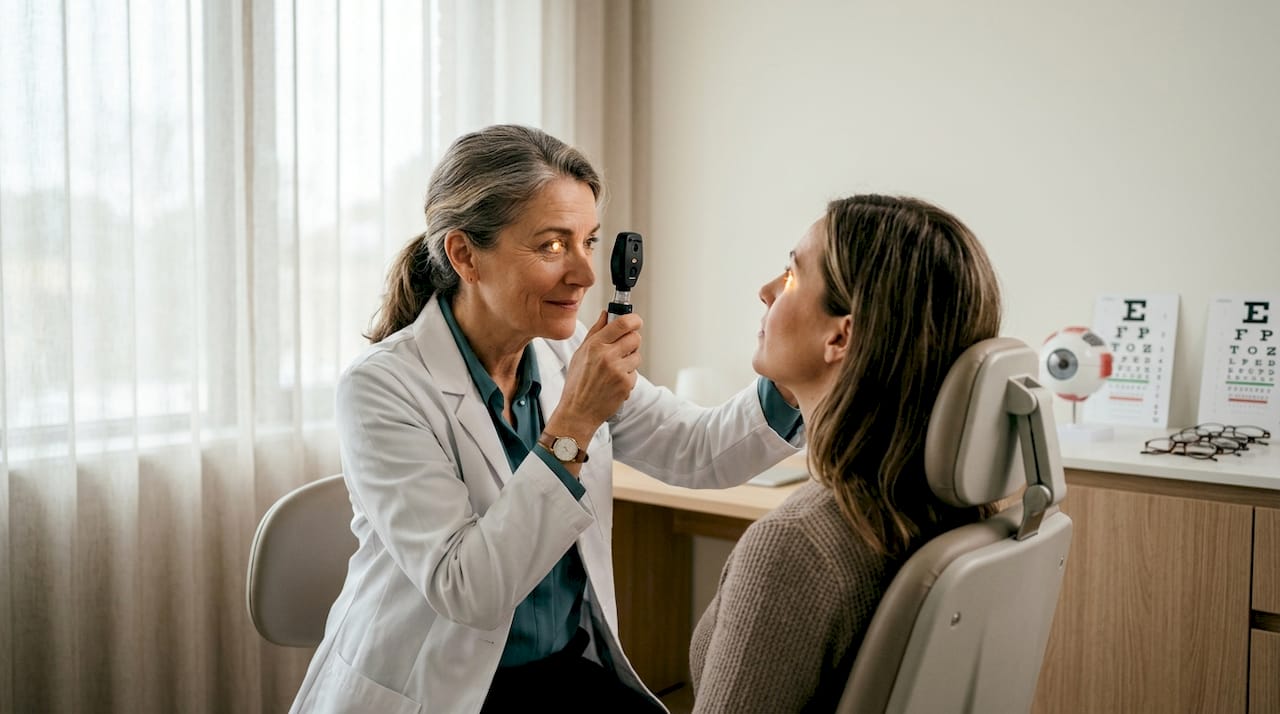
Vision changes are direct signals of eye and systemic health problems, often appearing before any other symptom surfaces. Understanding how vision changes signal health issues gives you a critical head start on conditions ranging from cataracts and glaucoma to multiple sclerosis and autoimmune disease. The eyes are the only place in the body where blood vessels and nerve tissue are visible without surgery. That makes them a uniquely powerful diagnostic window. Recognizing what your eyes are telling you, and acting on it quickly, can mean the difference between a treatable condition and permanent damage.
How do vision changes signal health issues?
The National Eye Institute maps specific vision changes directly to specific diseases. Cataracts cause blurry vision and difficulty with everyday tasks like reading or driving at night. Glaucoma causes progressive vision loss through optic nerve damage. Dry eye disease causes burning, irritation, and intermittent blurring. Each condition produces a distinct symptom pattern. That specificity is what makes vision changes so clinically useful. Your eyes are not just showing you the world. They are also showing your doctor what is happening inside your body.
The medical term for this diagnostic approach is ophthalmic symptom mapping. Clinicians use the character of your vision change, its timing, and any associated signs to triage urgency and guide diagnosis. A person who notices gradual blurring over months gets a very different workup than someone who wakes up with a curtain shadow across their visual field. Knowing which category your symptoms fall into helps you seek the right care at the right speed.

What types of vision changes commonly signal eye diseases?
Different eye diseases produce recognizable and distinct symptom patterns. The table below maps the most common vision changes to their likely causes.
| Vision change | Likely condition | Urgency |
|---|---|---|
| Blurry vision, glare, difficulty at night | Cataracts | Routine |
| Blind spots, halos around lights | Glaucoma | Prompt |
| Sudden floaters, flashes, curtain shadow | Retinal tear or detachment | Emergency |
| Redness, pain, light sensitivity | Uveitis or infection | Urgent |
| Burning, intermittent blur | Dry eye disease | Routine |
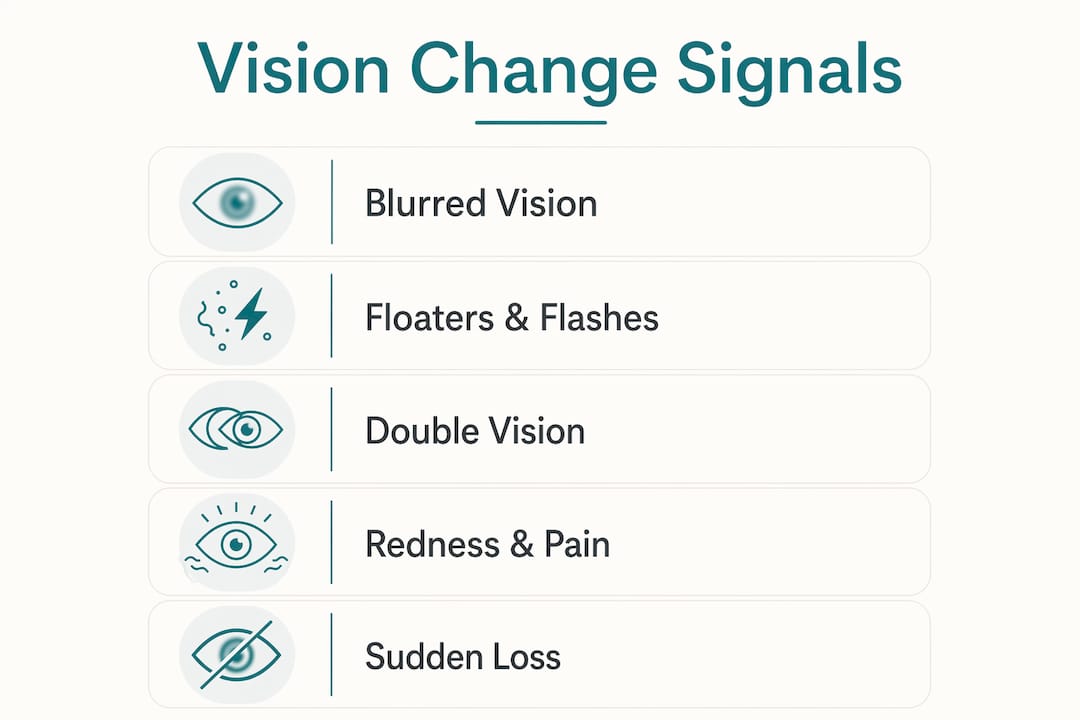
Blind spots and halos around lights are classic signs of glaucoma, caused by elevated eye pressure damaging the optic nerve. Most people with early glaucoma notice nothing until significant nerve damage has already occurred. That is why halos and blind spots matter so much. They are late-stage warnings from a disease that has been silently progressing.
Floaters and flashes deserve special attention. New-onset floaters carry a higher absolute risk of retinal detachment than flashes alone. Multiple floaters appearing suddenly, or floaters combined with flashes and a shadow across your visual field, require same-day evaluation. Delayed treatment converts a repairable retinal tear into permanent vision loss.
- Cataracts: Gradual blurring, increased glare, and faded colors. Symptoms develop over months to years.
- Glaucoma: Peripheral vision loss, halos, and blind spots. Often painless until advanced.
- Retinal detachment: Sudden floaters, flashes of light, and a dark curtain or shadow moving across vision.
- Uveitis or eye infection: Redness, pain, light sensitivity, and blurred vision appearing together.
- Dry eye disease: Burning, stinging, and intermittent blurring that worsens with screen use or dry environments.
Pro Tip: If you notice a sudden increase in floaters combined with flashes of light, cover each eye separately to check whether the shadow or field loss affects one eye or both. Tell your doctor exactly which eye is affected and when the symptoms started. That detail changes the urgency of your referral.
Sudden vs. gradual vision changes: what the difference means
The speed at which a vision change develops tells clinicians as much as the symptom itself. Sudden vision loss points toward vascular or neurological emergencies. Gradual vision decline points toward chronic eye diseases. Getting this distinction right is the fastest way to decide whether you need an emergency room or a scheduled appointment.
- Sudden vision loss in one eye may indicate a central retinal artery occlusion, a stroke affecting the visual cortex, or an acute retinal detachment. Each of these is a medical emergency requiring care within hours.
- Sudden curtain or veil across vision signals retinal detachment risk and requires emergency referral. Waiting even 24 hours increases the chance of permanent damage.
- Sudden double vision with headache or drooping eyelid can indicate a brain aneurysm or cranial nerve palsy. This combination warrants an immediate emergency room visit.
- Gradual blurring over weeks to months typically reflects cataracts, refractive error changes, or early macular degeneration. These warrant a prompt but non-emergency ophthalmology appointment.
- Gradual peripheral vision loss is the hallmark of glaucoma. Because it is painless and slow, many people miss it until the disease is advanced. Annual eye exams catch it before symptoms become obvious.
The practical rule is straightforward. Any vision change that appears within minutes or hours, especially with pain, headache, or neurological symptoms, is an emergency. Any vision change that has been creeping in over weeks or months still needs evaluation, but the timeline is less critical.
Vision changes as early signs of systemic and neurological diseases
The eyes often show signs of systemic disease before any other part of the body does. Ophthalmic signs can precede a formal systemic diagnosis, which is why eye doctors frequently coordinate with neurologists, rheumatologists, and internists.
Autoimmune diseases produce specific eye findings. Myasthenia gravis causes eyelid drooping and double vision from muscle weakness at the neuromuscular junction. Lupus can trigger autoimmune uveitis, presenting as eye pain, redness, and blurred vision. These eye symptoms sometimes appear before the patient or doctor has identified the underlying autoimmune condition.
Multiple sclerosis is another condition where the eyes speak first. Vision decrease in one eye developing over days to weeks, combined with pain when moving the eye and faded color perception, is a recognized early presentation of MS. This pattern is called optic neuritis. Neurologists rely on ophthalmologists to document it accurately because it directly influences MS diagnosis and treatment timing.
- Myasthenia gravis: Eyelid drooping and double vision, often worse at the end of the day when muscles fatigue.
- Lupus-related uveitis: Eye pain, redness, and blurred vision that recurs and requires immunosuppressive treatment.
- Multiple sclerosis (optic neuritis): One-sided vision loss with pain on eye movement and washed-out colors.
- Diabetes: Diabetic retinopathy causes blurring, floaters, and eventual vision loss from damaged retinal blood vessels.
- Hypertension: Hypertensive retinopathy produces changes visible on eye exam before blood pressure causes other symptoms.
Pro Tip: If your eye doctor finds signs of inflammation or nerve changes without an obvious eye disease cause, ask whether a referral to a neurologist or rheumatologist is appropriate. Eye findings that do not fit a standard eye diagnosis often point to a systemic condition that has not yet been identified.
When and how to seek medical help for vision changes
Knowing when to act is as important as knowing what to look for. Red eye combined with vision change, pain, or light sensitivity requires urgent evaluation. Harvard Health clinical guidance is direct on this point: that combination of symptoms is not routine irritation. It signals a condition that can cause permanent damage if left untreated for even a day or two.
- Seek emergency care immediately for sudden vision loss, curtain shadow, sudden double vision with headache, or eye pain with nausea and vomiting.
- Seek urgent care within 24 hours for new floaters with flashes, red eye with pain or light sensitivity, or vision change after an eye injury.
- Schedule a prompt appointment within days for gradual blurring, new halos, or any vision change that does not resolve on its own within 48 hours.
- Contact lens wearers face specific risks. Contact lens misuse causes red eyes, irritation, and vision changes. Pain or increasing redness while wearing lenses requires same-day evaluation, not just removing the lens and waiting.
When you see a clinician, describe your vision change with four details: which eye is affected, when it started, whether it is constant or intermittent, and what makes it better or worse. That information cuts triage time significantly. Vague descriptions like "my vision is off" delay the right diagnosis. Specific descriptions like "I see a gray shadow in the lower left of my right eye that started this morning" get you to the right specialist faster.
Pro Tip: Take a short video or photo of any visible eye change, such as redness or drooping, before your appointment. Visual documentation helps clinicians assess severity and track changes over time, especially if symptoms fluctuate.
Key takeaways
Vision changes are the body's most direct early warning system for both eye diseases and systemic conditions, and acting on them quickly prevents permanent damage.
| Point | Details |
|---|---|
| Sudden vision changes are emergencies | Curtain shadows, sudden floaters with flashes, and one-sided vision loss need same-day care. |
| Gradual changes still need evaluation | Slow blurring or peripheral loss can signal glaucoma or cataracts before they become severe. |
| Eyes reveal systemic disease early | Conditions like MS, lupus, and myasthenia gravis often show eye symptoms before diagnosis. |
| Symptom combinations raise urgency | Red eye plus pain plus vision change is never routine. Seek urgent care, not a wait-and-see approach. |
| Describe symptoms precisely | Telling your doctor which eye, when it started, and what it looks like speeds up accurate diagnosis. |
What I have learned from watching people ignore their eyes
Most people who come in with advanced glaucoma or a detached retina share one thing in common. They noticed something weeks or months earlier and decided to wait. The symptom seemed minor. They were busy. They assumed it would resolve on its own. It almost never does.
The uncomfortable truth about eye health is that the most dangerous conditions are often the least painful. Glaucoma destroys your peripheral vision silently. A retinal tear can sit there for days before it becomes a full detachment. By the time pain or dramatic vision loss arrives, the window for easy treatment has often closed.
What I tell people is this: your eyes are not supposed to change noticeably from week to week. If something looks different, that difference is information. It does not mean you are going blind. It means your body is flagging something worth checking. A 20-minute eye exam can rule out the serious causes and give you real peace of mind.
Regular eye exams matter even when you feel fine. Many systemic conditions, including high blood pressure and early diabetes, show up in the retina before blood tests catch them. An ophthalmologist or optometrist looking at your retina is, in a very real sense, looking at your cardiovascular and neurological health at the same time. That is a level of insight you cannot get from any other routine checkup.
The people who do best are the ones who treat a vision change the way they would treat chest pain. Not with panic, but with prompt attention. You do not ignore chest pain and hope it goes away. You should not ignore a sudden new floater or a shadow across your visual field either.
> — Rishi
Healthnavigatorai can help you make sense of your symptoms
Noticing a vision change is one thing. Knowing what to do next is another. Healthnavigatorai gives Canadians a free, no-signup way to describe their symptoms in plain language and get clear guidance on next steps, including which specialist to see and how long the wait typically is in their region.

Whether you are dealing with new floaters, unexplained eye redness, or a gradual change in your vision, you can check your symptoms directly on the platform and get an immediate, plain-language assessment. If you already have an eye report or medical document from a recent visit, you can also upload your document for personalized guidance. Healthnavigatorai connects your symptoms to the right care pathway, fast, and without any cost or data sharing.
FAQ
Can vision changes signal serious illness before other symptoms appear?
Yes. Conditions like multiple sclerosis, lupus, and hypertension frequently produce eye symptoms before other signs appear. An eye exam can reveal systemic disease in its early stages.
What vision symptoms require emergency care?
Sudden vision loss, a curtain or shadow across your visual field, and sudden double vision with headache all require immediate emergency evaluation. These symptoms can indicate retinal detachment, stroke, or a brain aneurysm.
Are floaters always a sign of something serious?
Not always, but new-onset floaters combined with flashes of light or a visual field shadow are a medical emergency. A sudden increase in floaters, especially in one eye, requires same-day evaluation.
How do I know if my red eye needs urgent care?
Red eye alone is often minor. Red eye combined with vision change, pain, or light sensitivity requires urgent evaluation, as this combination signals conditions that can cause permanent damage.
How often should I get an eye exam if I have no symptoms?
Adults with no known eye conditions should have a comprehensive eye exam at least every one to two years. People with diabetes, high blood pressure, or a family history of glaucoma need more frequent exams, as these conditions affect the eyes before symptoms appear.


