

Health search without tracking is defined as querying medical and symptom information online through tools and services that do not log your IP address, store your search history, or build a behavioral profile tied to your identity. For Canadians, this matters more than most realize. Health data is among the most sensitive personal information you can expose online, and standard search engines routinely sell query data to advertisers, insurers, and data brokers. Privacy-first meta-search engines, anonymous clinical services, and AI-powered tools like Healthnavigatorai offer a practical path to secure health information without sacrificing accuracy or speed.
What tools enable health search without tracking?
Health search without tracking relies on a specific class of tool called a privacy-first meta-search engine. These engines do not perform searches themselves. Instead, they relay your query through proxy servers to multiple upstream engines, then return aggregated results. The upstream engines see only the proxy's IP address, never yours.
Amnesia.tax is one concrete example. It aggregates results from 155+ search engines, tunnels every query through a VPN, and stores no history or cookies. That architecture means no single data point connects your search for "chest pain causes" to your name, location, or device.

Omada Search takes a similar approach. It proxies queries to multiple engines, does not log IP addresses, uses session-only cookies that expire when you close the browser, and masks user-agent strings. Masking the user-agent string is significant because it prevents a technique called browser fingerprinting, where websites identify you by the unique combination of your browser version, screen resolution, and installed fonts.
A key feature to look for in any private health search engine is the stripping of tracking parameters from outbound links. When you click a result, standard search engines append identifiers to the URL that tell the destination site where you came from and who you are. Privacy-first engines remove those parameters before sending you through.
Pro Tip: Combine a privacy-first search engine with your browser's private or incognito mode and a reputable VPN. Each layer addresses a different tracking vector: the search engine protects your query, private mode blocks local storage, and the VPN masks your connection from your internet provider.
One counterintuitive design choice in these tools is worth noting. Lack of personalization is deliberate in private health search results. You get global, unfiltered results rather than results shaped by your past behavior. For health research, that is actually an advantage. You see the same information a doctor would find, not a commercial version curated to match your previous clicks.
How do anonymous clinical services protect your identity?
Anonymous clinical services extend privacy beyond the search engine and into actual medical testing and counseling. These services allow you to submit samples, receive results, and speak with health professionals without ever providing your legal name, health card number, or insurance details.
Epicentre's protocol is a well-documented example. Their STI screening process uses pseudonyms instead of legal names, requires no doctor referral, and tracks samples by barcode rather than patient record. Results are delivered by private email, eliminating paper mail or phone calls that could expose your inquiry to others in your household.
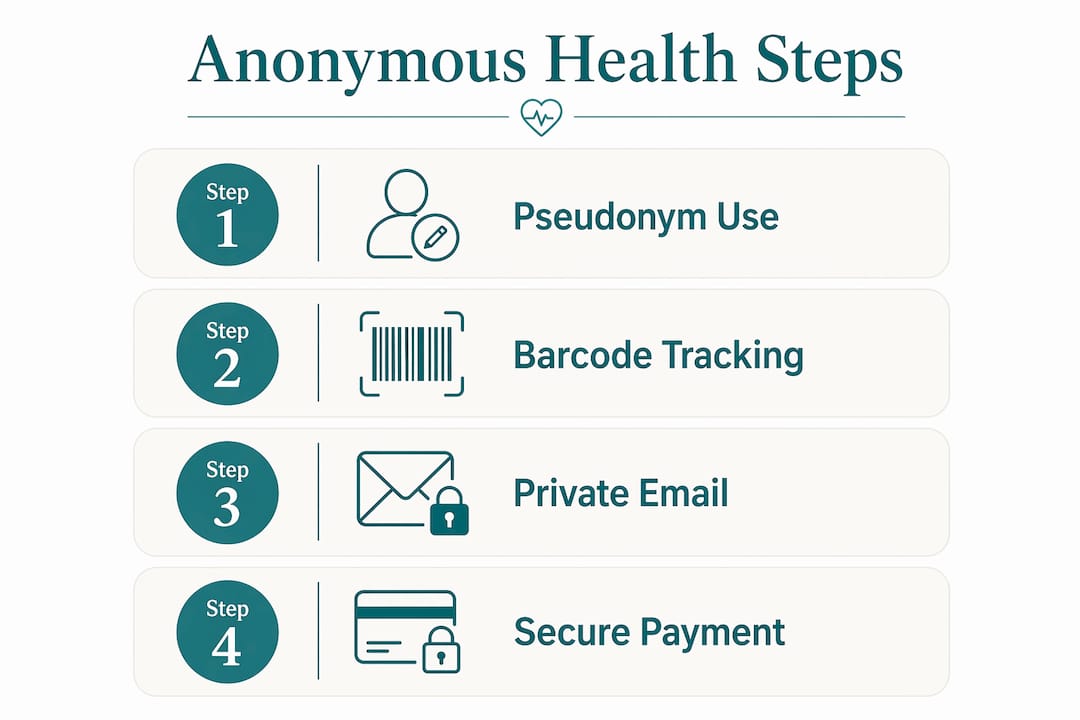
The payment method is where many people unknowingly break their own anonymity. Epicentre advises paying by cash or prepaid debit card to avoid financial paper trails. A credit card transaction creates a record that links your name to a specific clinic on a specific date. Prepaid cards purchased with cash carry no such link.
Anonymous counseling services follow a parallel model. AnoniemeZorg operates via secure chat, email, and phone in a zero-registration environment. No account creation, no name, no medical ID. Their experts have observed that removing registration requirements directly increases how openly people describe their symptoms. Candid disclosure leads to better guidance.
> "Anonymity lowers the first and highest barrier to seeking health help: the fear of being judged or exposed. When people know their identity is protected, they describe symptoms more honestly and seek help sooner." > AnoniemeZorg expert insight
Here is a practical sequence for using anonymous clinical services without creating a traceable record:
- Search for local anonymous testing options using a privacy-first meta-search engine, not a standard browser.
- Contact the clinic through a secure, standalone email address created specifically for health inquiries.
- Travel to the clinic without using a loyalty-linked transit card or a rideshare app tied to your account.
- Pay with cash or a prepaid card purchased separately.
- Receive results by private email and delete the message thread after reviewing.
- If follow-up counseling is needed, use the same anonymous email and a zero-registration service.
Pro Tip: Create a dedicated email address on a privacy-focused provider for all health-related correspondence. Use it only for health inquiries and never link it to your primary accounts, social profiles, or phone number.
How can AI-powered health tools support private health inquiries?
AI-powered health research platforms add a layer of capability that standard search engines cannot match. They interpret symptoms, cross-reference medical literature, and return structured assessments rather than a list of links. The privacy question is whether they do this while collecting your data.
The answer depends entirely on the platform's architecture. Platforms that offer offline or cached research modes prevent continuous API calls after your initial query. That matters because every API call is a potential data transmission. A cached result means the platform fetched the information once and stored it locally, so your follow-up reading does not generate additional tracking events.
Healthnavigatorai is built around this principle. It requires no sign-up, collects no personal data, and does not sell or share what you enter. You describe your symptoms or upload a medical document, and the platform returns an assessment with specialist recommendations and regional wait times. The no sign-up model is not just a convenience feature. It is the structural guarantee that no account profile exists to be breached, sold, or subpoenaed.
When evaluating any AI health platform for privacy, check for these features:
- No registration required: No account means no persistent identity record.
- No data retention policy: The platform should state explicitly that queries are not stored after the session ends.
- Offline or cached mode: Limits data transmission to the initial query only.
- Citation-backed results: Transparent sourcing lets you verify claims without trusting the platform blindly.
- HTTPS encryption: Confirms that data in transit is protected from interception.
AI symptom assessment tools that meet these criteria give you the analytical depth of a clinical pre-screening without the data exposure of a traditional patient portal.
What are the best practices for keeping health searches private?
The strongest privacy protection comes from layering multiple practices, not relying on any single tool. Browser fingerprinting risks remain even when you use a private search engine. Combining search tools with fingerprint-protection browser extensions closes that gap.
Start with your browser settings. Disable third-party cookies, block tracking scripts, and set your browser to clear all local data on close. Extensions like uBlock Origin block tracking pixels and advertising scripts that follow you across sites. A tracking pixel is a one-pixel invisible image embedded in a webpage that fires a signal to a third-party server the moment you load the page, confirming your visit.
Payment and contact methods matter as much as browser settings. Avoid using personal credit cards or insurance-linked billing for any health service where anonymity is the goal. Use cash, prepaid cards, and a standalone email address. Never use a shared device or a public Wi-Fi network without a VPN when conducting health inquiries, because both expose your activity to others on the same network.
Pro Tip: Clear your cookies and browsing history immediately after each private health research session. Even with a privacy-first search engine, local browser storage can retain fragments of your session that a shared device user could later access.
Avoid logging into any account, including social media or email, while conducting health searches. Logged-in states allow platforms to correlate your search behavior with your identity even if you are using a private search engine. The browser knows who you are; the search engine does not need to.
Cookies and tracking mechanisms are the most common way health search privacy breaks down in practice. Understanding how they work is the first step to blocking them effectively.
Key Takeaways
Anonymous health search is achievable for Canadians by combining privacy-first search engines, no-registration AI tools, and cash-based anonymous clinical services into a single layered workflow.
| Point | Details |
|---|---|
| Use privacy-first search engines | Tools like Amnesia.tax proxy queries and store no IP addresses or search history. |
| Pay with cash or prepaid cards | Credit card transactions create a financial record that links your name to a clinic visit. |
| Choose no-registration AI tools | Platforms without accounts cannot retain, sell, or expose your health query data. |
| Layer browser protections | Combine private search engines with fingerprint-blocking extensions to close tracking gaps. |
| Use a dedicated health email | A standalone address keeps health correspondence separate from your primary identity. |
Why anonymity in health search is more important than most people think
The common assumption is that health search privacy is only a concern for people with something to hide. That framing is wrong, and I have seen it discourage people from protecting themselves.
The real issue is that anonymity removes the fear of judgment that stops people from searching honestly. When someone suspects a sexually transmitted infection, a mental health condition, or a substance use problem, the last thing they need is a search engine building a profile that could surface in an insurance review or a data breach. The chilling effect is real. People search less specifically, get less useful results, and delay care.
What I find most underappreciated is how easy the baseline protections actually are. Switching to a privacy-first meta-search engine takes about two minutes. Creating a dedicated health email address takes five. These are not technical skills. They are habits, and they compound over time.
The harder conversation is about AI health tools. Many people assume that because a tool is free, their data is the product. That is often true, but not universally. Healthnavigatorai is free and does not monetize user data. The no-sign-up architecture is the proof, not the marketing copy. No account means no profile. No profile means nothing to sell.
My honest recommendation: build your private health search workflow before you need it. The worst time to figure out anonymous clinical testing options is when you are already anxious about a symptom. Set up the tools now, test them with a low-stakes search, and you will have the confidence to use them when it counts.
> — Rishi
Healthnavigatorai: private health guidance for Canadians
Canadians who want reliable health guidance without creating a data trail have a direct option in Healthnavigatorai.
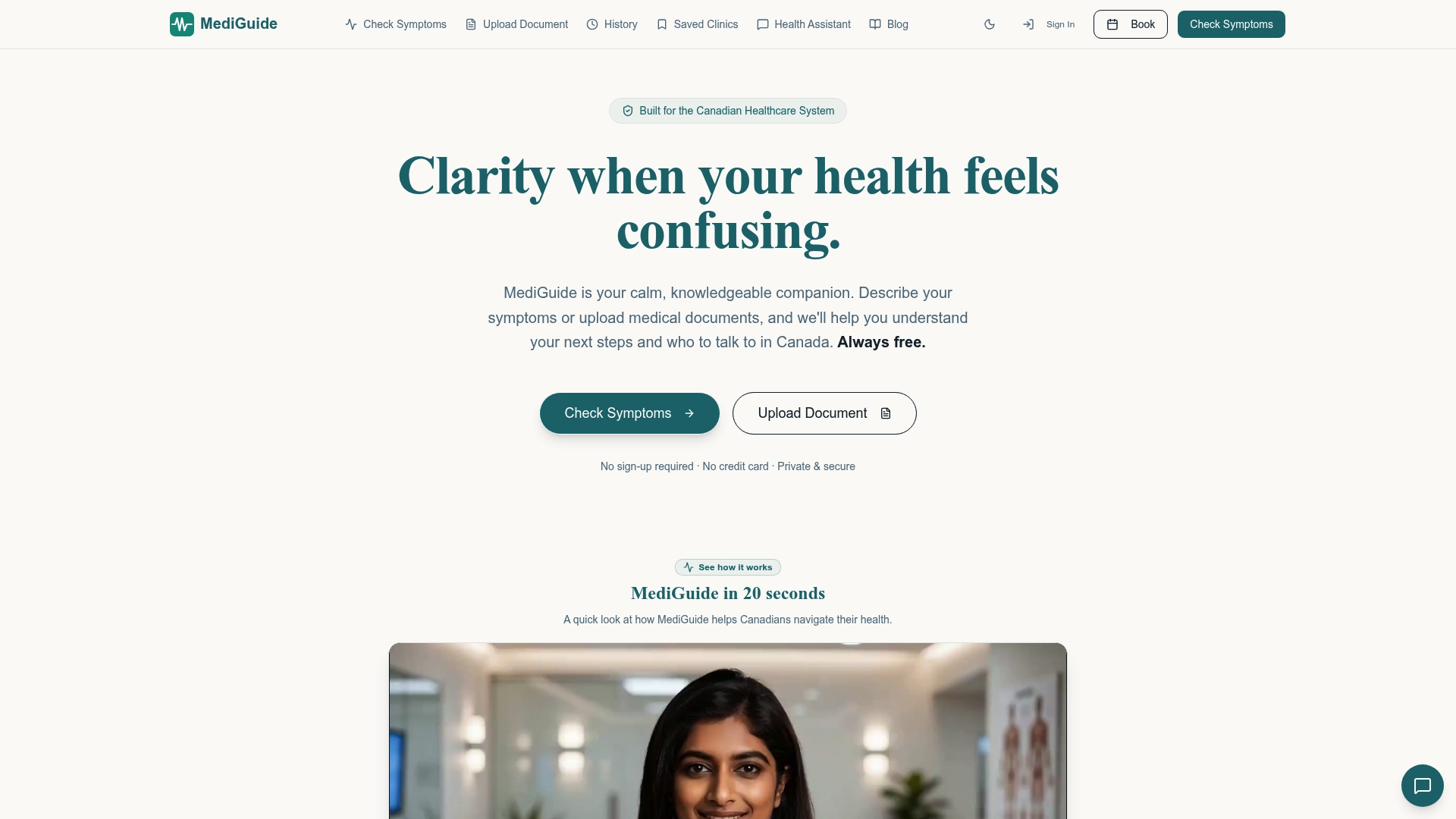
Healthnavigatorai requires no sign-up and collects no personal data. You describe your symptoms or upload a medical document for AI evaluation, and the platform returns a clear assessment with specialist recommendations and regional wait times specific to your province. No account is created. No query is stored or sold. For Canadians who want to check their symptoms privately and get a credible next step, Healthnavigatorai delivers exactly that, free and without the privacy trade-offs that come with standard health portals.
FAQ
What is health search without tracking?
Health search without tracking means querying medical information through tools that do not log your IP address, store your search history, or build an advertising profile from your queries. Privacy-first meta-search engines and no-registration AI platforms are the primary methods.
Are privacy-first search engines accurate enough for health research?
Yes. Tools like Amnesia.tax aggregate results from over 155 search engines, so the breadth of results matches or exceeds standard engines. The difference is that no behavioral profile shapes what you see, which actually produces less commercially biased health results.
How do I get anonymous health testing in Canada?
Look for clinics that offer pseudonym-based testing with barcode sample tracking and private email result delivery. Pay with cash or a prepaid card, and contact the clinic through a dedicated health email address rather than your primary account.
Does using incognito mode make my health searches private?
Incognito mode prevents your browser from storing local history, but it does not hide your searches from your internet provider or the search engine itself. Combine incognito mode with a privacy-first search engine and a VPN for meaningful protection.
Is Healthnavigatorai safe to use for sensitive health questions?
Healthnavigatorai requires no sign-up and retains no personal data from your session. The platform does not sell or share user information, making it a privacy-conscious option for Canadians who need anonymous health guidance on sensitive symptoms or medical documents.


