

What are the real risks of health app data sharing?
Most health apps are not as private as they look. 88% of mHealth apps include code to collect user data, and 23% transmit that data over insecure channels, exposing sensitive details like GPS location and passwords. That is not a fringe problem. That is the norm.
The core issue is that the health app market operates largely outside the rules most people assume protect them. HIPAA, the federal law that governs medical privacy, generally does not apply to consumer wellness or fitness apps. Your doctor's office is covered. The period tracker on your phone probably is not.
Here is a quick summary of what you are actually dealing with when you use a health app:
- Extensive data collection: 88% of mHealth apps include code to collect user data, far more than the data you actively enter, including device identifiers, location, and behavioral patterns.
- Insecure data transmission: 23% of mHealth apps transmit data over channels that can be intercepted.
- Third-party sharing: Apps routinely pass data to analytics and advertising firms like RudderStack and Google, often without any clear disclosure to users.
- Weak or missing privacy policies: 28.1% of mHealth apps studied had no privacy policy at all.
- Limited legal protection: HIPAA covers healthcare providers and insurers, not most consumer apps, leaving a wide regulatory gap.
- Real consequences: Health data breaches can contribute to identity theft, targeted advertising based on sensitive conditions, and potential misuse by insurers or employers.
Understanding health app data sharing risks is not about avoiding technology. It is about knowing exactly what you are agreeing to before you tap "allow."
What types of health apps collect and share your data?
Health apps span a wide range of categories, and the type of app you use shapes what data gets collected and where it goes.
Common health app categories:
- Fitness and activity trackers: Step counters, workout logs, sleep monitors. These collect movement data, heart rate, and often GPS location.
- Mental health apps: Mood journals, therapy platforms, meditation guides. These gather self-reported emotional states, session frequency, and sometimes voice or text inputs.
- Period and reproductive health trackers: Apps that log menstrual cycles, ovulation windows, pregnancy status, and sexual activity.
- Chronic condition monitors: Apps for diabetes, blood pressure, or asthma management. These handle clinical-grade biometric data.
- Medication management apps: Prescription reminders and drug interaction checkers that store medication lists and dosing schedules.
- General wellness apps: Nutrition trackers, hydration logs, and symptom checkers that collect dietary habits and health complaints.
The data these apps collect goes well beyond what users typically realize. Biometric readings, GPS coordinates, reproductive health details, symptom histories, and behavioral patterns are all fair game. Third-party services are frequently embedded directly into app code for analytics, advertising, or cloud storage, meaning your data reaches those companies the moment you open the app, not just when you click "share."
Privacy policies vary dramatically across these categories. A fitness tracker from a major hardware brand may have a detailed, audited policy. A free mental health journaling app downloaded by a million people may have almost nothing. The gap between what an app promises and what it actually does with your data is often invisible to the person using it.
What privacy and security risks do health apps actually create?
The risks go deeper than most people expect, and they compound in ways that are hard to trace.
Data collection without your awareness
Research published in the BMJ found that apps frequently do not comply with their own stated privacy practices, and users have no practical way to audit what is actually happening with their data. You can read a privacy policy carefully and still have no reliable picture of where your information ends up. That gap between stated policy and actual behavior is one of the most consistent findings across health app research.
Insecure transmission of sensitive data
When 23% of mHealth apps transmit data over insecure channels, the exposed information is not abstract. It includes GPS coordinates, account credentials, and health records that can be intercepted by anyone on the same network. Public Wi-Fi turns a routine app sync into a genuine security exposure.
The re-identification problem
"Anonymized" data is not as safe as it sounds. Research on health data anonymization shows that behavioral patterns and device-specific metadata can be cross-referenced to link supposedly de-identified records back to specific individuals. An app can strip your name from a dataset and still leave enough fingerprints for a determined actor to identify you.
> Key finding: A cross-sectional study of mHealth apps found that 88% include data-collection code, 23% use insecure transmission channels, and 28.1% had no privacy policy whatsoever. Those three figures together describe an industry where the default is exposure, not protection.
The privacy paradox
Studies on mature adult mHealth users reveal something counterintuitive: the risk people worry about most is not misuse of their medical history. It is personalized advertising. Many users express privacy concerns but continue using apps anyway, settling into a kind of resignation that accepting the technology means accepting the risk. That fatalism is understandable, but it leaves people more exposed than they need to be.
Pro Tip: Watch for data-sharing cascades. When an app shares your data with a third-party analytics SDK, that company can then pass it to another partner, and so on. You consented to one app. You may have unknowingly fed a chain of invisible data transfers involving companies you have never heard of. There is no practical way to trace where your data ends up once it leaves the original app.
Consequences beyond privacy
Health data breaches carry consequences that extend well past embarrassment. Exposed records can contain enough personal detail, including name, date of birth, and address, to enable identity theft. Sensitive health information, particularly around mental health, reproductive health, or chronic conditions, can affect how insurers or employers perceive you if it reaches the wrong hands. These are not hypothetical scenarios. The FTC's enforcement action against Flo Health found that the app shared users' personal health information with marketing and analytics companies including Facebook and Google, despite promising users it would keep that data private.
How does U.S. regulation actually protect you, and where does it fall short?
The regulatory picture in the United States is a patchwork, and the gaps are significant.
HIPAA's limited reach
HIPAA does not apply to most consumer health apps. The law covers healthcare providers, health insurers, and their business associates. A wellness app, a fitness tracker, or a period tracker downloaded from an app store is almost certainly not a covered entity under HIPAA, regardless of how sensitive the data it collects may be. That means the privacy protections you expect from your doctor's office simply do not transfer to your phone.
The FTC's role and its limits
The Federal Trade Commission enforces against deceptive data practices under the FTC Act, and it has used that authority in cases like the Flo Health settlement. But the FTC's reach is reactive, not preventive. It can penalize companies after harm occurs; it cannot comprehensively regulate what health apps collect or share in advance. The FTC and FDA together provide some enforcement framework, but clear, comprehensive guidelines for low-risk consumer health apps remain absent.
What the regulatory gaps mean in practice
Key regulatory realities for U.S. health app users:
- HIPAA protects data held by your doctor, hospital, or insurer. It does not protect the same data once you enter it into a consumer app.
- The FDA regulates medical devices and some clinical-grade apps, but most wellness and fitness apps fall outside its jurisdiction.
- State laws vary widely. California's CPRA offers stronger consumer data rights than most states; others offer very little.
- Companies that are not healthcare entities can legally sell or share your health data without your explicit consent in most states.
- There is no federal law that specifically governs consumer health app data in the way HIPAA governs clinical records.
Understanding what a privacy-first health platform actually commits to, beyond what the law requires, is one of the most useful distinctions you can make when choosing where to put your health information.
The absence of comprehensive federal regulation means that the burden of protection falls largely on you. Knowing the rules, or the lack of them, is the starting point.
How can you protect your health app data right now?
You cannot fix the regulatory gaps, but you can make much smarter decisions about which apps you use and what you share with them.

Review permissions before you install
Every permission an app requests is a potential data stream. Location access on a calorie counter is not necessary for the service. Microphone access on a symptom tracker is a red flag. Check what each permission actually enables before granting it, and deny anything that does not have an obvious, direct connection to the app's function. A detailed walkthrough of how app permissions work can help you spot the ones that create unnecessary exposure.
Choose local storage over cloud-based apps
Apps that store data locally on your device, rather than uploading it to a server, substantially reduce your exposure to hacking, subpoenas, and unauthorized third-party access. Cloud-stored data can be compelled by law enforcement or exposed in a breach. Data that never leaves your phone cannot be. This is especially relevant for reproductive health, mental health, and chronic condition apps.
Audit and delete your data regularly
Most apps let you delete your account and the data stored within the app itself. Do it when you stop using an app, not months later. The catch: deletion from third-party services that already received your data is rarely guaranteed. Once data has been shared downstream, you typically have no mechanism to retrieve or erase it. That is exactly why limiting sharing from the start matters more than trying to clean up afterward.
Practical steps to take today:
- Go through your phone's app list and delete any health app you have not used in the past three months.
- Review location, microphone, and contact permissions for every remaining health app in your device settings.
- Search for any health app you use in the FTC's public enforcement database to see if it has faced prior action.
- Check whether your app offers an option to disable data sharing with third parties, and turn it off.
- If you use a period or reproductive health tracker, consider switching to one that explicitly offers local-only storage.
- Monitor your email for data breach notifications, and act on them immediately if a health app you use is involved.
Pro Tip: Do not take a privacy policy at face value. Apps sometimes violate their own stated policies, and users have no way to verify compliance. Look specifically for language about third-party sharing, SDK integrations, and what happens to your data if the company is acquired. A policy that is vague on those three points is a policy that protects the company, not you.
Know what to do if your data is compromised
If you discover that a health app has misused or exposed your data, report it to the FTC at ReportFraud.ftc.gov. If the app claimed HIPAA coverage and you believe it applies, file a complaint with the HHS Office for Civil Rights. Document what data the app had access to, when you used it, and what the breach involved. For reproductive or mental health data specifically, consider whether the exposure creates any immediate personal risk and consult a privacy attorney if it does.
Digital literacy around health data is increasingly as important as health literacy itself. Knowing how your data moves, who can access it, and what your options are when something goes wrong puts you in a fundamentally stronger position than most app users ever reach.
A note on privacy-respecting alternatives
Not every digital health tool operates the same way. Healthnavigatorai is built on the principle that you should be able to get real health guidance without surrendering your data to do it. No sign-up required, no data sold, no third-party sharing. If you want to check your symptoms or get a plain-English read on a medical document, Healthnavigatorai handles it privately, without the data practices that make most consumer health apps a liability.
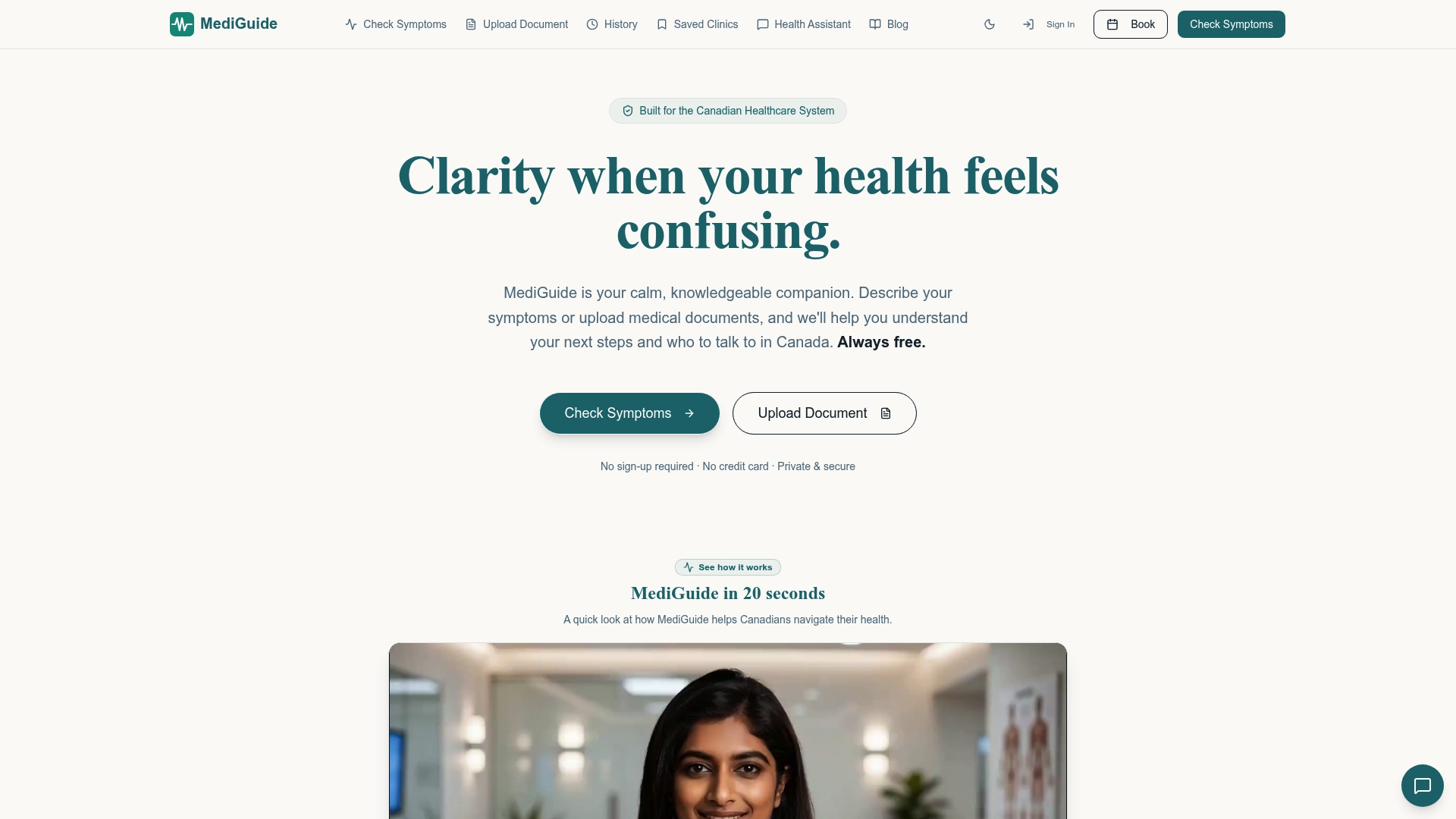
The difference between a tool that respects your privacy and one that monetizes it is not always visible in the interface. It shows up in the privacy policy, the business model, and whether the company has any financial incentive to share what you tell it. Healthnavigatorai has none of those incentives. You can also upload a medical document and get guidance without creating an account or leaving a data trail.
Key Takeaways
Most health apps collect and share far more data than users realize, and U.S. law leaves the majority of consumer apps outside HIPAA's protection, placing the responsibility for data safety squarely on the individual.
| Point | Details |
|---|---|
| Scale of data collection | 88% of mHealth apps include code to collect user data, and 23% transmit that data over insecure channels. |
| HIPAA does not cover most apps | Consumer wellness and fitness apps are generally not HIPAA-covered entities, leaving users with limited legal protection. |
| Third-party sharing is widespread | Apps routinely share data with analytics and advertising firms like RudderStack and Google, often without clear user disclosure. |
| Anonymization is not reliable | Behavioral patterns and device metadata can re-identify supposedly de-identified health records. |
| Local storage reduces risk | Apps that keep data on your device, rather than uploading to a server, significantly limit exposure to breaches and subpoenas. |


