

Mental health referral variability is defined as the systematic difference in how, when, and to whom patients are directed for mental health care, driven by clinical fit, socioeconomic status, healthcare system logistics, and administrative processes. Understanding why mental health referrals differ is the first step toward getting the right care, not just any care. Across Canada, two patients with identical symptoms can follow entirely different referral paths depending on their postal code, income level, or which clinician they see first. The factors affecting mental health referrals include everything from a specialist's acceptance criteria to whether a patient's symptoms are visible enough to trigger urgent action. Healthnavigatorai exists specifically to help Canadians cut through this complexity and find the right next step.
Why mental health referrals differ: clinical fit vs. convenience
The single biggest driver of referral variability is whether a referral is made based on clinical fit or administrative convenience. Referral driven by clinical fit rather than convenience improves mental health treatment outcomes. That distinction matters because a referral to the nearest available psychologist is not the same as a referral to the right one.
Clinical fit means matching a patient's specific diagnosis, history, and therapeutic needs to a clinician with the relevant training and approach. Administrative convenience means referring to whoever has an opening, whoever is in the same building, or whoever the GP has referred to before. The gap between these two approaches produces dramatically different outcomes for patients.

Sub-specialization makes this worse. Specialized psychiatric departments often have rigid acceptance checklists that general referrals may not satisfy. A GP referring a patient with complex trauma to a generalist anxiety clinic may see that referral rejected outright. The patient then waits again, restarts the process, and loses momentum at exactly the moment motivation is most fragile.
Key factors that reduce clinical fit in referrals:
- Clinician networks built on familiarity rather than specialization
- Referral templates that do not capture patient-specific therapeutic preferences
- Limited GP training on the distinctions between psychologist subspecialties
- Time pressure in primary care appointments that shortens referral discussions
- Patients who do not know they can request a specific type of provider
Pro Tip: Ask your GP directly: "Does this clinician specialize in my specific condition?" If the answer is vague, you have the right to request a referral to a provider whose training matches your needs.
How socioeconomic and demographic factors shape referral routes
Referral pathways are not neutral. Children from Black ethnic groups and lower socioeconomic status are more often referred via crisis-oriented routes than through standard primary care channels. That finding reflects a pattern seen across age groups: vulnerable populations reach mental health services later, through higher-acuity entry points, and with less continuity of care.
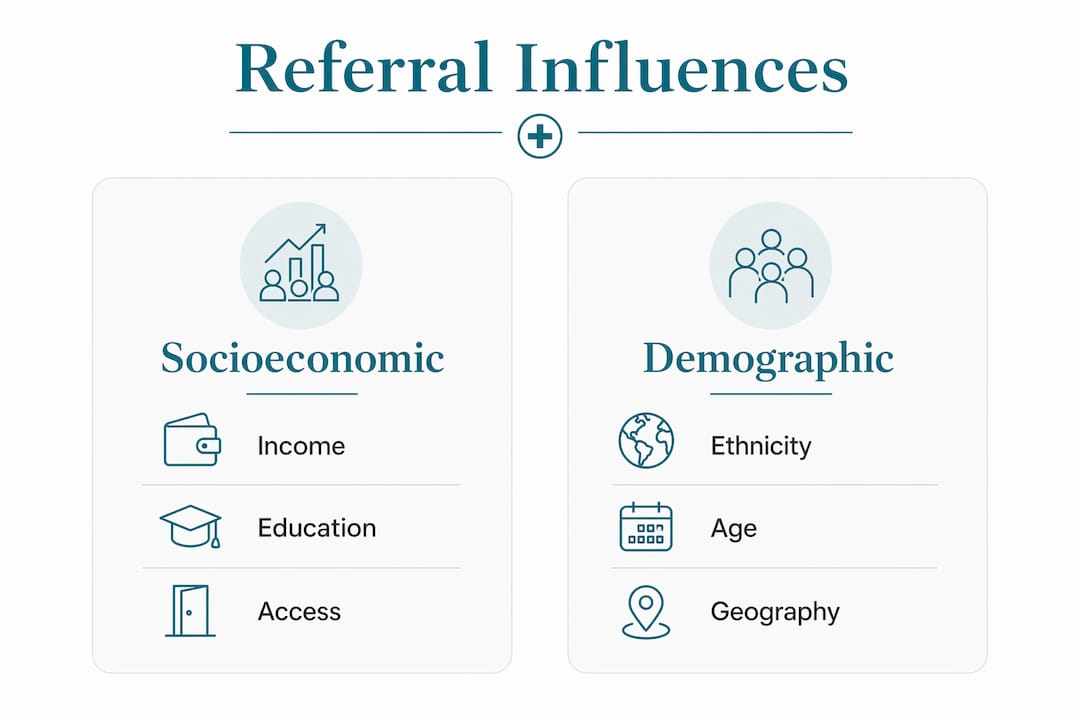
This matters because crisis referrals and standard referrals lead to very different care experiences. A crisis referral typically means emergency services, short-term stabilization, and discharge without a clear ongoing treatment plan. A primary care referral, by contrast, opens a pathway to sustained, relationship-based therapy. The route in shapes the care received.
Socioeconomic barriers that affect referral quality and timing include:
- Lower income patients facing transportation and childcare barriers to follow-up appointments
- Patients without stable housing who are deprioritized by intake systems requiring a fixed address
- Language barriers that reduce the accuracy of symptom communication during assessments
- School attendance gaps that remove a key referral trigger for youth mental health needs
- Stigma in certain communities that delays help-seeking until symptoms reach crisis level
Canada's mental health resources are not distributed evenly across provinces or income brackets. Understanding that your referral pathway may reflect your postal code as much as your clinical need is not pessimistic. It is practical knowledge that helps you advocate for a better route.
How healthcare system structures create referral differences
The same psychiatric service can cost over four times more depending on where the referral is directed. Median per-service cost is $216, with between-hospital price ratios reaching 4.16. That cost variation does not reflect a difference in care quality. It reflects the fragmented, site-dependent pricing structure of outpatient psychiatric services.
For patients, this means that a referral to a hospital-based psychiatrist and a referral to a community mental health clinic may look identical on paper but carry very different financial consequences. Insurance protocols often dictate which site is covered, which narrows the referral options available to any individual patient regardless of clinical fit.
The administrative process after a referral is granted creates its own barriers. Patients frequently drop out after referral due to confusing paperwork, long waits, and scheduling friction. This dropout happens when patient motivation is most fragile, making the post-referral period a critical and often neglected window.
Provincial health coverage rules add another layer of complexity. What is covered in Ontario may not be covered in New Brunswick or Nunavut, and those differences directly shape which referral options a clinician will offer.
Pro Tip: After receiving a referral, call the specialist's office within 48 hours to confirm receipt and ask about the intake process. Proactive follow-up is the single most effective way to prevent dropout at this stage.
| Referral barrier | Impact on patient |
|---|---|
| Long wait times post-referral | Patients disengage before first appointment |
| Complex intake paperwork | Patients abandon process due to confusion |
| Insurance site restrictions | Limits clinician options regardless of fit |
| Between-hospital cost variation | Creates financial barriers for uninsured patients |
Why depression and anxiety dominate referral patterns
Nearly 90% of behavioral health referrals from family medicine clinicians are for depression or anxiety. Only 9% explicitly cite chronic disease management. That imbalance is striking given that 47% of patients in primary care have at least one chronic condition with known mental health comorbidities.
The concentration of referrals on depression and anxiety reflects clinician training more than patient need. GPs receive clear, well-established protocols for recognizing and referring depression. The behavioral health needs of patients with diabetes, heart disease, or chronic pain are less visible in those protocols, so they generate fewer referrals.
Internalized stigma compounds this. Patients with chronic conditions often do not connect their mental health symptoms to their physical illness, so they do not raise them with their GP. Clinicians, in turn, do not probe for what they are not trained to expect. The result is a referral system that serves the most recognized conditions well and underserves everyone else.
| Referral reason | Proportion of referrals |
|---|---|
| Depression or anxiety | ~90% |
| Chronic disease-related behavioral health | ~9% |
| Other conditions | ~1% |
Improving this requires both clinician education and patient self-advocacy. Patients with chronic conditions who are experiencing mental health symptoms should name those symptoms explicitly during appointments rather than waiting to be asked.
Practical steps Canadians can take to navigate referral differences
Getting a better referral starts before you walk into the appointment. Clinicians' diagnostic visibility plays a key role in referral timing and acceptance. Symptoms that are not externally visible, such as persistent anxiety or low-grade depression, are referred later and less reliably than symptoms a clinician can observe directly.
- Document your symptoms in writing before your appointment. Include frequency, duration, and functional impact. A written record makes internal symptoms visible and gives the clinician concrete information to include in a referral letter.
- Ask specifically about the clinician's specialization. Patients have the right to request referrals to specific specialists or clinics that better fit their therapeutic needs. Use that right.
- Understand that a referral is not care. A referral triggers a series of steps involving scheduling, intake, and assessment before treatment begins. Plan for that process rather than assuming the referral completes it.
- Use Healthnavigatorai to assess your symptoms before your appointment. The platform's AI symptom assessment helps you articulate what you are experiencing in terms a clinician can act on.
- Follow up proactively. Contact the referred specialist within two business days. Confirm the referral was received and ask what the next step requires from you.
These steps do not guarantee a perfect referral. They do significantly improve the odds that the referral you receive matches your actual clinical need.
Key Takeaways
Mental health referral variability is driven by clinical fit, socioeconomic status, system logistics, and condition-specific blind spots that together determine who gets care, when, and from whom.
| Point | Details |
|---|---|
| Clinical fit drives outcomes | Referrals matched to specialist expertise produce better results than convenience-based referrals. |
| Demographics shape pathways | Vulnerable groups are more often routed through crisis care rather than standard primary care referrals. |
| Cost variation is real | The same psychiatric service can cost over four times more depending on the referral site. |
| Depression dominates referrals | Nearly 90% of behavioral health referrals target depression or anxiety, leaving chronic disease needs underserved. |
| Referral is not care | Patients must actively follow up after a referral to navigate scheduling, intake, and access barriers. |
What I've learned watching referral systems fail patients
I have spent years watching Canadians receive referrals that looked correct on paper and led nowhere in practice. The pattern is consistent. A GP, pressed for time, refers to whoever is available. The patient assumes the hard part is done. Six weeks later, they have not heard back, the intake form is sitting unopened on a kitchen table, and their motivation has dropped to near zero.
The clinical fit problem is the one that frustrates me most. The research is clear that matching patient needs to clinician specialization improves outcomes. Yet the default in most primary care settings is still to refer based on proximity and availability. That is not a failure of individual GPs. It is a structural problem in how referral systems are designed and resourced.
What actually helps patients is knowing, before they leave the GP's office, that the referral is a starting point and not a destination. Patients who understand the steps ahead, who document their symptoms clearly, and who follow up within 48 hours of a referral are the ones who reach care. The system does not reward passivity. It rewards informed, persistent engagement.
> — Rishi
Healthnavigatorai can help you prepare for your referral
Getting a mental health referral is one step. Arriving at that appointment prepared is another.
Healthnavigatorai is a free, no-sign-up tool built for Canadians who want to understand their symptoms before they see a clinician. You can check your symptoms to get a clear, plain-English assessment of what you are experiencing and which type of specialist is most likely to help. You can also upload medical documents to get guidance on what your existing records suggest about your next steps. Healthnavigatorai does not sell or share your data. It gives you the information you need to walk into a referral conversation with clarity, not confusion.
FAQ
Why do mental health referrals vary so much across Canada?
Referral variability reflects differences in provincial coverage rules, clinician training, specialist availability, and patient demographics. Two patients with the same diagnosis can follow entirely different pathways depending on where they live and who their GP is.
Can I request a specific mental health specialist?
Yes. Patients have the right to request referrals to specific specialists or clinics that better match their therapeutic needs. Asking your GP directly about a clinician's specialization improves the likelihood of a well-matched referral.
Why do I have to wait so long after getting a referral?
A referral initiates a process that includes scheduling, intake paperwork, and assessment before treatment begins. Proactive follow-up with the specialist's office within 48 hours of receiving a referral significantly reduces the risk of dropout or delay.
Why are depression and anxiety referred more than other conditions?
Nearly 90% of behavioral health referrals from family medicine clinicians target depression or anxiety. Clinicians have clearer protocols for these conditions, while the mental health needs associated with chronic diseases remain under-recognized and under-referred.
How can documenting symptoms improve my referral?
Clinicians refer faster and more accurately when symptoms are clearly described. Symptoms that are not externally visible, such as anxiety or low mood, are referred less reliably unless the patient communicates them in specific, functional terms during the appointment.


