

A community health navigator is a trained professional who helps individuals and families access healthcare services and community resources by overcoming non-clinical barriers and guiding them through complex systems. The role sits outside direct clinical care. Navigators do not diagnose or treat. Instead, they connect people to the right services at the right time, reducing the friction that causes so many to fall through the cracks. For anyone confused about where to start with a health concern, a community health navigator is often the most practical first call.
What is a community health navigator and what do they do?
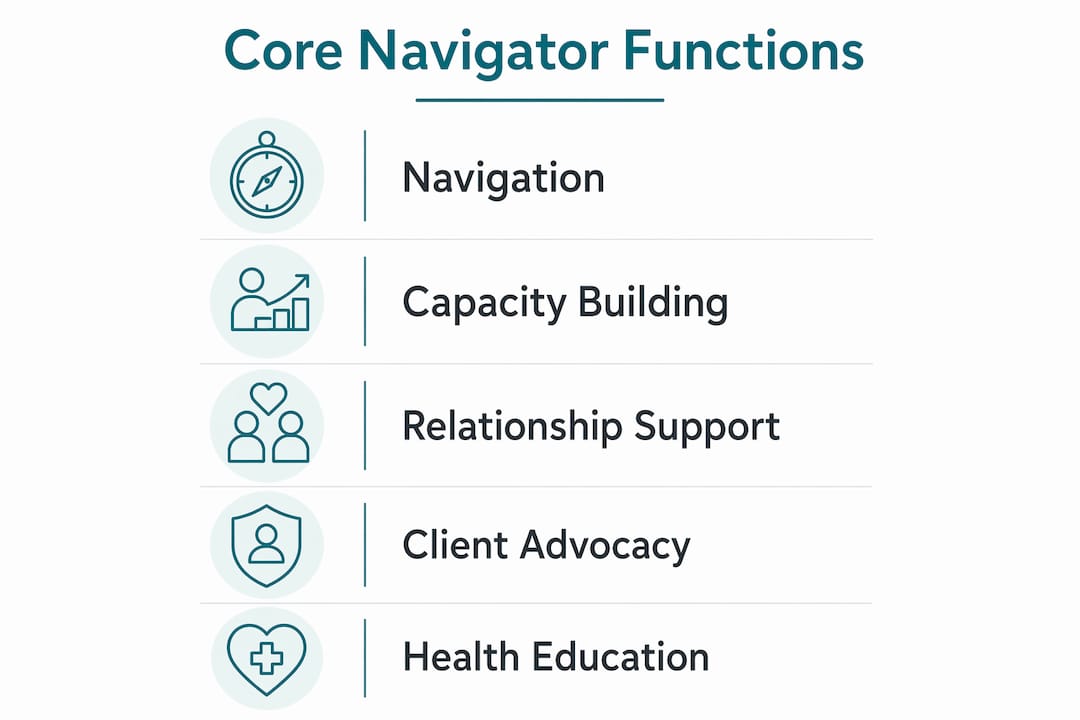
A community health navigator, also called a care navigator or link worker, is defined by three core functions: navigation, capacity building, and relationship-based support. An analysis of 23 studies found that 96% of navigator roles focus on navigation, 87% on capacity building and self-management support, and 78% on relationship building and personalized care. Those numbers tell a clear story: the role is far more than pointing people to a phone number.
Navigation means actively guiding someone through a system they find confusing or intimidating. A navigator might help a patient schedule a specialist appointment, explain what a referral letter means, or identify a free transportation option to get to a clinic across town. Capacity building is the longer game. The goal is to help patients understand their own health well enough to manage it independently over time, not to create permanent dependency on the navigator.

The term "community health navigator" is the most common label in North America, but the same role appears under other names. Link worker, social prescriber, and care coordinator all describe overlapping functions. Knowing these synonyms matters because the service you need may be listed under a different title in your area.
What are the primary responsibilities of community health navigators?
Community health navigator responsibilities span a wide range of practical, non-clinical tasks that most people never think about until they need them. Research shows that navigators handle barrier-clearing tasks such as paperwork, transportation coordination, and language interpretation in 74% of cases. That figure reflects how much of healthcare access depends on logistics, not medicine.
Core responsibilities include:
- System navigation: Identifying the right clinic, specialist, or community program for a patient's specific situation
- Paperwork and scheduling: Completing insurance forms, booking appointments, and following up on referrals
- Language and cultural support: Interpreting health information for patients whose first language is not English
- Transportation coordination: Arranging rides to appointments for patients without reliable transit
- Mental health and recovery access: Connecting clients to mental health services and substance recovery programs through advocacy and outreach
- Case documentation: Maintaining records in care coordination databases to track outcomes and share updates with clinical teams
Navigators also perform a range of administrative duties including case assessment and client communication. These tasks keep care coordinated across multiple providers and agencies.
Pro Tip: If you are working with a navigator for the first time, bring a written list of every provider you currently see, every medication you take, and any upcoming appointments. This gives the navigator a complete picture and cuts your first meeting time in half.
Who works as a community health navigator and what training do they have?
Community health navigators come from diverse professional backgrounds, and there is no single required credential. Data from 15 studies shows that registered nurses make up 46% of navigator roles, while social workers account for 33%. The remaining positions are filled by community health workers, peer support specialists, and trained volunteers with lived experience of the systems they help others navigate.
The skills that matter most in this role are not always taught in formal degree programs. High system literacy and motivational interviewing are critical competencies, but standardized training frameworks for navigators remain rare. That gap creates real inconsistency in service quality across programs.
The path to becoming a health navigator typically follows these steps:
- Earn a relevant degree or certificate: Social work, nursing, public health, or community health are the most common starting points.
- Build local knowledge: Effective navigators know their community's specific resources, from food banks to mental health clinics to housing programs.
- Develop motivational interviewing skills: This structured communication technique helps navigators support behavior change without being directive.
- Seek cultural competence training: Navigators serve diverse populations, so understanding cultural context is non-negotiable.
- Look for certification programs: Organizations like the National Association of Community Health Workers offer credentials that strengthen a navigator's professional standing.
Pro Tip: If you are considering this career, volunteer with a local community health organization first. The informal knowledge you gain about local service gaps is worth more than most textbook training.
Role ambiguity is a real challenge. Because the title varies so widely, navigators often have to explain their own role to the clinical staff they work alongside. Lack of a standardized role title creates confusion among both patients and healthcare providers, which limits how effectively the role functions within a team.
Why are community health navigators important for chronic disease and vulnerable populations?
Community health navigators act as a critical safety net during the most vulnerable moments in a patient's healthcare experience. Stakeholder research identifies the hospital-to-home transition as one of the highest-risk periods for patients with chronic or complex needs. Without a navigator, patients discharged from hospital often miss follow-up appointments, misunderstand medication instructions, or lose contact with their care team entirely.
> "Community health navigation is widely used for populations with chronic diseases, older adults, and others with complex psychosocial needs. The role functions as a bridge between clinical care and the social determinants that shape health outcomes, including housing, income, and social isolation."
The impact is clearest for people managing conditions like diabetes, heart failure, or chronic obstructive pulmonary disease. These patients interact with multiple providers across different systems. A navigator holds that picture together when no single clinician has the time or mandate to do so. For older adults living alone, a navigator may be the only person who notices that a missed appointment signals something more serious.
| Population group | Key navigator function | Primary benefit |
|---|---|---|
| Chronic disease patients | Care coordination across providers | Fewer gaps between appointments |
| Older adults | Safety monitoring and social connection | Reduced isolation and emergency visits |
| Newcomers and immigrants | Language support and system orientation | Faster access to appropriate care |
| Mental health patients | Advocacy and service linkage | Consistent connection to support |
Navigators also address the social determinants of health that clinical teams rarely have time to tackle. Food insecurity, unstable housing, and lack of transportation all affect health outcomes. A navigator who addresses those factors upstream prevents the emergency room visits that result when basic needs go unmet.
How do navigators collaborate within healthcare teams, and what challenges do they face?
Community health navigators are most effective when they are formally integrated into multidisciplinary care teams, not operating as isolated add-ons. Organizational commitment to the navigator role, including clear job definitions and active promotion to both staff and patients, determines whether the role delivers its full value. Programs that treat navigators as optional extras consistently underperform.
The interface between clinical and non-clinical roles creates friction. Physicians and nurses are trained to work within defined scopes of practice. Navigators operate in a different space, one that is relational and community-facing rather than procedural. Without clear protocols for communication and referral, navigators can find themselves either ignored by clinical staff or asked to perform tasks outside their role.
Key challenges navigators face in team settings:
- Role clarity: Clinical colleagues may not understand what a navigator does or when to refer a patient
- Funding instability: Many navigation programs rely on short-term grants, which creates staff turnover and service gaps
- Documentation systems: Navigators often lack access to the same electronic health records used by clinical teams, limiting information sharing
- Workload boundaries: Without clear caseload limits, navigators can become overwhelmed, reducing the quality of support each patient receives
Successful programs address these challenges by embedding navigators in regular team meetings, giving them read access to patient records, and setting defined referral criteria. Community partnerships with housing agencies, food banks, and mental health organizations extend the navigator's reach beyond what any single clinic can offer.
How can you find a community health navigator or become one?
Finding a community health navigator is easier than most people expect. Common access points include primary care clinics, hospital discharge planning offices, community health centers, and insurance marketplace navigators. In Canada, provincial health authorities often list navigator services through their community health support services directories.
To get the most from a navigator, engage early. Navigators are most effective when involved in preventive care, not only after a crisis or hospital discharge. If you have a new diagnosis, a complex family health situation, or difficulty understanding your coverage, contact a navigator before the situation becomes urgent.
For those pursuing a career in this field:
- Research your local programs: Hospitals, community health centers, and public health departments all hire navigators under various titles.
- Connect with professional associations: The National Association of Community Health Workers and similar bodies offer training, networking, and advocacy resources.
- Build your referral network: The most effective navigators maintain personal relationships with staff at local agencies, not just a list of phone numbers.
- Track your outcomes: Document the barriers you resolve and the referrals you make. This data supports funding applications and demonstrates your program's value.
Understanding your own digital health footprint also helps you work more effectively with a navigator, since many services now require online accounts or digital records.
Key Takeaways
Community health navigators are the most direct solution for patients who know they need care but cannot figure out how to access it.
| Point | Details |
|---|---|
| Core navigator functions | Navigation, capacity building, and relationship support define the role across 96%, 87%, and 78% of programs respectively. |
| Non-clinical task focus | Navigators handle paperwork, transportation, and language barriers in 74% of cases, not clinical treatment. |
| Diverse backgrounds | Registered nurses (46%) and social workers (33%) fill most navigator roles, but no single credential is required. |
| Highest-impact populations | Chronic disease patients, older adults, and newcomers benefit most from early, proactive navigator engagement. |
| Integration is the key | Formal team integration and clear role definitions determine whether a navigation program succeeds or stalls. |
The role we keep undervaluing
I have spent years watching healthcare systems invest heavily in clinical technology while leaving the connective tissue between services chronically underfunded. Community health navigators are that connective tissue. They are the reason a 72-year-old with heart failure actually shows up to her cardiology follow-up instead of ending up back in the emergency room three weeks later.
What strikes me most is how much navigator effectiveness depends on local knowledge and trust, not credentials. The best navigators I have seen work are not always the ones with the most formal training. They are the ones who know the housing coordinator at the shelter by first name, who understand which clinic runs late on Thursdays, and who can tell a frightened patient in plain language what their discharge summary actually means.
The training gap is real and it matters. Motivational interviewing, system literacy, and cultural competence are teachable skills. The fact that most navigator programs leave staff to develop these on the job is a policy failure, not a personal one. Until health systems treat navigation as a profession with defined standards and stable funding, the role will keep delivering results below its potential.
The importance of community health navigation will only grow as populations age and chronic disease rates climb. The question is whether health systems will formalize and fund the role before the gap it fills becomes a crisis.
> — Rishi
Healthnavigatorai: health guidance when you need it most
Waiting for a navigator appointment should not mean waiting in the dark about your health. Healthnavigatorai gives Canadians a free, private way to understand their symptoms and medical documents before, during, or between navigator visits.
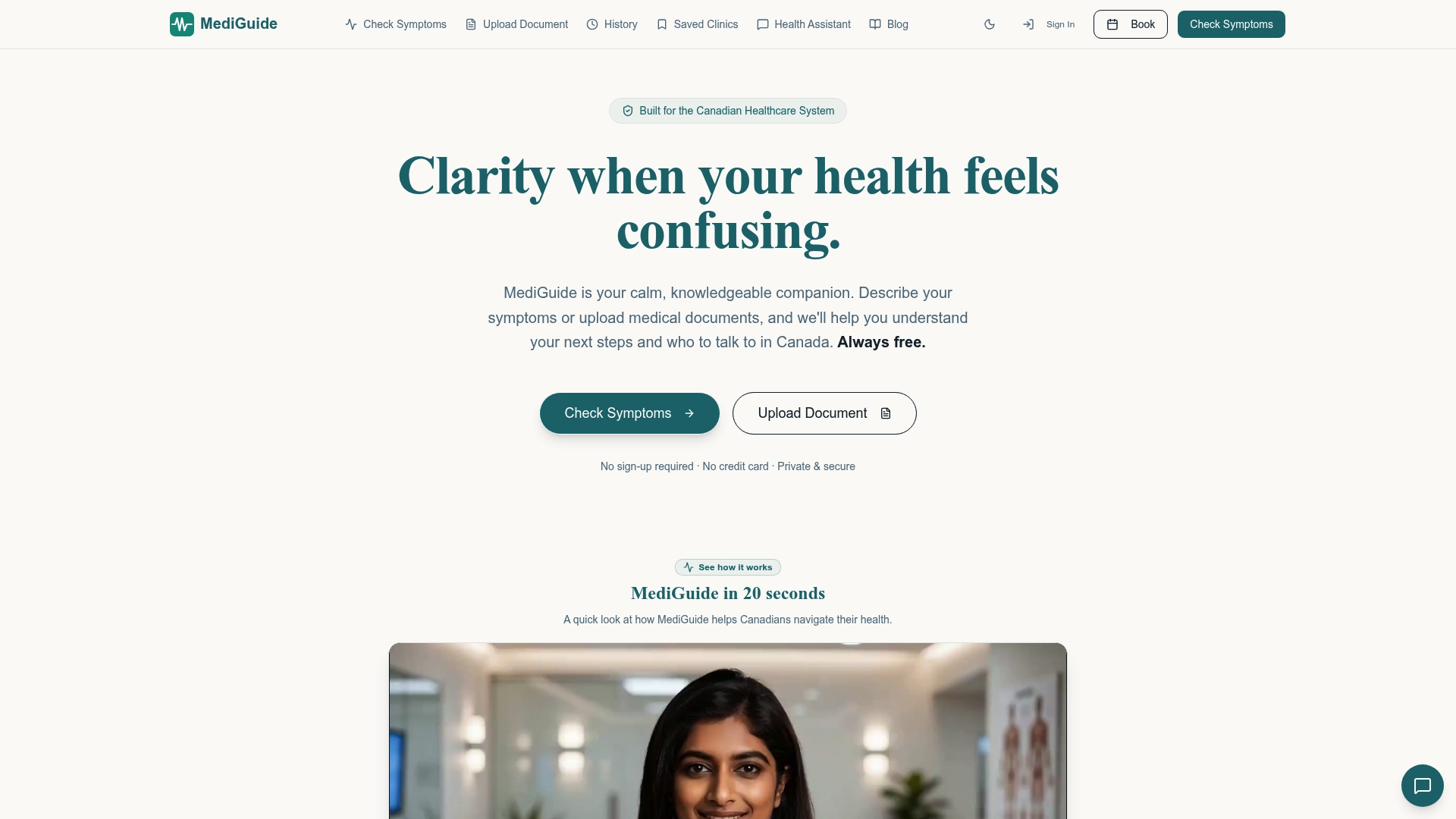
Describe your symptoms or upload a medical document and Healthnavigatorai delivers a plain-English assessment with guidance on next steps, including which type of specialist to see and average wait times in your region. No sign-up required. No data sold. If you want to arrive at your next navigator meeting with a clearer picture of your own health, check your symptoms with Healthnavigatorai first.
FAQ
What is the difference between a health navigator and a case manager?
A case manager typically holds a clinical license and manages medical treatment plans, while a community health navigator focuses on non-clinical barriers like transportation, paperwork, and service access. The roles often overlap but serve different primary functions.
How do I find a community health navigator near me?
Contact your primary care clinic, local hospital, or community health center and ask about navigator or care coordination services. In Canada, provincial health authority websites list community health support services by region.
Do community health navigators cost money to use?
Most community health navigator services are free to patients. They are typically funded by hospitals, public health agencies, or community grants, with no direct charge to the people they serve.
Can a community health navigator help with mental health access?
Yes. Navigators connect clients to mental health and substance recovery services through advocacy and outreach, and they often maintain direct relationships with local mental health programs to speed up referrals.
What qualifications do you need to become a health navigator?
There is no single required qualification. Most navigators hold a background in nursing, social work, or public health, combined with skills in motivational interviewing and local community knowledge. Certification through organizations like the National Association of Community Health Workers strengthens professional standing.


