

Palliative care is specialized medical care focused on relieving the symptoms, pain, and stress of serious illness. It can begin at any stage of a diagnosis, run alongside curative treatments, and covers far more than physical comfort. The World Health Organization describes it as an approach that improves quality of life for both patients and their families by preventing and relieving suffering through early identification and treatment of pain and other problems, whether physical, psychological, social, or spiritual.
A few core elements define what palliative care actually delivers:
- Symptom management: Relief from pain, fatigue, nausea, shortness of breath, constipation, and sleep problems
- Emotional and psychological support: Addressing anxiety, depression, and the mental weight of serious illness
- Social and spiritual care: Practical help with daily challenges and support for spiritual concerns
- Team-based approach: Physicians, nurses, social workers, chaplains, and therapists working together
- Family and caregiver support: Care that extends beyond the patient to the people closest to them
Palliative care is not a signal of giving up. It is an extra layer of support that helps people live as actively and comfortably as possible, whatever their prognosis.
Table of Contents
- What are the real benefits of palliative care?
- How does palliative care work alongside your other doctors?
- Palliative care vs. hospice care: what's the difference?
- How do you access palliative care services?
- What is "total pain" and how does the care team address it?
- What symptoms and conditions does palliative care manage?
- When should you consider asking for palliative care?
- Key Takeaways
What are the real benefits of palliative care?
Palliative care does more than manage physical symptoms. It addresses the full weight of what serious illness puts on a person and their family, and the benefits show up across every dimension of that experience.

MedlinePlus lists the core symptoms palliative care relieves: pain, shortness of breath, fatigue, constipation, nausea, loss of appetite, and sleep problems. It also helps patients cope with the side effects of treatments like chemotherapy or radiation. That combination of symptom control and treatment support is what makes it genuinely useful from day one of a diagnosis.
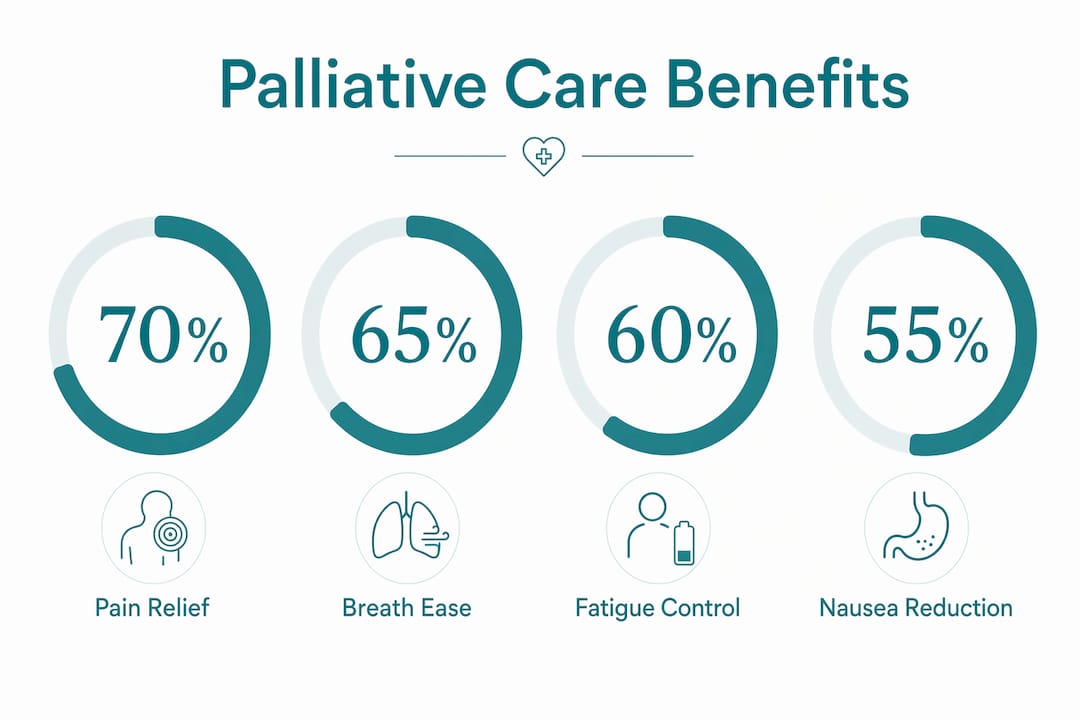
Beyond the physical, palliative care reduces emotional distress for both patients and caregivers. Goals-of-care conversations, a central part of every palliative consultation, help patients articulate what matters most to them. Those conversations tend to reduce unwanted treatments and ease the burden on family members who might otherwise face impossible decisions alone.
Key goals the palliative care team works toward:
- Controlling pain and distressing symptoms
- Aligning medical treatment with the patient's personal values
- Reducing unnecessary hospitalizations
- Supporting caregivers with practical resources and emotional guidance
- Improving overall quality of life at every stage of illness
How does palliative care work alongside your other doctors?
Palliative care does not replace your oncologist, cardiologist, or primary care physician. It works beside them. The palliative team coordinates with your existing providers to make sure your care plan reflects your goals, not just your diagnosis.

The palliative care team typically includes physicians, nurses, social workers, chaplains, pharmacists, and therapists. Each member addresses a different dimension of the patient's experience. Social workers handle practical and financial concerns. Chaplains provide spiritual support regardless of religious affiliation. Therapists address emotional health. The physician and nursing staff manage symptoms and coordinate with the broader medical team.
Care can start at diagnosis and continue through every phase of treatment, follow-up, and, if needed, end of life. The palliative team attends to what the National Cancer Institute calls the psychological, social, and spiritual problems caused by disease or its treatment, not just the physical symptoms themselves.
How palliative care integrates with your treatment:
- Starts at or shortly after diagnosis, not only when curative options run out
- Runs in parallel with chemotherapy, surgery, radiation, or other active treatments
- Communicates regularly with your primary care team and specialists
- Adjusts its focus as your illness and goals evolve over time
- Provides continuity of support across different care settings
Palliative care vs. hospice care: what's the difference?
This is the question that creates the most confusion, and clearing it up matters because the mix-up keeps people from asking for palliative care when they need it.
Cleveland Clinic puts it plainly: palliative care can begin at diagnosis and run alongside curative treatments, while hospice care typically starts after curative treatments stop, when a person's life expectancy is six months or less. Hospice always includes palliative care, but palliative care does not mean hospice.
| Feature | Palliative care | Hospice care |
|---|---|---|
| When it starts | At any stage of illness | When curative treatment ends |
| Goal | Comfort plus curative support | Comfort only |
| Life expectancy requirement | None | Generally six months or less |
| Curative treatment | Continues alongside | Stopped |
| Settings | Hospital, home, clinic, nursing facility | Home, hospice facility |
Key distinctions to keep in mind:
- Palliative care is appropriate at any age and any illness stage
- Hospice is a specific program for end-of-life care, not a synonym for palliative care
- Choosing palliative care does not mean stopping treatment
- Hospice care is a subset of palliative care, not the other way around
The confusion between palliative and end-of-life care is one of the biggest barriers to access. Providers and patients both benefit from clearer communication about what palliative care actually covers.
How do you access palliative care services?
The most common path is a referral from your primary care doctor or specialist, but you can also ask for it yourself. If you or a family member is managing a serious illness and struggling with symptoms or difficult treatment decisions, raising it directly with your care team is entirely appropriate.
Palliative care is available in multiple settings:
- Hospitals: Most major hospitals have dedicated palliative care teams or consultation services
- Outpatient clinics: Some cancer centers and health systems offer standalone palliative care clinics
- Home: Home-based palliative care is available through visiting nurse services and specialized programs
- Nursing facilities: Long-term care and skilled nursing facilities often have palliative support on site
Triggers that typically prompt a referral include a new serious illness diagnosis, a high symptom burden, complex treatment decisions, or the need for goals-of-care conversations. Palliative care is available at any age, and early access tends to produce better outcomes, including fewer hospitalizations and better use of medical resources, according to the WHO.
To prepare for your first consultation, bring a list of your current symptoms, including emotional ones, your medications, and your personal goals for care. Involving a family member or caregiver in that first visit helps the team understand your full situation.
What is "total pain" and how does the care team address it?
The concept of "total pain" is central to how palliative care thinks about suffering. It recognizes that serious illness does not just hurt physically. It creates emotional anguish, disrupts relationships, strains finances, and raises profound spiritual questions. The palliative care team is built specifically to address all four dimensions at once.
Components of total pain and who addresses each:
- Physical pain: Managed by palliative physicians and nurses through medication, interventions, and symptom monitoring
- Emotional distress: Addressed by therapists and counselors, and by the whole team through honest, compassionate communication
- Social challenges: Social workers help with practical needs, family dynamics, financial concerns, and community resources
- Spiritual concerns: Chaplains provide support regardless of religious background, helping patients find meaning and peace
Early palliative care, started at or near diagnosis, gives the team time to understand a patient's full picture before a crisis forces rushed decisions. That proactive approach is what separates well-coordinated palliative care from reactive symptom management.
Pro Tip: Before your first palliative care visit, write down not just your physical symptoms but also your emotional concerns, your biggest fears about your illness, and what "a good day" looks like for you. That information helps the team tailor their support from the very first conversation, as Cleveland Clinic recommends.
What symptoms and conditions does palliative care manage?
Palliative care covers a wide range of serious illnesses, not just cancer. Heart failure, chronic obstructive pulmonary disease, kidney disease, dementia, Parkinson's disease, ALS, and HIV/AIDS are all conditions where palliative support makes a meaningful difference. Any illness that significantly affects quality of life and involves complex symptom management can benefit from this approach.
The symptoms the team commonly addresses include:
- Pain, including chronic and treatment-related pain
- Fatigue and weakness
- Nausea, vomiting, and loss of appetite
- Shortness of breath
- Anxiety and depression
- Confusion or delirium
- Sleep disturbances
- Constipation and other digestive issues
Palliative care also manages the side effects of treatments themselves, such as the nausea from chemotherapy or the fatigue from radiation. The goal is always to keep the patient as functional and comfortable as possible so they can engage with treatment and with the people they care about.
When should you consider asking for palliative care?
The short answer: earlier than most people think. Many patients and families wait until a crisis, but palliative care works best when it starts early, giving the team time to build a relationship and understand what the patient values most.
Consider asking for a palliative care referral when:
- You or a loved one receives a diagnosis of a serious, chronic, or life-threatening illness
- Symptoms like pain, fatigue, or breathlessness are affecting daily life
- Treatment side effects are difficult to manage
- You are facing a major treatment decision and want help thinking through your options
- You want to document your care preferences through advance care planning
- Caregiver stress is becoming unmanageable
A Mayo Clinic consultation typically includes goals-of-care conversations that guide treatment preferences and often result in advance care planning. Those conversations reduce the burden on families who might otherwise have to make critical decisions without knowing what their loved one would have wanted.
Palliative care can be adjusted over time as needs change. Starting early does not lock you into any particular path. It simply means you have a team in your corner from the beginning.
Key Takeaways
Palliative care is specialized support for serious illness that can begin at diagnosis, run alongside curative treatment, and address physical, emotional, social, and spiritual needs through a dedicated multidisciplinary team.
| Point | Details |
|---|---|
| Starts at any stage | Palliative care can begin at diagnosis, not only when curative options are exhausted. |
| Not the same as hospice | Hospice is end-of-life care; palliative care supports patients at any illness stage, including during active treatment. |
| Addresses total pain | The team manages physical symptoms, emotional distress, social challenges, and spiritual concerns together. |
| Team-based by design | Physicians, nurses, social workers, chaplains, and therapists each address a different dimension of the patient's experience. |
| Ask early | Earlier referral leads to better symptom control, fewer hospitalizations, and more time to align care with personal values. |


