

A no signup health tool in Canada is a free digital resource that lets you analyze your health symptoms and access medical information without creating an account or submitting personal data. These tools process everything locally in your browser, meaning your information never reaches a server. Healthnavigatorai is one example of this category, built specifically for Canadians who want fast, plain-English health guidance without the privacy trade-offs that come with traditional health apps. The core promise is simple: you get real answers, and no one gets your data.
What is a no signup health tool in Canada?
A no signup health tool is any free digital resource that operates without requiring registration, email, or personal identification. The term "anonymous health measurement tool" is the more technical label used by privacy advocates and developers, but most Canadians simply search for tools that work without an account. These tools fall into three main categories: symptom checkers, medical document analyzers, and health trackers.
Symptom checkers let you describe what you are feeling and receive a plain-language explanation of possible causes. Medical document analyzers accept uploaded lab results or clinical notes and translate them into plain English. Health trackers log metrics like sleep, mood, or pain levels entirely within your browser using technologies like IndexedDB and localStorage, which means data never leaves your device.

Some tools go further. Open-source medical intake tools hosted on platforms like GitHub wipe all data when you close the browser tab, with zero server storage at any point. That is a fundamentally different model from commercial health apps, which typically retain your data for analytics or advertising purposes.
Canadian organizations also back free tools with no registration requirements. The Canadian Lung Association's BreatheSTRONG program and government-endorsed app repositories from provincial health authorities offer self-care tools for mental health and chronic disease management. These carry institutional credibility that generic apps lack.
| Feature | No signup tools | Traditional health apps |
|---|---|---|
| Account required | No | Yes |
| Data stored on servers | No | Yes |
| Cross-device sync | No | Yes |
| Privacy risk | Low | Moderate to high |
| Cost | Free | Free or paid |
How to use free health tools in Canada safely and effectively
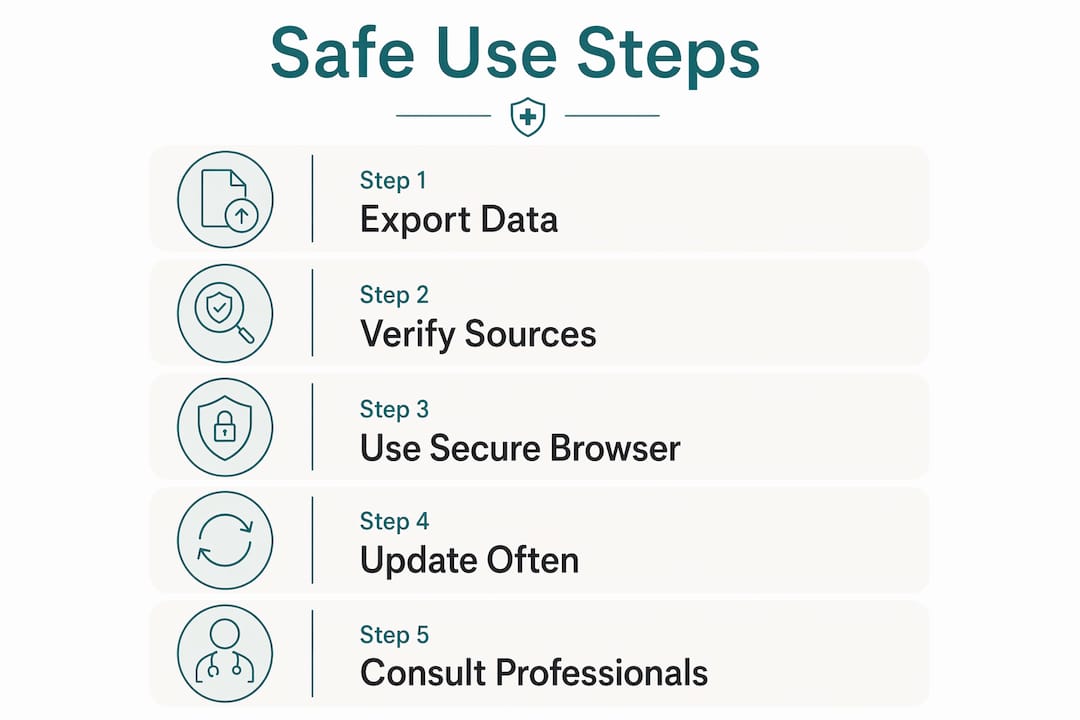
Safe use of any anonymous health resource starts with verifying the source. A tool backed by a Canadian provincial government, a recognized institution, or a transparent open-source repository carries far more credibility than an unverified app with no listed developer. Check the URL, look for a privacy policy written in plain language, and confirm the tool does not request your email at any point.
Follow these steps to get the most out of a no account health resource:
- Open the tool in a private or incognito browser window. This prevents cookies or cached data from linking your session to other browsing activity.
- Describe your symptoms in plain language. You do not need medical terminology. Write what you feel, where you feel it, and how long it has been happening.
- Read the output as a screening result, not a diagnosis. Clinical validation shows that app assessments differ from professional evaluations in a meaningful percentage of cases, which is why these tools carry disclaimers about their screening-only role.
- Export your results before closing the browser. Tools that use local storage will lose your data when you clear your cache. Download a PDF or JSON file if the tool offers that option.
- Cross-reference with a trusted Canadian source. Provincial health lines like 811 in Ontario or Health Link 811 in Alberta provide free nurse-led advice that complements what a digital tool tells you.
Pro Tip: Before you close any browser-based health tool, screenshot or export your results. Local storage tools do not sync across devices, so your data exists only in that browser session.
Progressive Web Apps (PWAs) offer a useful middle ground. You can install them offline directly from your browser to your homescreen without going through an app store, which removes the privacy risks that come with app store data collection. This gives you an app-like experience with no download and no account.
Common mistakes when using no signup tools
The most common mistake is treating a screening tool as a diagnosis. Many Canadian health apps operate as regulated Class I medical devices, which means they carry legal disclaimers stating they do not replace clinical judgment. Reading a result as a definitive answer leads people to either panic unnecessarily or ignore symptoms that need professional attention.
A second common problem is losing data unexpectedly. Browser-based tools that rely on localStorage or IndexedDB store everything on your device. If you clear your browser cache, update your browser, or switch devices, that data is gone. The fix is straightforward: export your results immediately after each session.
Watch for these additional pitfalls:
- Phishing apps that mimic legitimate tools. Always access tools through official websites or verified links, not through social media ads or unsolicited messages.
- Tools that ask for your email "to send results." This is a registration requirement in disguise. A genuine no signup tool delivers results in the browser window.
- Assuming the tool covers all conditions. Most free health tools focus on common symptoms. Rare or complex conditions require specialist evaluation.
- Ignoring tool update dates. A tool last updated in 2021 may not reflect current clinical guidelines. Check when the tool was last reviewed.
Pro Tip: Before clearing your browser cache for any reason, open your health tool and export your data as a JSON or PDF file. Losing a symptom log you built over weeks is avoidable.
If a tool fails to load, try a different browser. Chromium-based browsers like Chrome and Edge handle IndexedDB storage most reliably. Safari on iOS sometimes restricts local storage in ways that cause browser-based tools to behave unexpectedly.
How these tools protect your privacy compared to traditional health apps
No signup means no personal profile. Privacy advocates confirm that email or account requests in health tools almost always indicate data harvesting intentions. When a tool requires no registration, it has no mechanism to link your health queries to your identity, which eliminates the primary vector for user profiling.
The technical safeguard is local storage. Tools built on IndexedDB or localStorage keep all data inside your browser. Local AI-powered health dashboards take this further by removing personal identifiers before analysis and supporting optional end-to-end encryption. Your data never travels across a network, so there is nothing to intercept.
> "Removing account sign-up in health tools prevents long-term user tracking and data monetization. When no account exists, no profile can be built, and no data can be sold."
Contrast this with commercial health apps, which routinely collect usage data, symptom logs, and behavioral patterns for analytics. Some share this data with third-party advertisers under broad consent clauses buried in terms of service. A no account health resource sidesteps this entirely because there is no account to attach data to.
Canadian privacy law adds another layer of protection. PIPEDA, the Personal Information Protection and Electronic Documents Act, governs how private-sector organizations handle personal data. Tools that collect no data are automatically compliant. For a deeper look at how Canadian privacy law applies to your health information, the rules are worth understanding before you use any digital health resource.
| Privacy feature | No signup tool | Traditional health app |
|---|---|---|
| Personal profile created | No | Yes |
| Data sold to third parties | No | Often |
| PIPEDA compliance risk | Minimal | Varies |
| Encryption of stored data | Local only | Server-side |
| Anonymous use possible | Yes | No |
Trusted Canadian health tools are typically backed by provincial governments or established institutions, which adds a layer of accountability that purely commercial apps lack. When a tool carries government endorsement, you can verify its privacy practices through public documentation.
Key Takeaways
A no signup health tool in Canada gives you private, browser-based symptom screening with no account, no data harvesting, and no cost.
| Point | Details |
|---|---|
| No account means no profile | Tools with zero registration cannot build or sell a personal health profile linked to you. |
| Local storage protects your data | IndexedDB and localStorage keep all data on your device, never on a server. |
| Export data before closing | Browser-based tools lose your data if you clear cache; always download results immediately. |
| Screening is not diagnosis | Canadian health apps operate as Class I medical devices and carry disclaimers against clinical use. |
| Institutional backing matters | Tools endorsed by provincial governments or established organizations carry verifiable privacy standards. |
Why I trust privacy-first health tools more than most people expect
Rishi here. I have spent a lot of time looking at how Canadians actually interact with digital health tools, and the pattern I see most often surprises people. The biggest barrier is not technology. It is trust. People hesitate to describe their symptoms online because they assume someone is watching or storing that information.
The honest answer is that with a properly built no signup tool, nobody is watching. The data literally does not leave your browser. That is not a marketing claim. It is a technical reality of how IndexedDB works. When I first started recommending these tools, I was skeptical too. I tested several by checking network traffic while using them. The well-built ones showed zero outbound data requests during a session.
What I tell people is this: use these tools the way you would use a medical dictionary. They give you vocabulary and context. They help you walk into a doctor's appointment with better questions. They are not a replacement for that appointment. The tools I trust most are the ones that say this clearly, right on the screen, before you even start. If a tool does not tell you its limitations upfront, that is a reason to look elsewhere.
The anonymous health search options available to Canadians in 2026 are genuinely better than what existed three years ago. But the best tool is still the one you use consistently and critically, not the one with the most features.
> — Rishi
Healthnavigatorai: a no signup health tool built for Canadians
Healthnavigatorai's MediGuide is a free, AI-powered health guidance tool designed specifically for Canadians. It requires no account, stores no personal data, and delivers plain-English assessments within seconds.
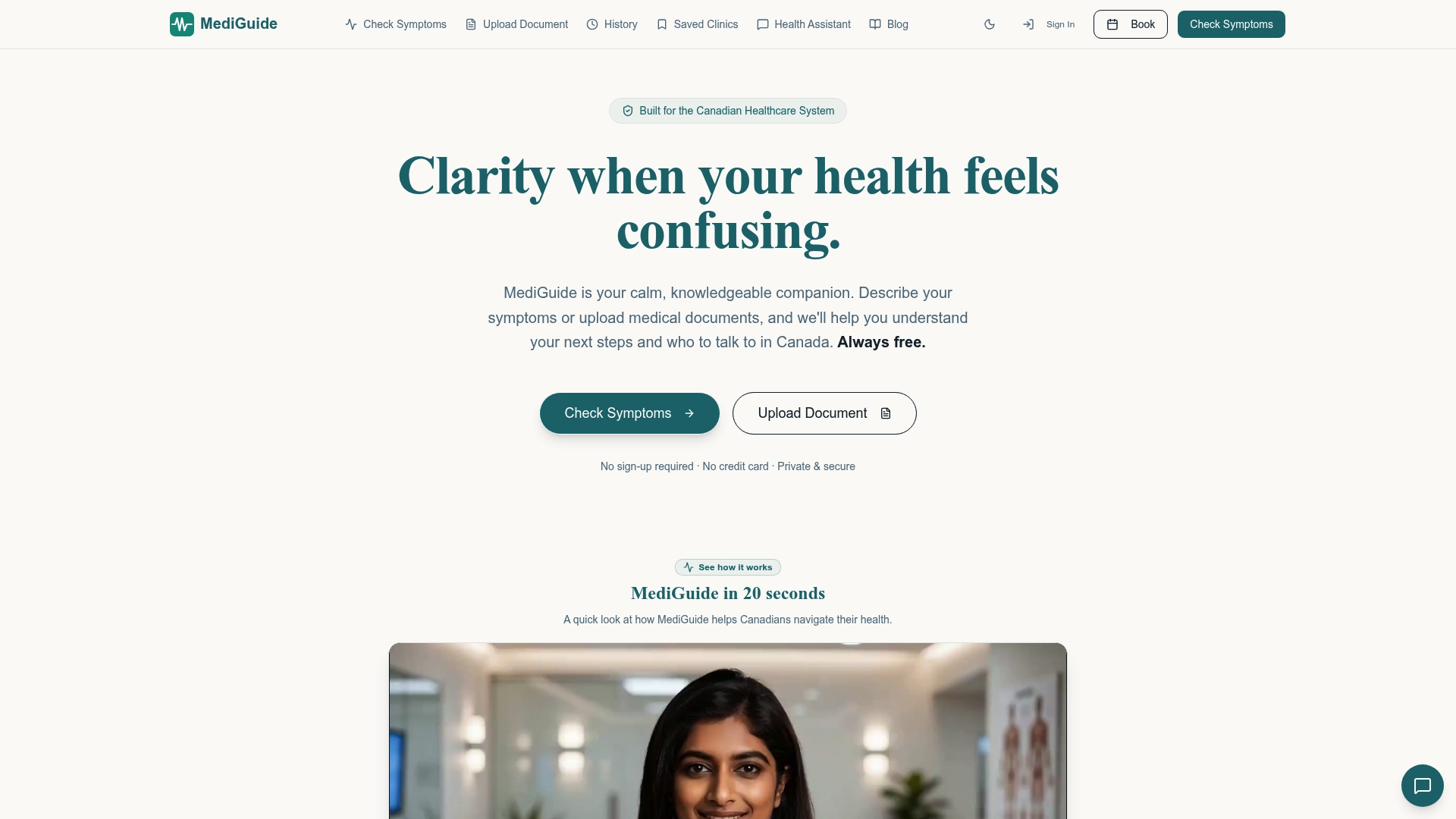
You can check your symptoms directly in your browser, or upload a medical document like a lab result or clinical note to get a plain-language explanation. MediGuide also connects you to the right type of specialist based on your symptoms and shows average wait times for your region. No registration. No data sold. No confusion about what your results mean. For Canadians who want health guidance that respects their privacy, Healthnavigatorai is built exactly for that purpose.
FAQ
What is a no signup health tool?
A no signup health tool is a free digital resource that lets you assess symptoms or access medical information without creating an account or providing personal data. All processing happens in your browser, and no information is stored on external servers.
Are free health tools in Canada accurate?
Free health tools in Canada function as screening aids, not diagnostic instruments. Clinical data shows that app-based assessments can differ from professional evaluations, which is why Canadian health apps carry disclaimers stating they do not replace medical judgment.
How do I keep my data when using a no account health tool?
Export your results as a PDF or JSON file immediately after each session. Browser-based tools using local storage lose all data if you clear your cache or switch devices, so manual export is the only way to preserve your records.
Do no signup health tools follow Canadian privacy law?
Tools that collect no personal data carry minimal risk under PIPEDA, Canada's federal privacy law for private-sector organizations. Because no account is created and no data leaves your device, there is no personal information to regulate.
Can I use these tools on my phone?
Yes. Many no signup health tools work in mobile browsers, and some support Progressive Web App installation, which lets you add the tool to your homescreen for offline use without going through an app store.


