

PIPEDA health information rules define how Canadian private-sector organizations must protect your medical data during commercial activities, establishing core privacy rights every Canadian should understand. The Personal Information Protection and Electronic Documents Act, known as PIPEDA, is the federal law that governs this protection. However, provinces like Ontario, Nova Scotia, and Newfoundland have substantially similar legislation that replaces PIPEDA for clinical health data in those jurisdictions. The Office of the Privacy Commissioner of Canada oversees federal compliance and handles complaints when organizations mishandle personal information.
1. How PIPEDA defines health information as sensitive data
Health information is classified as sensitive personal information under PIPEDA, which means it requires a higher level of protection than ordinary personal data. The Office of the Privacy Commissioner confirms that organizations must obtain meaningful, express consent for highly sensitive categories like genetic data, biometric identifiers, and specific medical diagnoses. This is not a technicality. It means a standard checkbox on a website intake form does not legally satisfy the consent requirement for sharing your DNA results or mental health records.
Sensitive health data under PIPEDA includes:
- Genetic and biometric information (DNA profiles, fingerprints used in health contexts)
- Mental health and psychiatric records
- Substance use and addiction history
- Sexual health and reproductive information
- Disability status and chronic condition diagnoses
Sensitivity is also contextual. A wellness app tracking your daily steps operates under different privacy standards than a clinic managing your surgical history. Health-related apps often follow commercial privacy policies rather than clinical standards, unless a regulated health professional operates them. That distinction matters when you decide which digital tools to trust with your personal health details.
Pro Tip: Before using any health app, check whether it is operated by a regulated health professional or a commercial company. The answer changes which privacy law applies to your data.

2. Consent requirements for health data under PIPEDA
Express consent is the standard PIPEDA requires for collecting, using, or disclosing sensitive health information. Express consent means you actively agree, in writing or verbally on record, rather than simply failing to opt out. Generic intake forms that bundle health data consent with general service terms do not meet this standard for sensitive categories.
The consent rules differ depending on which law governs your situation:
- PIPEDA (federal): Requires express consent for sensitive health data; implied consent may apply for less sensitive information in limited commercial contexts.
- Ontario's PHIPA: Displaces PIPEDA for personal health information in Ontario healthcare settings and generally requires express consent for collection, use, and disclosure.
- Nova Scotia and Newfoundland: Have substantially similar laws that replace PIPEDA for direct healthcare providers, with their own consent frameworks.
- Other provinces: PIPEDA applies by default to private-sector health data handling, with no provincial law replacing it.
Implied consent can apply in narrower situations, such as when a family doctor shares your records with a specialist you were referred to. The key condition is that the purpose is obvious and you would reasonably expect the sharing to occur. Research uses, cross-border data transfers, and commercial data sharing do not qualify for implied consent under PIPEDA.
Pro Tip: When signing any health-related consent form, ask specifically what data will be shared, with whom, and for how long. A provider who cannot answer clearly may not be meeting the meaningful consent standard.
3. Your rights to access, correct, and complain about your health data
Canadians have a legal right to request access to personal health information held by private-sector organizations under PIPEDA. Organizations must respond within 30 days, though they may extend this timeline with notice. Access may be refused in specific circumstances, including when disclosure would reveal information about a third party, when solicitor-client privilege applies, or when release could endanger someone's safety.
Your rights under PIPEDA include:
- Right to access: Request a copy of any personal health information an organization holds about you.
- Right to correction: Ask the organization to correct inaccurate or incomplete health records. If they refuse, you can require them to note your correction request in the file.
- Right to withdraw consent: Withdraw consent for future use or disclosure of your health data, subject to legal or contractual limits.
- Right to complain: File a complaint with the Office of the Privacy Commissioner if you believe an organization has violated PIPEDA.
The Office of the Privacy Commissioner investigates complaints, mediates disputes, and can recommend remedies. The OPC cannot impose fines directly, but it can refer cases to Federal Court, which can order compliance and award damages. If your province has its own health privacy law, a separate provincial regulator handles complaints for healthcare providers in that jurisdiction.
4. Navigating the patchwork of federal and provincial health privacy laws
The patchwork of privacy laws across Canadian provinces creates real confusion for patients trying to understand their rights. The core question is always: which law governs the organization handling your data?
| Jurisdiction | Governing law for health data | Regulator |
|---|---|---|
| Ontario | PHIPA (replaces PIPEDA for health providers) | Information and Privacy Commissioner of Ontario |
| Nova Scotia | Personal Health Information Act (replaces PIPEDA) | Nova Scotia Privacy Review Officer |
| Newfoundland and Labrador | Personal Health Information Act (replaces PIPEDA) | Office of the Information and Privacy Commissioner |
| All other provinces | PIPEDA (federal, applies to private-sector health data) | Office of the Privacy Commissioner of Canada |
PIPEDA still applies in provinces without substantially similar legislation, and it also applies to commercial health businesses like insurance companies and private labs operating across provincial lines. Dual reporting obligations exist for data breaches in Ontario, where organizations may need to notify both the provincial and federal regulators depending on the nature of the breach. That overlap catches many patients off guard.
Cross-provincial health data flows add another layer of complexity. If your Ontario doctor shares records with a clinic in Alberta, the data may shift from PHIPA jurisdiction to PIPEDA jurisdiction mid-transfer. Patients should ask their providers which law applies before consenting to any cross-provincial data sharing. Understanding your provincial health coverage boundaries is a practical starting point for identifying which regulator protects your data.
5. How digital health tools change the privacy equation
Digital health tools, including AI-powered apps, symptom checkers, and wearable devices, do not automatically fall under clinical privacy standards. Healthcare privacy is shifting from entity-based models to data-centric ones as AI and mobile health tools integrate with personal information, challenging traditional regulations. A fitness tracker sold by a retail company collects health-adjacent data under commercial privacy rules, not clinical ones.
This distinction has direct consequences for you. A commercial health app can legally sell your anonymized health data to third parties unless its privacy policy explicitly prohibits this. Anonymization is not always as protective as it sounds. Research consistently shows that re-identification of health data is possible when multiple data points are combined. Understanding your digital health footprint is the first step toward protecting it.
PIPEDA compliance guidelines require commercial organizations to be transparent about data use, but transparency only helps if you read and understand the policy before consenting. Most people do not. That gap between legal compliance and actual patient awareness is where most privacy violations occur in practice.
6. Practical steps to protect your health information privacy
Protecting your health data under Canadian privacy laws requires active participation, not passive trust. These steps apply whether you are dealing with a clinic, an insurance company, or a health app.
- Read privacy policies before consenting. Look specifically for statements about data selling, third-party sharing, and retention periods. If the policy is vague, ask for clarification in writing.
- Ask who controls your data. For any health service, ask directly: who owns this data, who can access it, and under what conditions can it be shared or sold?
- Keep records of consent. Save copies of any consent forms you sign, including digital agreements. These records matter if you need to withdraw consent or file a complaint later.
- Request access annually. You have the right to see what health data organizations hold about you. Exercising this right regularly helps you catch errors and unauthorized uses early.
- Verify app credentials. Before using a secure health website or app, confirm whether it is operated by a regulated health professional or a commercial entity.
- Know your regulator. Identify whether PIPEDA or a provincial law governs your care setting so you know where to file a complaint if needed.
Pro Tip: When a health app asks for more data than its stated purpose requires, such as location access for a symptom checker, treat that as a red flag and decline the permission.
Key takeaways
PIPEDA health information rules set the federal baseline for medical data privacy in Canada, but provincial laws like PHIPA govern clinical health data in Ontario, Nova Scotia, and Newfoundland, creating a layered system every Canadian patient must understand.
| Point | Details |
|---|---|
| PIPEDA governs commercial health data | Federal law applies to private-sector organizations unless a substantially similar provincial law displaces it. |
| Express consent is required for sensitive data | Genetic, biometric, and mental health data require active, specific consent, not a generic checkbox. |
| You have the right to access and correct records | Organizations must respond to access requests within 30 days under PIPEDA. |
| Provincial laws create jurisdictional complexity | Ontario, Nova Scotia, and Newfoundland have their own health privacy laws that replace PIPEDA for clinical providers. |
| Digital health tools carry different privacy standards | Commercial health apps follow commercial privacy rules, not clinical ones, unless operated by regulated professionals. |
Why the PIPEDA conversation is more urgent than most Canadians realize
The legal framework around health information privacy in Canada was built for a world of paper records and local clinics. That world no longer exists. AI-powered diagnostic tools, cross-border cloud storage, and commercial health apps now handle data that was once confined to a locked filing cabinet. The laws have not kept pace, and patients are absorbing the risk.
What concerns me most is the consent gap. Canadians sign digital consent forms without reading them, often because the forms are written in legal language designed to protect the organization, not inform the patient. Express consent under PIPEDA is supposed to be meaningful. In practice, it frequently is not. Generic forms bundling sensitive health data consent with general service agreements are still common, and most patients have no idea they may not be legally valid for their most sensitive information.
The provincial patchwork makes this worse. A patient moving from Ontario to Alberta does not automatically understand that their data protection rights have changed. The health information privacy framework in Canada needs harmonization, and until that happens, individual awareness is the only reliable protection. Knowing which law applies to your care setting is not a legal technicality. It is the difference between having a regulator who can act on your behalf and filing a complaint with the wrong office entirely.
The good news is that the rights already exist. Access rights, correction rights, and complaint mechanisms are all in place. Most Canadians simply do not know they have them or how to use them.
> — Rishi
Healthnavigatorai makes health privacy less confusing
Understanding your rights under Canadian privacy laws should not require a law degree. Healthnavigatorai is a free, no-sign-up AI tool built specifically for Canadians who want clear answers about their health without sacrificing their personal data.
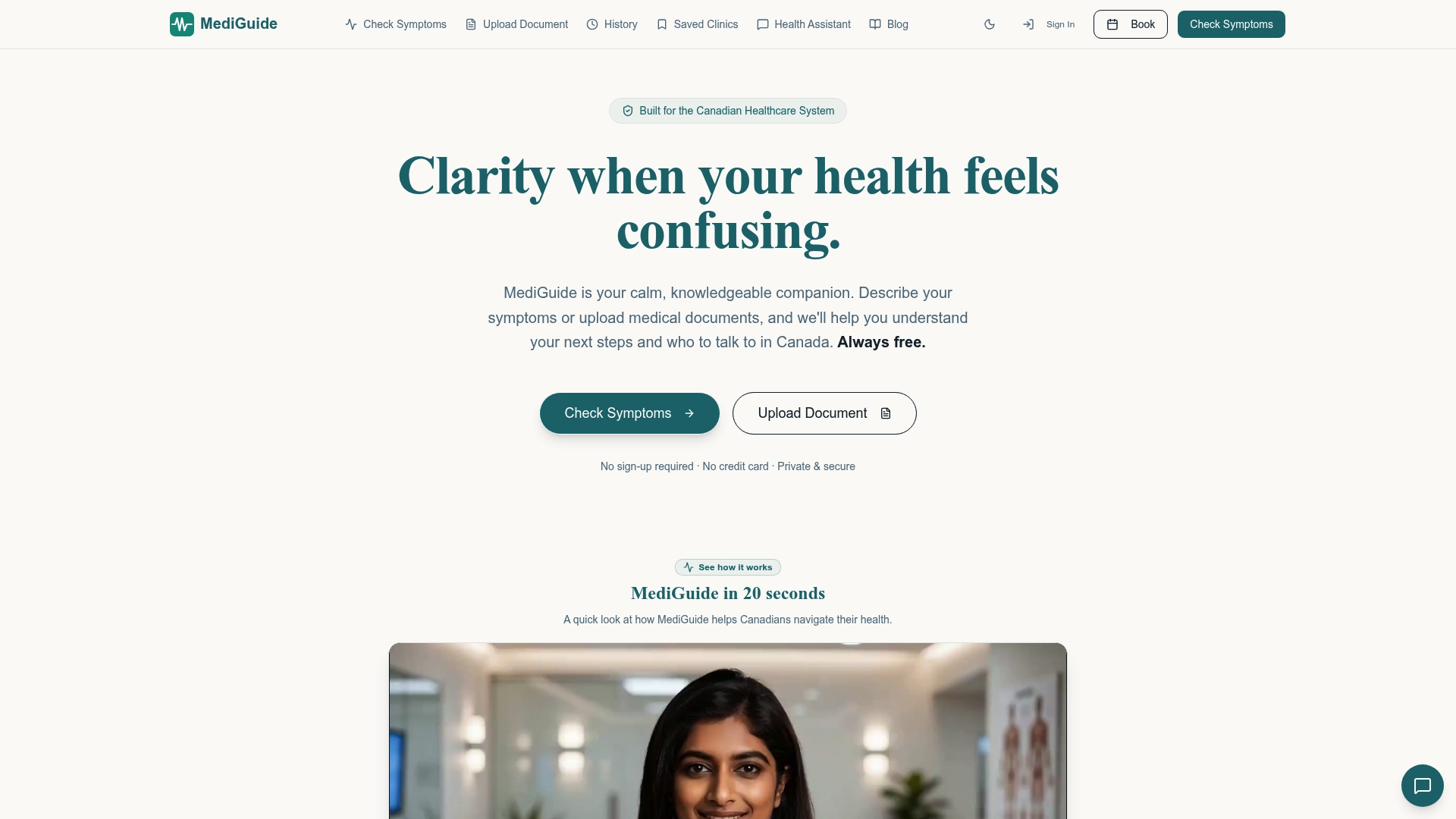
When you check your symptoms with Healthnavigatorai, your data is never sold or shared. The platform connects you to the right specialists and provides regional wait times, all without storing your personal information. If you have medical documents you need help understanding, you can upload them securely and get plain-English explanations instantly. For Canadians who want health guidance that respects their privacy, Healthnavigatorai is built around that principle from the ground up.
FAQ
What does PIPEDA cover in healthcare?
PIPEDA governs how private-sector organizations collect, use, and disclose personal health information during commercial activities. It does not cover public-sector health bodies or clinical providers in provinces with substantially similar legislation.
Does PIPEDA apply to my doctor in Ontario?
No. Ontario's Personal Health Information Protection Act (PHIPA) displaces PIPEDA for healthcare providers in Ontario. Your doctor's handling of your records falls under PHIPA and the oversight of the Information and Privacy Commissioner of Ontario.
Can I request my health records under PIPEDA?
Yes. PIPEDA gives you the right to request access to personal information held by private-sector organizations, and they must respond within 30 days. Exceptions apply in limited circumstances, such as when disclosure would reveal information about another person.
What is the difference between express and implied consent under PIPEDA?
Express consent requires you to actively agree to the collection or use of your data, typically in writing. Implied consent applies in limited situations where the purpose is obvious and expected, such as a referral between two treating physicians.
Where do I file a complaint if my health data is misused?
File a complaint with the Office of the Privacy Commissioner of Canada if PIPEDA governs your situation. If you are in Ontario, Nova Scotia, or Newfoundland, contact the relevant provincial privacy commissioner, as those provinces have their own health privacy laws and regulators.


