

Digital health consent types are formal permissions that govern how your personal health information is collected, used, and shared through electronic health systems. For Canadians, understanding these consent categories is not optional. Federal law under PIPEDA requires that informed and revocable consent practices protect every patient whose data moves through a digital health platform. The standard industry term for this field is health data consent governance, and it covers everything from a routine clinic intake form to a blockchain-based permission record. Consent is not a simple yes or no. Researchers define it as a multi-dimensional, continuous artifact with six distinct components: subject, scope, purpose, recipient, duration, and revocability. Each component matters when your health data crosses organizational boundaries.
1. What are the primary digital health consent types?
Consent models fall into four recognized categories: specific, broad, tiered, and dynamic. Each model differs in how much control you keep over your data and how flexibly providers can use it.
- Specific consent limits data use to one narrow, defined purpose. A lab test consent that covers only that test is a classic example. You know exactly what you are agreeing to, and nothing else is permitted.
- Broad consent allows providers or researchers to use your data for a wider range of future purposes. Research biobanks commonly use this model. The trade-off is less granular control in exchange for advancing medical science.
- Tiered consent works like a menu. You select from a set of options, each covering a different level of data use. This model gives you more flexibility than broad consent while avoiding the narrow limits of specific consent.
- Dynamic consent goes furthest. It lets you review, update, or withdraw your permission at any time through a digital platform. Dynamic consent supports continuous control and ongoing communication between you and your care team.
Pro Tip: Ask your clinic which consent model applies to your records before signing any digital form. Knowing whether your consent is specific or broad changes what you can revoke later.
In the Canadian context, provincial health authorities often layer their own requirements on top of federal PIPEDA rules. British Columbia's Personal Information Protection Act and Ontario's Personal Health Information Protection Act each add jurisdiction-specific obligations that affect which consent model a clinic can legally use.

2. What are the five types of digital health consent forms?
Modern digital health clinics use five distinct consent form categories, each covering a different area of clinical, administrative, or legal compliance.
- HIPAA intake and administrative forms. These cover routine treatment authorizations and administrative data sharing. In Canada, the equivalent forms align with PIPEDA and provincial health privacy statutes. They establish the baseline permission for your provider to collect and use your identifying and clinical information.
2. Surgical and high-risk procedure consents. These forms carry heightened disclosure requirements. They must explain the specific risks, alternatives, and data implications of a procedure. Patients sign these before any intervention that carries significant physical or informational risk.
3. Telehealth and remote care consents. Telehealth consent requires specific disclosures about platform security, data sharing practices, and your rights as a remote patient. A video appointment on a third-party platform introduces data risks that an in-person visit does not. This form type addresses those risks directly.
4. Specialized data and genetic testing consents. Genetic and biometric data carries unique sensitivity. These forms govern who can access your results, how long data is retained, and whether it can be used in research. Canadian labs handling genetic samples must comply with both PIPEDA and the Genetic Non-Discrimination Act.
5. Contingency and dependent care consents. These authorize a family member, legal guardian, or third party to access or make decisions about your health information. They are common for pediatric care, elder care, and situations where a patient cannot consent independently.
Each form type serves a distinct legal and clinical function. Signing one does not substitute for another.
3. How does digital consent management work?
The technology behind consent management has moved well beyond paper forms and checkbox agreements. Two developments stand out: blockchain-based governance and dynamic consent platforms.
Blockchain frameworks like ConsentChain use immutable, auditable records and smart contracts to enforce purpose-bound, time-limited consents. Every permission grant and every revocation is recorded on a distributed ledger that no single organization can alter. That auditability builds trust in ways a PDF signature cannot.
Dynamic consent platforms take a different approach. They give you a personal dashboard where you can see exactly who has accessed your data, update your preferences, and withdraw consent in real time. The practical benefit is significant: you are not locked into a decision you made at intake two years ago.
Pro Tip: When a clinic offers a patient portal, check whether it includes a consent management section. If it does, review your active consents at least once a year.
The hardest implementation challenge is not capturing consent. Enforcing revocation downstream across every system that already received your data is the real technical problem. When your care pathway crosses multiple organizations, each transition requires its own consent and lawful basis. Few healthcare systems have fully solved this yet.
Blockchain-based consent governance also requires alignment with legal rights like data erasure. An immutable ledger records that consent was revoked, but it cannot always delete the underlying data from every downstream system. Canadian privacy law gives you the right to request deletion, and that right must be honored regardless of the technology in use.
4. What Canadians should know about managing their digital health consent
Your consent rights in Canada are stronger than most people realize. PIPEDA gives you the right to know what data is collected, why it is collected, who receives it, and how to revoke your permission. Provincial laws in Ontario, British Columbia, and Alberta add further protections specific to health information.
Understanding your digital health footprint is the first step. Every app, portal, and wearable device that touches your health data operates under some form of consent agreement. Reading those agreements before you sign is not paranoia. It is the only way to know what you are actually authorizing.
Consent is multidimensional, not a single checkbox. The six dimensions of a well-formed consent, which are subject, scope, purpose, recipient, duration, and revocability, each carry practical weight. Duration tells you how long your data can be used. Revocability tells you whether you can take back your permission and how to do it.
Continuous consent management matters for ongoing data use. A consent you gave at hospital admission may still be active years later. Dynamic consent platforms address this by prompting you to review permissions periodically. If your provider does not offer this, you can request a consent audit directly from their privacy officer.
Communicating with your healthcare provider about consent is your right, not an imposition. Ask which consent model applies to your records. Ask how revocation is enforced across partner organizations. Ask whether your data is used in research under a broad consent you may not remember signing.
Key Takeaways
Meaningful digital health consent requires understanding six dimensions of permission, four consent models, and five form types, all within Canada's layered federal and provincial privacy framework.
| Point | Details |
|---|---|
| Four core consent models | Specific, broad, tiered, and dynamic consent each offer different levels of patient control over health data. |
| Five clinical form types | Administrative, surgical, telehealth, genetic, and dependent care forms each serve a distinct legal purpose. |
| Revocation is the hard part | Enforcing consent withdrawal across all downstream systems remains the biggest technical challenge in digital health. |
| Canadian law gives you rights | PIPEDA and provincial statutes require providers to honor your right to know, consent, and revoke data use. |
| Dynamic consent builds trust | Real-time consent management platforms improve transparency and reduce the risk of outdated permissions staying active. |
Why consent is the most underrated issue in Canadian digital health
The conversation about digital health in Canada focuses heavily on access and wait times. Consent gets far less attention, and that gap concerns me.
Most patients I speak with have no idea which consent model governs their records. They signed a form at intake, and they assume that is the end of it. The reality is that consent is a living document. It can be updated, it can expire, and it can be revoked. But only if you know those options exist.
The promise of dynamic consent and blockchain governance is real. These technologies can give patients genuine authority over their data in ways that paper forms never could. The risk is that they become tools for institutional compliance theater rather than actual patient empowerment. A consent dashboard that is buried three menus deep in a patient portal is not meaningful access.
The ethical responsibility sits with healthcare providers. They must design consent processes that are genuinely understandable, not just legally defensible. Plain-language summaries, periodic consent reviews, and clear revocation pathways should be standard practice, not exceptions.
For Canadians, the practical takeaway is this: treat your consent records the way you treat your financial accounts. Review them regularly. Ask questions when something is unclear. And know that the law is on your side when you want to make changes.
> — Rishi
How Healthnavigatorai supports Canadians with health information
Understanding consent is one piece of managing your health in a digital world. Healthnavigatorai's MediGuide platform gives Canadians a free, no-signup tool to describe symptoms, upload medical documents securely, and receive plain-English assessments that point you toward the right next step.
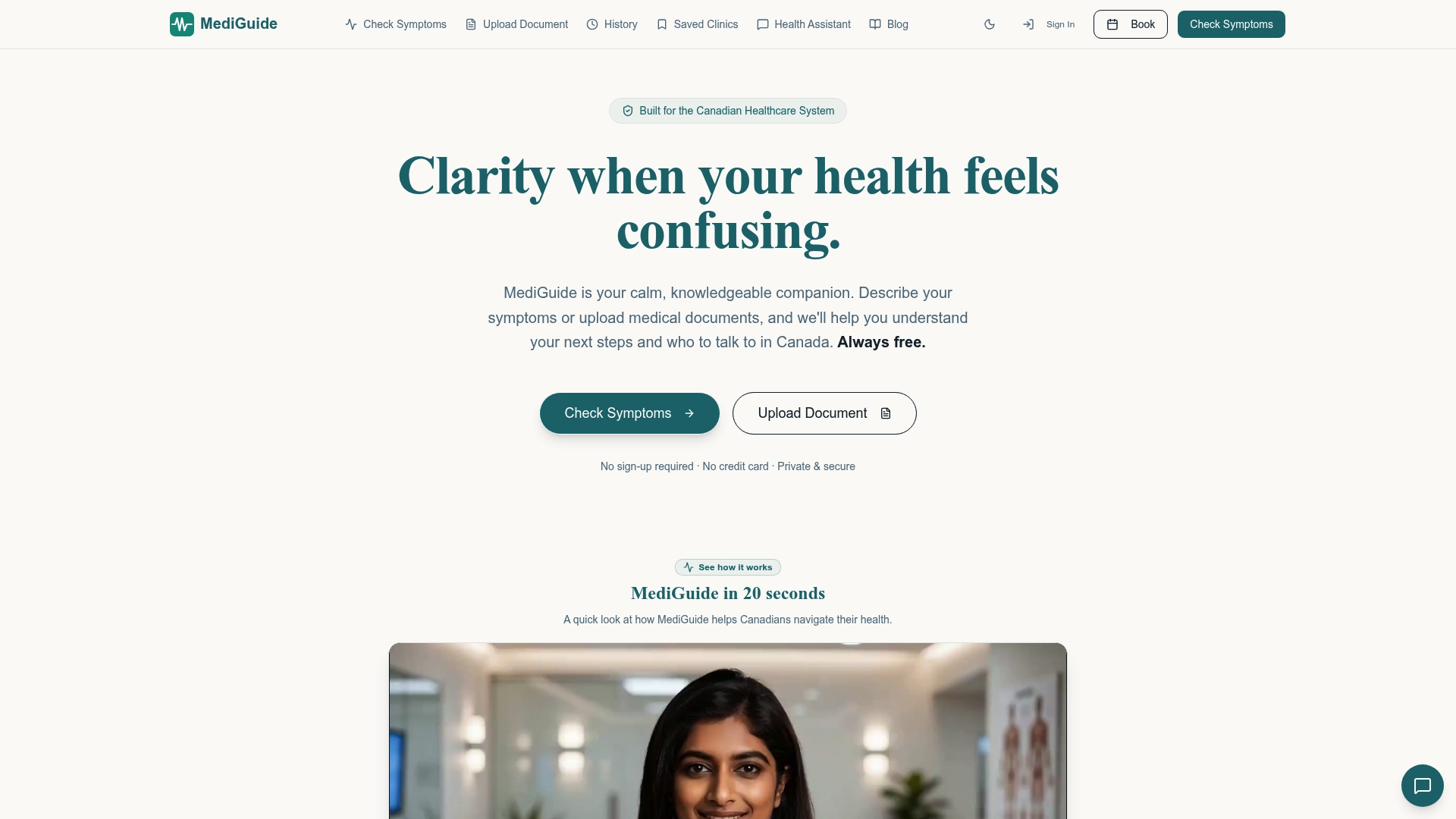
MediGuide does not sell or share your personal data, which means you can use it without adding another layer of consent complexity to your health records. If you want to understand what a medical document says before you sign a consent form, MediGuide can help you read it clearly. Check your symptoms or upload a document today to get guidance specific to your region, including average specialist wait times across Canada.
FAQ
What are the main digital health consent types in Canada?
The four main consent models are specific, broad, tiered, and dynamic. Each differs in how much control you retain over how your health data is used and for how long.
What is dynamic consent and why does it matter?
Dynamic consent lets you update or withdraw your health data permissions at any time through a digital platform. It is favored over static one-time forms because it supports ongoing patient control and transparency.
How does PIPEDA affect my digital health consent rights?
PIPEDA requires that Canadian patients give informed, revocable consent before their personal health information is collected or shared electronically. You have the right to know who holds your data and to request its deletion.
What should a telehealth consent form include?
A telehealth consent form must disclose the platform's security practices, data sharing arrangements, and your rights as a remote patient. These disclosures address risks specific to digital communication that in-person care does not involve.
Can I revoke consent after I have already given it?
Yes. Canadian privacy law gives you the right to revoke consent at any time. The practical challenge is ensuring that revocation propagates across every system that already received your data, which requires follow-up with your provider's privacy officer.


