

An immunologist assesses whether your immune system is underactive, overactive, misdirected, or reacting abnormally to triggers. In practice, that covers a wide range of conditions: recurrent infections that never fully resolve, severe allergic reactions, autoimmune diseases where the body attacks its own tissue, and rare genetic disorders that leave the immune system structurally incomplete. The specialty sits at the intersection of diagnosis and long-term management, which is why a single visit can clarify problems that have stumped primary care for months.
Here is what an immunologist will specifically look for during evaluation:
- Recurrent or unusually severe infections (sinus, ear, lung, or skin)
- Patterns suggesting the immune system is attacking the body (joint pain, rashes, organ inflammation)
- Severe or unexplained allergic reactions, including anaphylaxis
- Poor or unexpected responses to routine vaccines
- Chronic inflammation without a clear infectious cause
- Family history of immune disorders or early-onset autoimmune disease
Table of Contents
- What conditions does an immunologist assess?
- What tests does an immunologist use to evaluate you?
- What should you expect at your first immunology appointment?
- When should you see an immunologist?
- What treatment options might an immunologist recommend?
- Why does specialist assessment matter for accurate diagnosis?
- How to prepare for your immunology appointment
- Key Takeaways
- The case for getting evaluated sooner rather than later
- Useful sources and further reading
What conditions does an immunologist assess?
Immunologists evaluate five broad condition categories, and knowing which one fits your situation is often the first step toward getting the right referral.
Primary immunodeficiencies are genetic. The immune system is missing a component or has one that does not work correctly from birth. Common variable immunodeficiency (CVID) and severe combined immunodeficiency (SCID) are two well-known examples. CVID causes low antibody levels and frequent bacterial infections; SCID is far more severe and affects both T and B cells.

Secondary immunodeficiencies are acquired rather than inherited. HIV/AIDS is the most recognized example, but chemotherapy, long-term corticosteroid use, and certain cancers can also suppress immune function significantly.
Autoimmune diseases occur when the immune system misidentifies the body's own tissue as foreign. Systemic lupus erythematosus (lupus) and rheumatoid arthritis are classic examples. Vasculitis and inflammatory myopathies fall here too, often requiring co-management with rheumatology.
Allergic and hypersensitivity conditions are the most common reason people see an immunologist. These include:
- Food allergies and anaphylaxis
- Allergic rhinitis (hay fever) and seasonal allergies
- Asthma, especially when poorly controlled or atypical
- Chronic urticaria (hives) and eczema
- Drug and insect venom allergies
Immune dysregulation syndromes are less common but increasingly recognized. These include conditions like hemophagocytic lymphohistiocytosis (HLH) and autoinflammatory syndromes, where the immune system activates inappropriately without a clear external trigger.
Overlap with other specialties is common. Asthma may involve pulmonology; lupus often involves rheumatology; immune-related endocrine disorders bring in endocrinology. Expect team-based care for anything systemic.
What tests does an immunologist use to evaluate you?
The tests an immunologist orders depend on the suspected category of dysfunction, but several are standard across most evaluations. The table below maps the most common tests to their purpose.
| Test | What it measures | What an abnormal result suggests |
|---|---|---|
| Immunoglobulin panel (IgG, IgA, IgM) | Antibody levels in the blood | Low levels suggest humoral immunodeficiency (e.g., CVID) |
| Specific antibody response to vaccines | Functional humoral immunity | Poor response despite vaccination indicates B-cell dysfunction |
| Lymphocyte subset testing / flow cytometry | T-cell, B-cell, and NK-cell counts | Low T-cell counts suggest cellular immunodeficiency |
| Complement testing | Complement pathway activity | Deficiencies increase susceptibility to encapsulated bacteria |
| Skin prick testing | Immediate (IgE-mediated) hypersensitivity | Positive wheal confirms sensitization to a specific allergen |
| Patch testing | Delayed (T-cell-mediated) contact hypersensitivity | Identifies contact allergens causing dermatitis |
| Pulmonary function testing / spirometry | Airflow and lung capacity | Obstruction pattern consistent with asthma |
| Genetic testing | Specific gene mutations | Confirms suspected primary immunodeficiency or dysregulation syndrome |
Functional immune assays such as specific antibody responses to vaccines and complement pathway testing are particularly valuable for detecting subtle immunodeficiencies that a routine complete blood count will miss entirely. Flow cytometry gives a precise count of lymphocyte subsets, which is essential when SCID or CD4 depletion is suspected.
Genetic testing is reserved for cases where a primary immunodeficiency or immune dysregulation syndrome is strongly suspected, usually after functional assays point toward a structural defect. Results can take several weeks and often require interpretation alongside clinical findings rather than in isolation.
Understanding your blood test results before your appointment can help you ask sharper questions and understand what the immunologist is looking for.
Pro Tip: Bring prior lab results, vaccination records, and a written symptom timeline to your first appointment. Specialists use this information to choose targeted functional assays rather than ordering broad, nonspecific panels, which saves time and often reduces out-of-pocket costs.

What should you expect at your first immunology appointment?
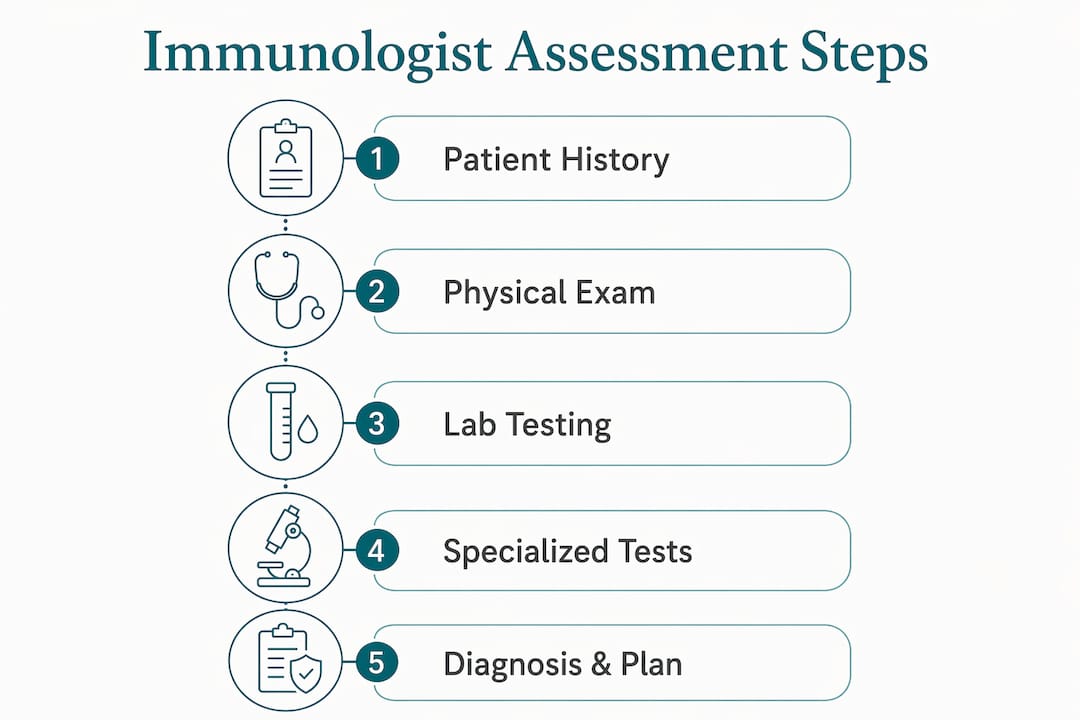
The visit starts with a thorough medical history, and this part takes longer than most patients expect. The immunologist will ask about:
- The pattern, frequency, and severity of infections over your lifetime
- Any allergic reactions, including what triggered them and how severe they were
- Family history of immune problems, autoimmune disease, or early-onset allergies
- Current medications, prior treatments, and any unusual reactions to vaccines or drugs
From there, a physical exam focuses on areas that reflect immune activity: lymph nodes, skin, sinuses, lungs, and joints. Skin tests, basic blood draws, and spirometry can often be performed during the first visit, giving the specialist immediate data to work with.
Some results come back the same day. A skin prick test, for example, produces a reaction within 15–20 minutes. Blood panels for immunoglobulins typically return within a few days. Complement testing and lymphocyte subsets may take a week or more. Genetic testing and cultures sit at the far end of the timeline, sometimes requiring several weeks, and may prompt a second or third visit before a full picture emerges.
Staged testing is normal in immunology. The specialist may order a focused initial panel, review results, and then add functional assays based on what the first round shows. Referrals to ENT, pulmonology, or rheumatology often happen in parallel rather than sequentially, particularly for systemic presentations.
> Key insight: Early referral for suspected autoimmune disease or immunodeficiency can prevent cumulative organ damage and improve long-term outcomes. Waiting until symptoms are severe often narrows treatment options.
When should you see an immunologist?
Most people reach an immunologist through a primary care referral, but knowing the specific triggers helps you advocate for one. The ACAAI recommends evaluation when symptoms suggest the immune system is not functioning within normal parameters.
Referral triggers to discuss with your doctor:
- Four or more ear, sinus, or respiratory infections per year in adults (more in children)
- Two or more serious infections (pneumonia, meningitis, sepsis) in a lifetime
- Recurrent infections requiring intravenous antibiotics
- A severe or life-threatening allergic reaction, including anaphylaxis
- Asthma that does not respond adequately to standard treatment
- Unexplained low blood counts (neutropenia, lymphopenia) on routine labs
- Chronic inflammation or elevated inflammatory markers without a clear cause
- Suspected autoimmune disease with systemic signs (joint pain, rash, fatigue, organ involvement)
- Unusual or severe reactions to vaccines
> Red flag: Anaphylaxis, rapidly progressive systemic symptoms, or any infection spreading to the central nervous system warrants emergency care first. Immunology follow-up comes after stabilization, not instead of it.
Primary care should run basic labs (CBC, metabolic panel, CRP) before referring in most non-urgent cases. That baseline data helps the immunologist skip redundant testing and focus on specialist-level assays from the start.
What treatment options might an immunologist recommend?
After assessment, the management plan depends entirely on what the evaluation found. Immunologists either prescribe treatments directly or coordinate them with other specialists.
- Allergen avoidance and environmental control: The first line for allergic conditions. This includes identifying specific triggers through testing and reducing exposure. For indoor allergens like dust mites and pet dander, HEPA air filtration can meaningfully reduce airborne load alongside medical management.
- Pharmacotherapy: Antihistamines and intranasal corticosteroids for allergic rhinitis; inhaled corticosteroids and bronchodilators for asthma; systemic corticosteroids for acute flares of autoimmune disease. Biologics such as dupilumab (for eczema and asthma) and omalizumab (for chronic urticaria) are increasingly used when standard medications fall short.
- Allergen immunotherapy: Subcutaneous injections (allergy shots) or sublingual drops/tablets that gradually desensitize the immune system to specific allergens. This is the only treatment that modifies the underlying allergic response rather than just suppressing symptoms.
- Immunoglobulin replacement therapy: For patients with primary antibody deficiencies like CVID, regular infusions of immunoglobulin (IVIg or SCIg) replace the antibodies the body cannot produce. The immunologist typically manages this directly.
- Immunomodulatory drugs: For autoimmune conditions, drugs like hydroxychloroquine, methotrexate, mycophenolate, or newer targeted biologics reduce immune overactivity. These are often co-managed with rheumatology or other relevant specialists.
- Vaccine and infection prevention planning: Immunologists create individualized vaccine schedules for patients with immunodeficiencies, including guidance on which live vaccines to avoid and when prophylactic antibiotics are appropriate.
Long-term follow-up is standard. Periodic lab monitoring, infection tracking, and therapy adjustments are part of the ongoing relationship with an immunologist, not just a one-time consultation.
Why does specialist assessment matter for accurate diagnosis?
The core value of seeing an immunologist, rather than managing immune concerns through primary care alone, comes down to diagnostic precision. AAAAI specialists specifically highlight removing incorrect allergy labels as a key outcome of specialist evaluation. An incorrect penicillin allergy label, for example, affects antibiotic choices for life and can lead to the use of broader-spectrum drugs that carry more side effects and contribute to resistance.
Subtle immunodeficiencies are another area where specialist assessment changes outcomes. Routine blood panels often look normal even when functional immunity is impaired. It takes vaccine-response testing, complement assays, or flow cytometry to detect these gaps, and interpreting those results correctly requires clinical context that a generalist may not have.
Translational immunology research is also reshaping how clinicians interpret test results. Immunometabolism, the study of how metabolic signals influence immune responses, is informing newer, more targeted diagnostics. Clinical immunologists who stay current with this work can connect a lab finding to a treatment option that did not exist five years ago.
> "The clinical immunologist applies the concepts and techniques of basic immunology to the investigation, diagnosis, and treatment of patients." — PubMed, formal definition of the specialty
There are three recognized types of immunologists: researchers (Ph.D.), clinicians (M.D.), and physician-scientists (M.D./Ph.D.). When you see a clinical allergist-immunologist in the U.S., you are seeing someone trained specifically to translate immune science into patient care decisions.
How to prepare for your immunology appointment
Walking in prepared makes a real difference. Immunologists work most efficiently when they have structured information from the start.
Bring with you:
- Prior lab results, including any CBC, metabolic panels, or allergy tests
- Vaccination records (especially relevant if poor vaccine response is suspected)
- A complete medication and supplement list, including over-the-counter antihistamines
- A written allergy history with reaction details and severity
- A chronological symptom timeline noting when problems started, how often they occur, and what seems to trigger or worsen them
- Family history of immune disorders, autoimmune disease, or recurrent infections
Questions worth asking your immunologist:
- Which tests do you recommend, and what would an abnormal result mean for my care?
- Are there any immediate safety steps I should take before results come back?
- What result would change my treatment plan, and what would keep it the same?
- Will I need long-term follow-up, and how often?
- Are there any specialist referrals you anticipate needing?
A quick note on insurance: many specialized immunological tests, including flow cytometry and genetic panels, require prior authorization. Ask the office staff about this before your appointment so delays do not hold up your diagnostic timeline.
If you want to organize your symptoms before the visit, Healthnavigatorai's AI symptom assessment tool can help you structure what you are experiencing into a clear, chronological format. You can also upload prior lab results to get a plain-English summary of what they show before you walk into the specialist's office.
Key Takeaways
An immunologist assesses immune dysfunction across five condition categories using targeted tests, and early specialist evaluation consistently leads to better outcomes than delayed referral.
| Point | Details |
|---|---|
| Core assessment scope | Immunologists evaluate underactive, overactive, and misdirected immune responses across five condition categories. |
| Key tests to expect | Expect immunoglobulin panels, lymphocyte subset testing, skin prick or patch tests, and possibly genetic assays. |
| Main referral triggers | Four or more infections per year, anaphylaxis, poor vaccine response, or signs of autoimmune disease warrant a referral. |
| Diagnostic precision matters | Incorrect allergy labels and missed immunodeficiencies both harm long-term care; specialist testing catches what routine panels miss. |
| Prepare before you go | Bring lab results, vaccination records, and a symptom timeline to help the immunologist choose targeted tests from the start. |
If you recognize any referral triggers above, talk to your primary care clinician about a specialist referral, or use Healthnavigatorai's symptom checker to clarify your next step.
The case for getting evaluated sooner rather than later
People often sit with immune symptoms for years before anyone connects the dots. Recurrent sinus infections get treated individually. Chronic hives get managed with antihistamines. Fatigue and joint pain get attributed to stress. None of those responses are wrong exactly, but they miss the underlying pattern.
What changes with a specialist evaluation is the frame. An immunologist looks at the whole picture: the frequency, the severity, the family history, the vaccine responses, and the lab trends over time. That perspective often reveals something that individual symptom management never would. A patient who has had four rounds of pneumonia in three years does not just have bad luck; they may have a complement deficiency that is entirely treatable once identified.
The practical outcomes of early referral are real: fewer emergency visits, a clearer treatment plan, and in many cases, a therapy that actually addresses the root cause rather than just suppressing symptoms. Allergen immunotherapy, for example, can reduce allergic sensitivity over years in a way that no antihistamine ever will.
Healthnavigatorai is built around exactly this kind of clarity. The platform lets you describe your symptoms or upload your medical documents and get a plain-English assessment of what they might mean and which specialist to see next, all without signing up or sharing your data. For anyone trying to figure out whether their immune symptoms warrant a referral, that is a useful first step before the appointment.

Useful sources and further reading
These are the primary sources used in this guide. Each is worth bookmarking if you want to explore further.
- ACAAI: What Conditions Do Immunologists Treat? — The American College of Allergy, Asthma & Immunology's patient-facing overview of the specialty's scope, including condition categories and treatment approaches.
- ACAAI: When Should You See an Immunologist? — Specific referral criteria and red-flag symptoms, written for patients and primary care clinicians.
- AAAAI: About Allergists and Immunologists — The American Academy of Allergy, Asthma & Immunology's description of specialist skills, including the value of removing incorrect allergy labels.
- NIGMS: What Does an Immunologist Do? — National Institute of General Medical Sciences overview of the three types of immunologists and their roles.
- PubMed: What Is a Clinical Immunologist? — Peer-reviewed formal definition of the specialty and U.S. certification requirements.
- Medical News Today: What Is an Immunologist? — Accessible overview of standard assessment procedures, including skin tests, antibody tests, and T-cell assays.
- MedlinePlus: Autoimmune Diseases — NIH-backed patient resource on autoimmune conditions, useful for understanding the autoimmune category immunologists evaluate.
Getting a referral: Start with your primary care physician. If you have had a severe allergic reaction or anaphylaxis, urgent care can bridge the gap while you arrange specialist follow-up. For anything involving a rapidly spreading infection or systemic collapse, go to the emergency room first.


